Official websites use .gov
A .gov website belongs to an official government organization in the United States.

Secure .gov websites use HTTPS
A lock ( ) or https:// means you’ve safely connected to the .gov website. Share sensitive information only on official, secure websites.

Broad-Scale Assessment of Methylmercury in Adult Amphibians

Synopsis

The largest assessment of methylmercury bioaccumulation in adult amphibians to-date revealed methylmercury was common and widespread, with substantial variation among sites and life history characteristics. Using nonlethal sampling methods allowed us to include several imperiled species in the study.

View publication

Abstract

Mercury (Hg) is a toxic contaminant that has been mobilized and distributed worldwide and is a threat to many wildlife species. Amphibians are facing unprecedented global declines due to many threats including contaminants. While the biphasic life history of many amphibians creates a potential nexus for methylmercury (MeHg) exposure in aquatic habitats and subsequent health effects, the broad-scale distribution of MeHg exposure in amphibians remains unknown. We used nonlethal sampling to assess MeHg bioaccumulation in 3,241 juvenile and adult amphibians during 2017-2021. We sampled 26 populations (14 species) across 11 states in the United States, including several imperiled species that could not have been sampled by traditional lethal methods. We examined whether life history traits of species and whether the concentration of total mercury in sediment or dragonflies could be used as indicators of MeHg bioaccumulation in amphibians.

Methylmercury contamination was widespread, with a 33-fold difference in concentrations across sites. There was more variation among sites than among years or clustered subsites. Life history characteristics such as size, sex, and whether the amphibian was a frog, toad, newt, or other salamander were the factors most strongly associated with bioaccumulation. Total Hg in dragonflies was a reliable indicator of bioaccumulation of MeHg in amphibians (R2 ≥ 0.67), whereas total Hg in sediment was not (R2 ≤ 0.04). Our study, the largest broad-scale assessment of MeHg bioaccumulation in amphibians, highlights methodological advances that allow for nonlethal sampling of rare species and reveals immense variation among species, life histories, and sites. Our findings can help identify sensitive populations and provide environmentally relevant concentrations for future studies to better quantify the potential threats of MeHg to amphibians.

Sites sampled

Sites sampled in the contiguous United States where we used nonlethal sampling to assess methylmercury bioaccumulation in adult amphibians. We collected a toe clip for frogs and toads and a tail tip for newts and other salamanders. Lentic (standing water) sites are shown as circles, and lotic (flowing water) sites are shown as squares. We also collected dragonfly larvae from 10 sites and 13 unique subsites to measure the correlation between mercury accumulation in amphibians and dragonflies (point within circles or squares). Locations are jittered slightly to reduce overlap among sites. See Supplementary Table 1 for details on sites and species sampled. Note that dragonflies were sampled at a total of five separate subsites at two sites in Oregon, and dragonflies were collected for two species at one site in Montana; hence, only 11 points for dragonflies are displayed on the map (see Supplementary Table 7). Baselayer sources: Esri, Garmin, Food and Agriculture Organization, National Oceanic and Atmospheric Administration, U.S. Geological Survey, Environmental Protection Agency.

MeHg concentrations

Methylmercury (MeHg) concentrations (ng/g dry weight [dw]) in adult amphibians collected across the contiguous United States. (B) Model-estimated mean (and 95% confidence intervals) whole-body MeHg (ng/g dw) for each species. Numbers on the y-axis indicate sample sizes for each species.

Our results reveal that MeHg exposure is widespread in amphibians across the United States, including for several threatened and endangered species.

Among the species, we found a 33-fold difference in geometric mean concentrations. The lowest and highest geometric mean MeHg concentrations (±GSD) were for Green Frogs (32.5 ± 1.9 ng/g dw) and Gulf Coast Waterdogs (1,071 ± 3 ng/g dw), respectively, in Louisiana. Mudpuppies in Louisiana and Two-lined Salamanders in Maine also had some of the highest MeHg concentrations (geometric mean: 471 ± 2 and 691 ± 1 ng/g dw), whereas Western Toads in Montana, Oregon Spotted Frogs in Oregon, and California Red-legged Frogs in southern California had among the lowest geometric mean MeHg concentrations (40.4 ± 1.7, 37.3 ± 1.2, and 48.5 ± 1.5 ng/g dw).

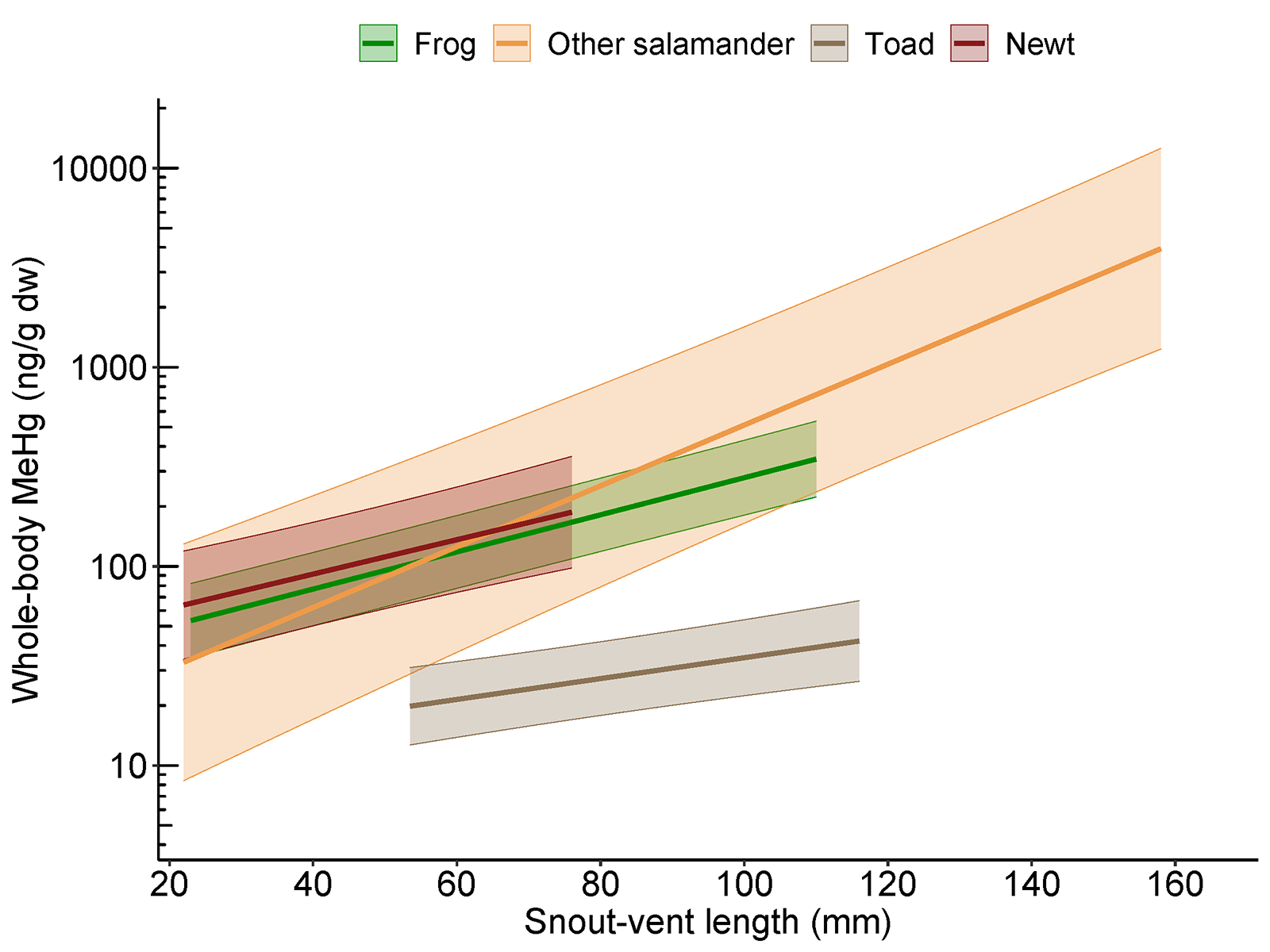
Characteristics such as size, sex, and whether the amphibian was a frog, toad, newt, or other salamander were strongly associated with MeHg bioaccumulation.

Methylmercury increased with animal size (snout-vent length); this bioaccumulation rate was higher in plethodontids and proteids (other salamanders) than in frogs, newts, or toads and lowest for toads compared to all other amphibian groups.

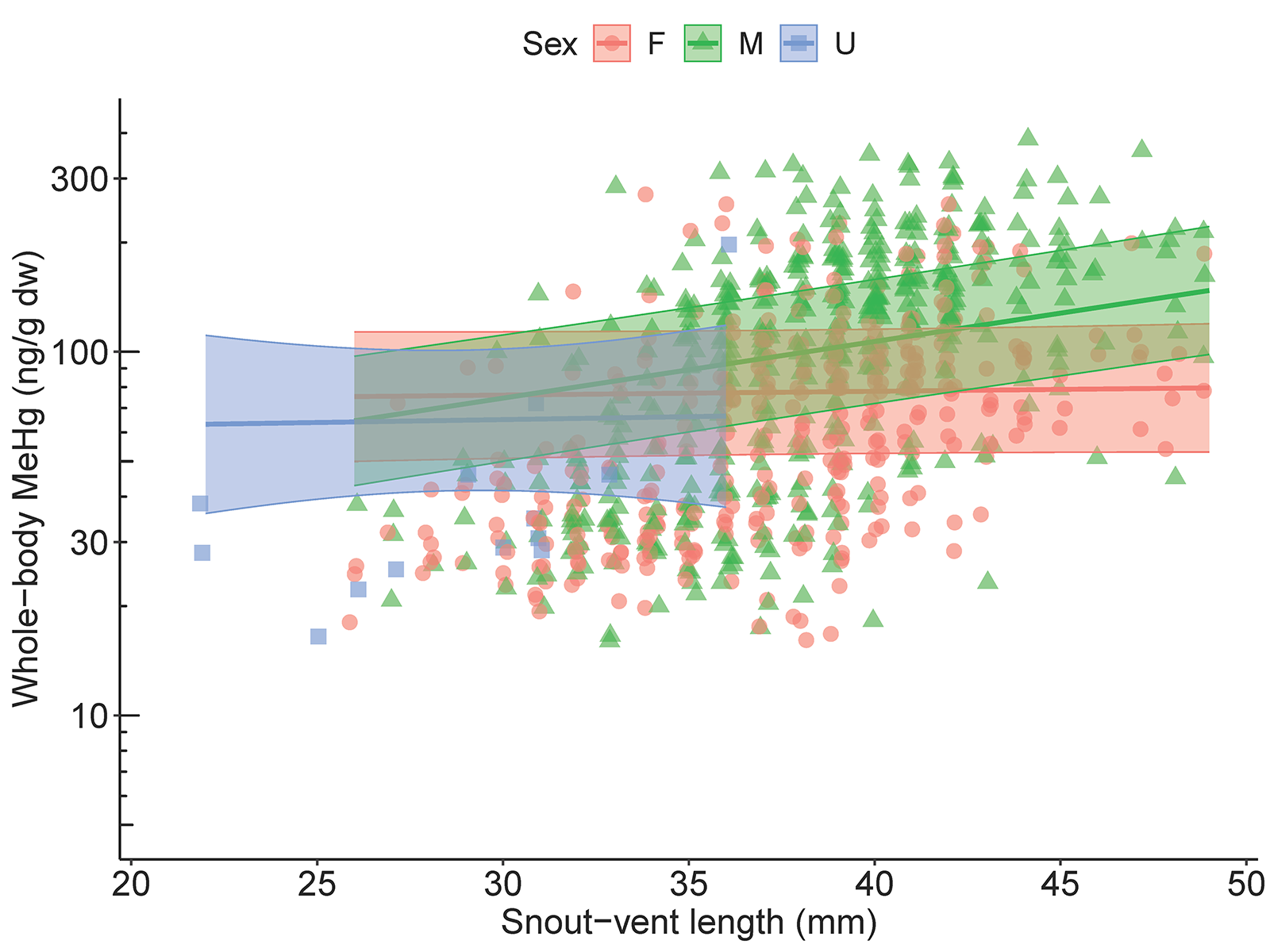
We sought to better understand variation in MeHg concentrations among taxa by conducting separate analyses for the two species that were each sampled at four locations.

The relationship between size and MeHg in Eastern Newts depended on whether the newt was a male or female. At longer lengths, male newts had marginally higher MeHg bioaccumulation than females, but this was opposite at shorter lengths.

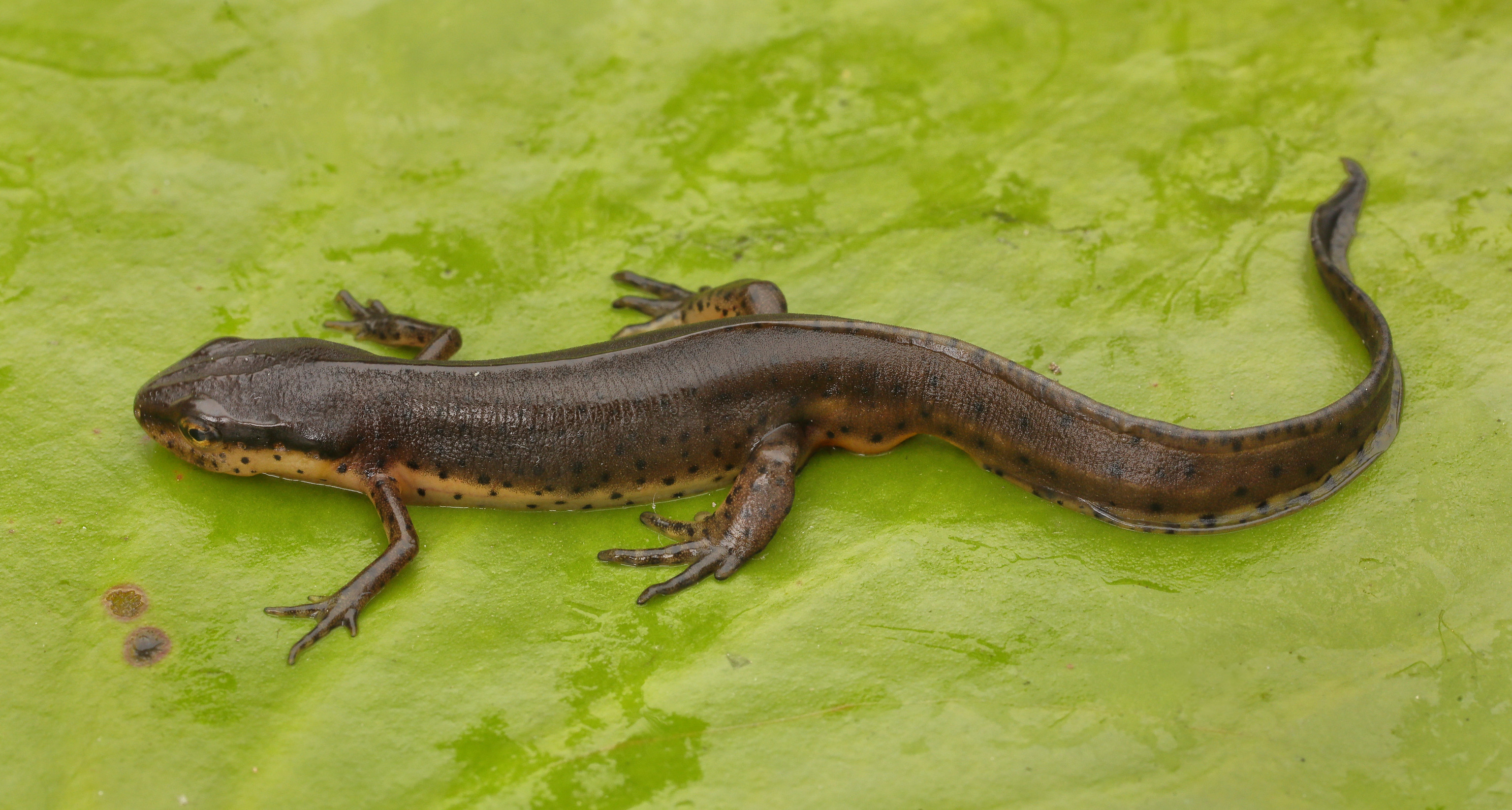
Notophthalmus viridescens - Eastern Newt Notophthalmus viridescens - Eastern Newt. Photographer: Alan Cressler.

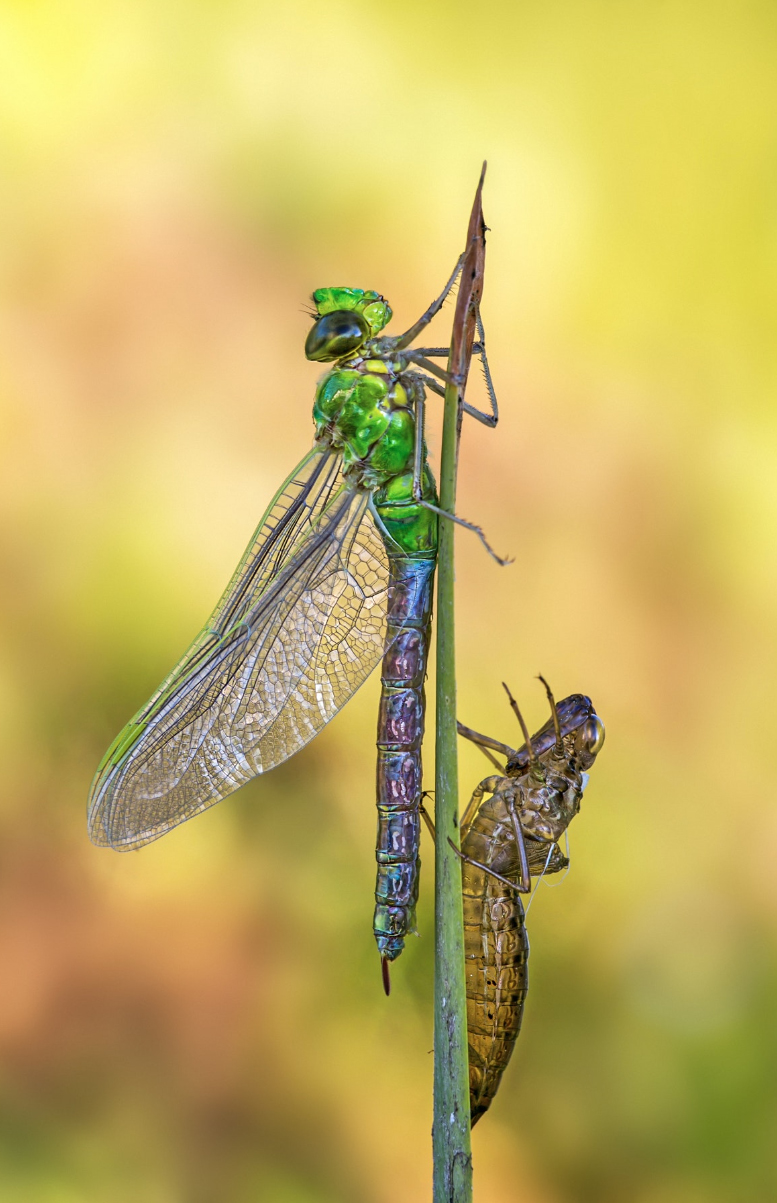
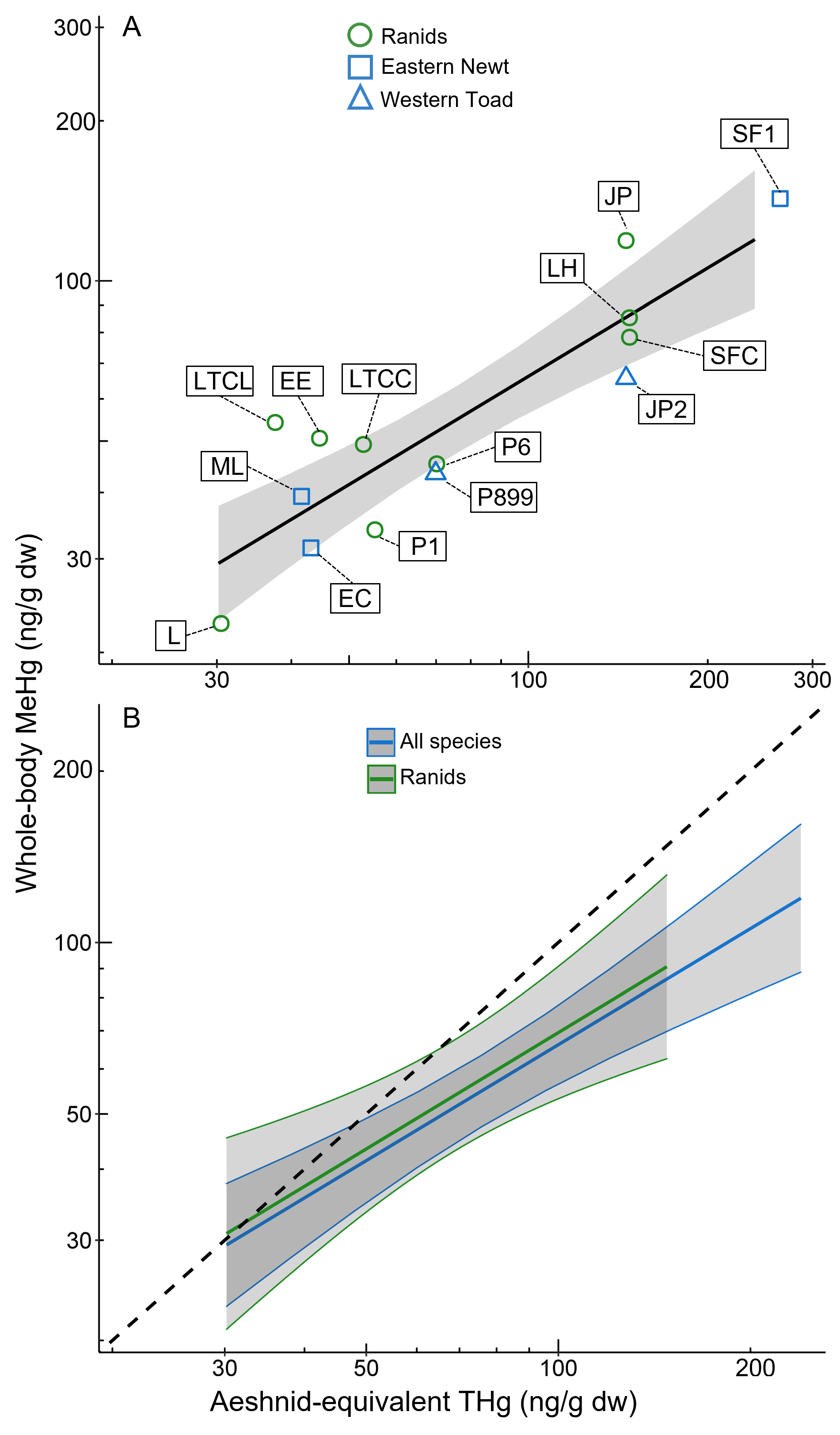
Due to their predatory nature, ease of capture, and ubiquitous presence across waterbodies, dragonfly larvae can be effective sentinels for bioaccumulative contaminants like MeHg.

Dragonfly THg concentrations were strongly correlated with MeHg in amphibian tissues for all species and for ranid species separately. Given that all amphibian species combined and the subset of ranids was similarly correlated with dragonfly THg, life history differences among amphibian species might not have a strong influence on the relationship between amphibian and dragonfly Hg bioaccumulation.


Credit: Dorothea Oldani.

Dragonfly amphibian slope comparison

usgs.gov

An official website of the U.S Geological Survey

Have a question about government services?
Contact USA.gov