
Recent Products
ARMI biologists are always engaging in different amphibian studies across the country. Here is a list of their most recently published products.
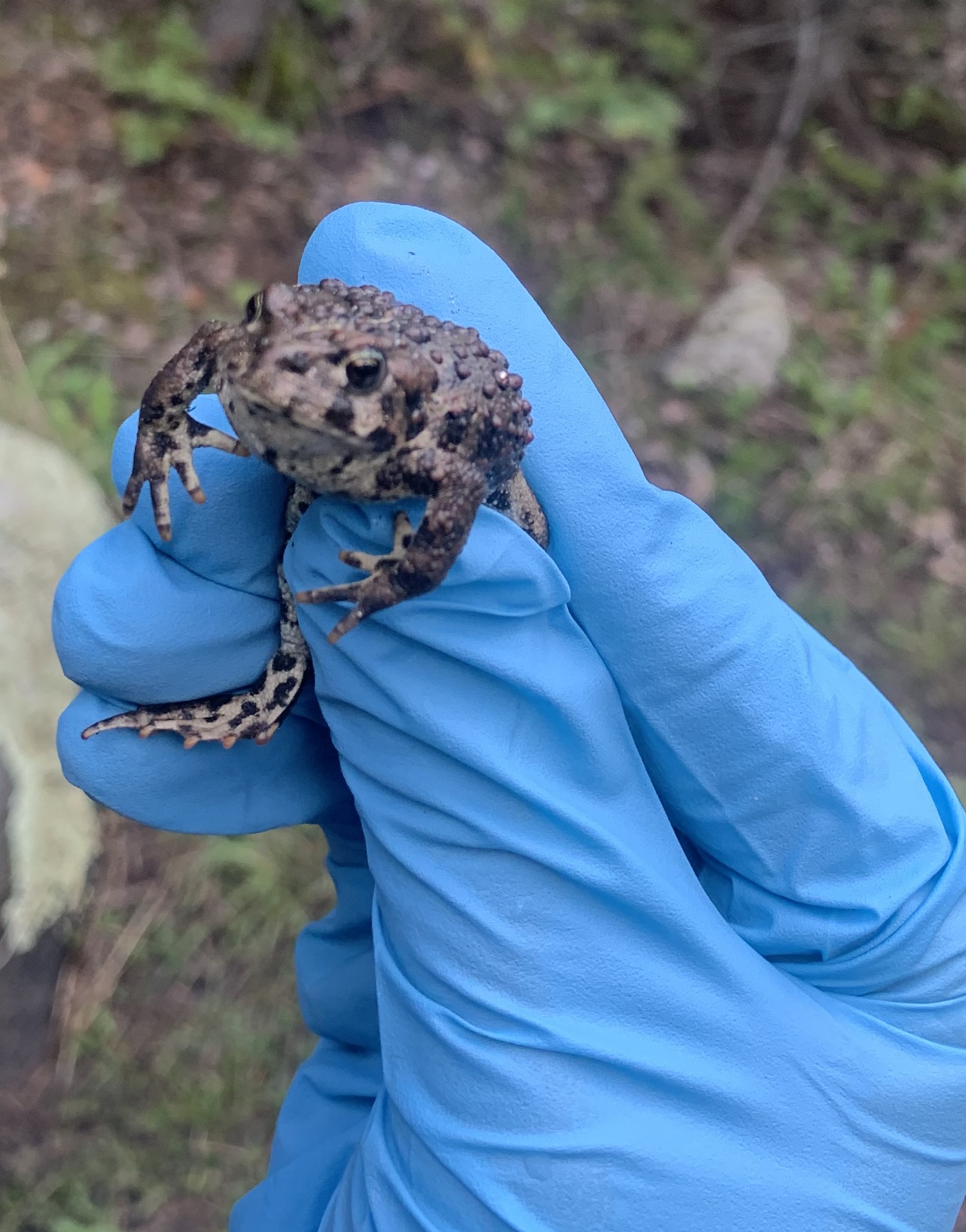
Papers & Reports Of toads and tolerance: Quantifying intraspecific variation in host resistance and tolerance to a lethal pathogen
Authors: Bennett Hardy; Erin Muths; W C Funk; Larissa L Bailey
Date: 2024-05-30 | Outlet: Journal of Animal Ecology
Due to the ubiquity of disease in natural systems, hosts have evolved strategies of disease resistance and tolerance to defend themselves from further harm once infected. Resistance strategies directly limit pathogen growth, typically leading to lower infection burdens in the host. A tolerance approach limits the fitness consequences caused by the pathogen but does not directly inhibit pathogen growth. Testing for intraspecific variation in wild host populations is important for informing conservation decisions about captive breeding, translocation, and disease treatment. Here, we test for the relative importance of tolerance and resistance in multiple populations of boreal toads (Anaxyrus boreas boreas) against Batrachochytrium dendrobatidis (Bd), the amphibian fungal pathogen responsible for the greatest host biodiversity loss due to disease. Boreal toads have severely declined in Colorado (CO) due to Bd, but toad populations challenged with Bd in western Wyoming (WY) appear to be less affected. We used a common garden infection experiment to expose post-metamorphic toads sourced from four populations (2 in CO and 2 in WY) to Bd and monitored changes in mass, pathogen burden, and survival for eight weeks. We used a multi-state modeling approach to estimate weekly survival and transition probabilities between infected and cleared states, reflecting a dynamic infection process that traditional approaches fail to capture. We found that WY boreal toads are highly tolerant to Bd infection with higher survival probabilities than those in CO when infected with identical pathogen burdens. WY toads also had higher probabilities of clearing infections and took an average of five days longer to reach peak infection burdens. Our results demonstrate strong intraspecific differences in tolerance and resistance that explain why population declines vary regionally across the species. We used a robust, multi-state framework to gain inference on typically hidden disease processes when testing for host tolerance or resistance and demonstrated that describing an entire species as ‘tolerant’ or ‘resistant’ is unwise without testing for intraspecific variation in host defenses.
Papers & Reports Matching decision support modeling frameworks to disease emergence stages
Authors: Evan HC Grant; Brittany A Mosher; Riley F Bernard; Alexander D Wright; Robin E Russell
Wildlife disease management decisions often require rapid responses to situations that are fraught with uncertainty. By recognizing that management is implemented to achieve specific objectives (whether defined explicitly or not), resource managers and science partners can identify an analysis technique and develop a plan to collect necessary data that will allow for the evaluation of management actions.
Papers & Reports Preparing for a Bsal invasion into North America has improved multi-sector readiness
Authors: Deanna H Olson; Evan HC Grant; Molly Bletz; Jonah Piovia-Scott; Jacob L Kerby; Michael J Adams; Florencia M Breitman; Michelle R Christman; María J Forzán; Matthew J Gray; Aubree J Hill; M S Koo; David Lesbarrères; Olga Milenkaya; Eria A Rebollar; Louise A Rollins-Smith; Megan Serr; Alex Shepak; Lenny Shirose; L Sprague; Jenifer Walke; Alexa R Warwick; Brittany A Mosher
Western palearctic salamander susceptibility to the skin disease caused by the amphibian chytrid fungus Batrachochytrium salamandrivorans (Bsal) was recognized in 2014, eliciting concerns for a potential novel wave of amphibian declines following the B. dendrobatidis (Bd) chytridiomycosis global pandemic. Although Bsal had not been detected in North America, initial experimental trials supported the heightened susceptibility of caudate amphibians to Bsal chytridiomycosis.
Papers & Reports Contrasting demographic responses under future climate at multiple life stages for two populations of a montane amphibian
Authors: Amanda M Kissel; Wendy J Palen; Michael J Adams; Justin Garwood
Date: 2024-01-03 | Outlet: Climate Change Ecology
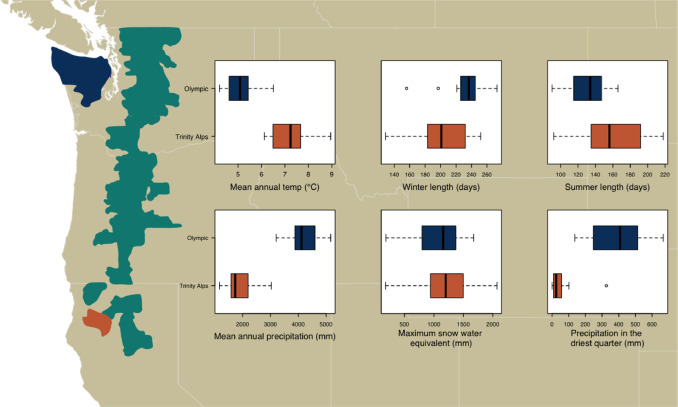
For species with complex life histories, climate change can have contrasting effects for different life stages within locally adapted populations and may result in responses counter to general climate change predictions. Using data from two, 14-year demographic studies for a North American montane amphibian, Cascades frog (Rana cascadae), we quantified how aspects of current climate influenced annual survival of larvae and adult stages and modeled the stochastic population growth rate (?s) of each population for current (1980-2006) and future periods (2080s). Climate drivers of survival for the populations were similar for larvae (i.e. decreases in precipitation lead to pond drying and mortality), but diverged for terrestrial stages where decreases in winter length and summer precipitation had opposite effects. By the 2080s, we predict one population will be in sharp decline (?s = 0.90),while the other population will remain nearly stable (?s = 0.99) in the absence of other stressors, such as mortality due to disease. Our case study demonstrates a result counter to many climate envelope predictions in that stage-specific responses to local climate and hydrology result in a higher extinction risk for the more northern population.

Papers & Reports Terrestrial Movement Patterns of the Common Toad (Bufo bufo) in Central Spain Reveal Habitat of Conservation Importance
Authors: David R Daversa; Erin Muths; Jaime Bosch
Date: 2012 | Outlet: Journal of Herpetology, 46(4):658-664
Journal of Herpetology, 46(4):658-664
Papers & Reports Native amphibian toxin reduces invasive crayfish feeding with potential benefits to stream biodiversity
Authors: Gary Bucciarelli; Sierra J. Smith; Justin J. Choe; Phoebe D. Shin; Robert N Fisher; Lee B Kats
Date: 2023-09-13 | Outlet: BMC Ecology and Evolution 23, 51
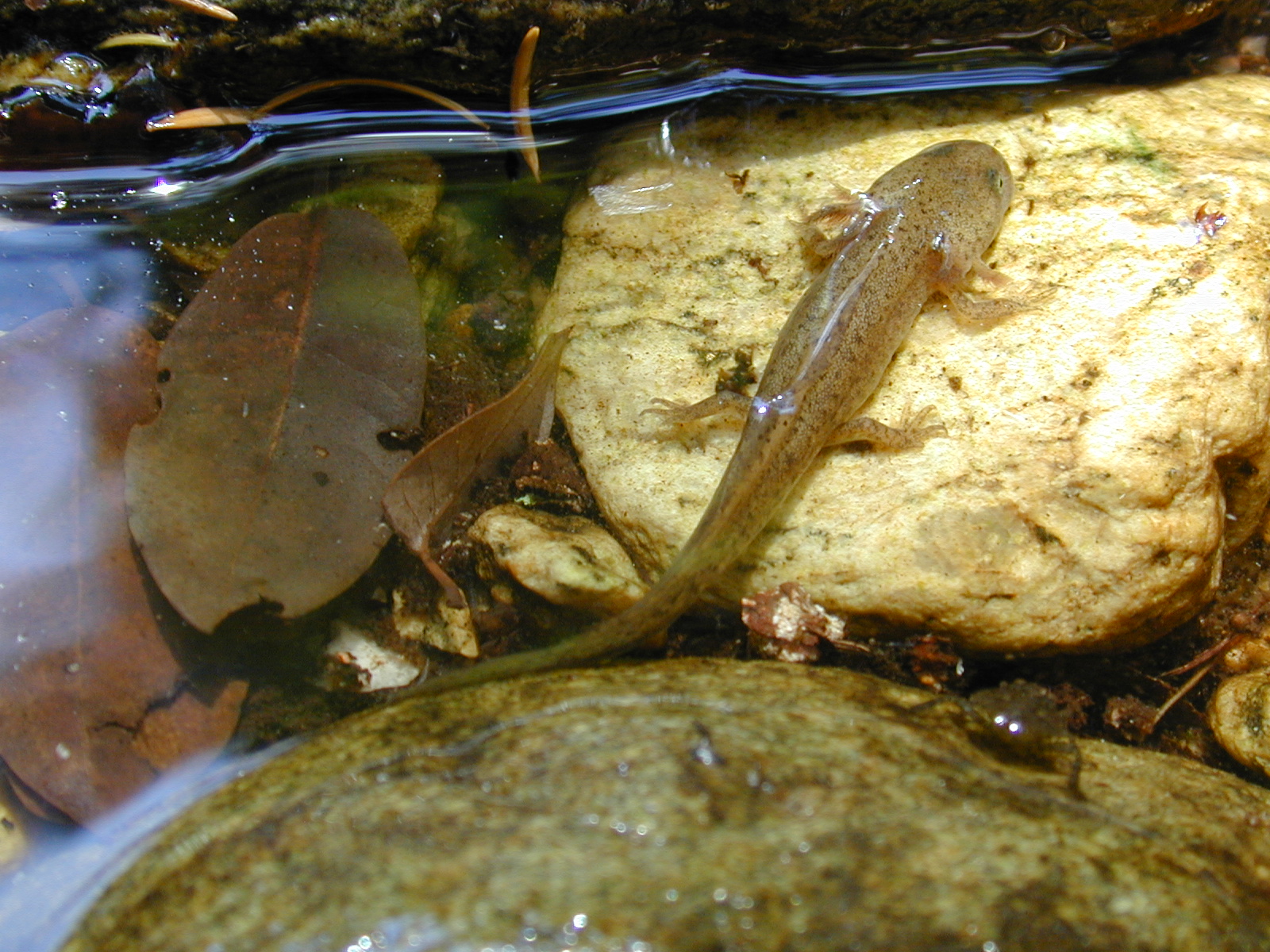
Biodiversity is generally reduced when non-native species invade an ecosystem. Invasive crayfish, Procambarus clarkii, populate California freshwater streams, and in the Santa Monica Mountains (Los Angeles, USA), their introduction has led to trophic cascades due to omnivorous feeding behavior and a rapid rate of population growth. The native California newt, Taricha torosa, possesses a neurotoxin, tetrodotoxin (TTX), that affects freshwater animal behavior. Given P. clarkii has a limited evolutionary history with TTX, we hypothesized that TTX may affect crayfish feeding behaviors. To determine if TTX affects P. clarkii behavior, we measured cumulative movement and various feeding behaviors of P. clarkii exposed to (i) waterborne, ecologically realistic concentrations of TTX (~?3.0?×?10??8 moles/L), (ii) an anuran chemical cue to account for intraguild cues, or (iii) a T. torosa chemical cue with quantitated TTX in it (~?6.2?×?10??8 moles/L).
Results
We found that the presence of TTX in any form significantly reduced crayfish movement and decreased the amount of food consumed over time. Crayfish responses to the anuran treatment did not significantly differ from controls.
Conclusion
Our laboratory results show that naturally occurring neurotoxin from native California newts limits invasive crayfish foraging and feeding rates, which may play a role in preserving local stream ecosystems by limiting invasive crayfish behaviors that are detrimental to biodiversity.
Results
We found that the presence of TTX in any form significantly reduced crayfish movement and decreased the amount of food consumed over time. Crayfish responses to the anuran treatment did not significantly differ from controls.
Conclusion
Our laboratory results show that naturally occurring neurotoxin from native California newts limits invasive crayfish foraging and feeding rates, which may play a role in preserving local stream ecosystems by limiting invasive crayfish behaviors that are detrimental to biodiversity.
Papers & Reports BioLake: A first assessment of lake temperature-derived bioclimatic predictors for aquatic invasive species
Authors: Ryan C Burner; Wesley M. Daniel; Peder S. Engelstad; Christopher J. Churchill; Richard E Erickson
Date: 2023-07-10 | Outlet: Ecosphere 14(7):e4616
Aquatic invasive species (AIS) present major ecological and economic challenges globally, endangering ecosystems and human livelihoods. Managers and policy makers thus need tools to predict invasion risk and prioritize species and areas of concern, and they often use native range climate matching to determine whether a species could persist in a new location. However, climate matching for AIS often relies on air temperature rather than water temperature due to a lack of global water temperature data layers, and predictive power of models is seldom evaluated. We developed 12 global lake (water) temperature-derived “BioLake” bioclimatic layers for distribution modeling of aquatic species and compared “climatch” climate matching predictions (from climatchR package) from BioLake with those based on BioClim temperature layers and with a null model. We did this for 73 established AIS in the United States, training the models on their ranges outside of the United States and Canada. Models using either set of climate layers outperformed the null expectation by a similar (but modest) amount on average, but some species were occasionally found in locations with low climatch scores. Mean US climatch scores were higher for most species when using air temperature. Including additional climate layers in models reduced mean climatch scores, indicating that commonly used climatch score thresholds are not absolute but can be context specific and may require calibration based upon climate data used. Although finer resolution global lake temperature data would likely improve predictions, our BioLake layers provide a starting point for aquatic species distribution modeling. Climate matching was most effective for some species that originated at low latitudes or had small ranges. Climatch scores remain useful but limited for predicting AIS risk, perhaps because current ranges seldom fully reflect climatic tolerances (fundamental niches). Managers could consider climate matching as one of a suite of tools that can be used in AIS prioritization.
Papers & Reports Critical review of the phytohemagglutinin assay for assessing amphibian immunity
Authors: Lauren Hawley; Kelly L Smalling; Scott Glaberman
Date: 2023-12-12 | Outlet: Conservation Physiology
Infectious diseases are a major driver of the global amphibian decline. In addition, many factors, from genetics and stress to pollution and climate change, can influence the response to pathogens. Therefore, it is important to be able to evaluate amphibian immunity in the field and in the laboratory. The phytohemagglutinin (PHA) assay is an inexpensive and relatively non-invasive tool that has been used extensively to assess immunocompetence, especially in birds, and more recently in amphibians. However, there is substantial variation in experimental methodology among amphibian PHA studies in terms of species and life stages, PHA doses and injection sites, and use of experimental controls. Here, we compile and compare all known PHA studies in amphibians in order to identify knowledge gaps and develop best practices for future work. We found that research has only been conducted on a limited number of species, which may not reflect the diversity of amphibians as a whole. There is also a lack of validation studies in most species, so that doses and timing of PHA injection and subsequent swelling measurements may not effectively evaluate immunocompetence. Based on these and other findings, we put forward a set of recommendations to make future PHA studies more consistent and improve the ability to utilize this assay in wild populations, where immune surveillance is greatly needed.
Papers & Reports Geographic Distribution. Storeria occipitomaculata
Authors: Aidan G Phillips; William C Carroll; Brad M Glorioso
Date: 2022-12-01 | Outlet: Herpetological Review
Geographic distribution parish record for this snake species
Papers & Reports Thirteen Years of Turtle Capture-Mark-Recapture in a Small Urban Pond Complex in Louisiana, USA
Authors: Brad M Glorioso; Hardin J Waddle; Doug P Armstrong
Date: 2023-09 | Outlet: Journal of Herpetology
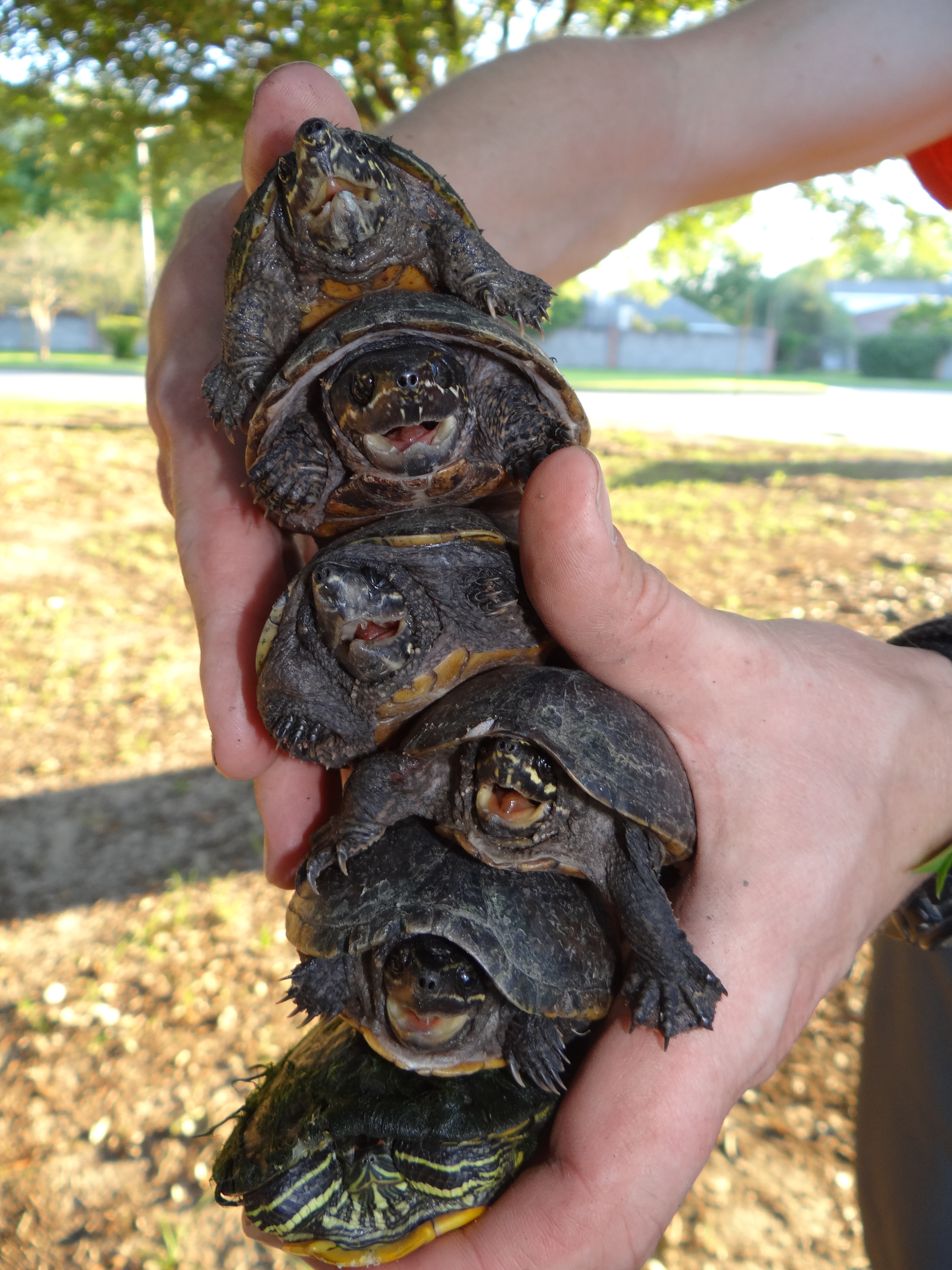
Turtles are one of the most imperiled vertebrate groups in the world. With habitat destruction unabated in many places, urban and suburban greenspaces may serve as refugia for turtles, at least those species able to tolerate heavily altered landscapes. In south-central Louisiana, we have conducted a turtle capture-mark-recapture effort in two ponds in an urban greenspace for 13 years to understand species composition, survival, and individual growth rates. We had 574 total captures of 251 individuals of five species from 2009–2021, with Trachemys scripta elegans (Red-eared Sliders) and Sternotherus odoratus (Eastern Musk Turtles) being most common. Apparent annual survival for T. scripta (0.79) was similar to estimates reported in other studies in altered habitats, whereas apparent annual survival for S. odoratus (0.89) was slightly or much higher than other published studies. Growth rates of T. scripta were comparable to other studies and showed both sexes have similar rates of growth until maturity, which is earlier and at a smaller size in males. The two ponds showed marked differences in captures by size, with significantly more juvenile T. scripta captured in the pond with more vegetation, depth, and a softer bottom. Most T. scripta (78.5%) that were recaptured came from the same pond they were originally captured. The basic demographic data gained in this study can serve as a starting point for broader questions on urbanization effects and as a comparison to more natural populations.
* USGS neither sponsors nor endorses non-USGS web sites; per requirement "3.4.1 Prohibition of Commercial Endorsement."
* PDF documents require Adobe Reader or Google Chrome Browser for viewing.
* PDF documents require Adobe Reader or Google Chrome Browser for viewing.