
Search ARMI Database
Search term(s)
Contribution Number
Search Results
1290 record(s) found.
Papers & Reports Identifying factors linked with persistence of reintroduced populations: lessons learned from 25 years of amphibian translocations
Authors: Blake R Hossack
Date: 2022 | Outlet: Global Ecology and Conservation
Most translocation efforts are unsuccessful, often for unknown reasons. We assessed factors linked with population persistence for 25 years of translocations of the federally threatened Chiricahua Leopard Frog. Local features were paramount, including habitat, predators, and restoration history. Timing and life stages stocked affected persistence, but rearing environment did not. Two or more translocations produced an approximate 4-yr increase in predicted population persistence.
Papers & Reports Energy-related wastewater contamination alters microbial communities of sediment, water, and amphibian skin
Authors: Brian J Tornabene; Kelly L Smalling; C E Givens; Emily B Oja; Blake R Hossack
Date: 2023-07-01 | Outlet: Science of the Total Environment
To inform responsible energy development, it is important to understand the ecological effects of contamination events. Wastewaters from oil and gas extraction often contain high concentrations of sodium chloride (NaCl) and heavy metals (e.g., strontium and vanadium), but studies of their influence on microbial communities are limited. We sampled water, sediment, and larval amphibian skin (four species) across a gradient of contamination (0.04–17500 mg/L Cl) in a large energy production area of North America. NaCl concentrations affected the similarity among microbiomes of water, sediment, and amphibian skin, but not the diversity or richness of water and skin microbiomes. Strontium concentrations were associated with lower diversity and richness of sediment microbial communities. Amphibian microbiomes were similar to those of water, but not sediment, and sediment microbiomes were similar to those of water. Species identity was the strongest predictor of amphibian microbiomes; frog microbiomes were similar but differed from that of the salamander, whose microbiome had the lowest richness and diversity. Understanding whether effects of wastewaters on microbial communities also influences their ecosystem function will be an important next step. Our study provides novel insight into associations among different wetland microbial communities and effects of wastewaters from energy production.
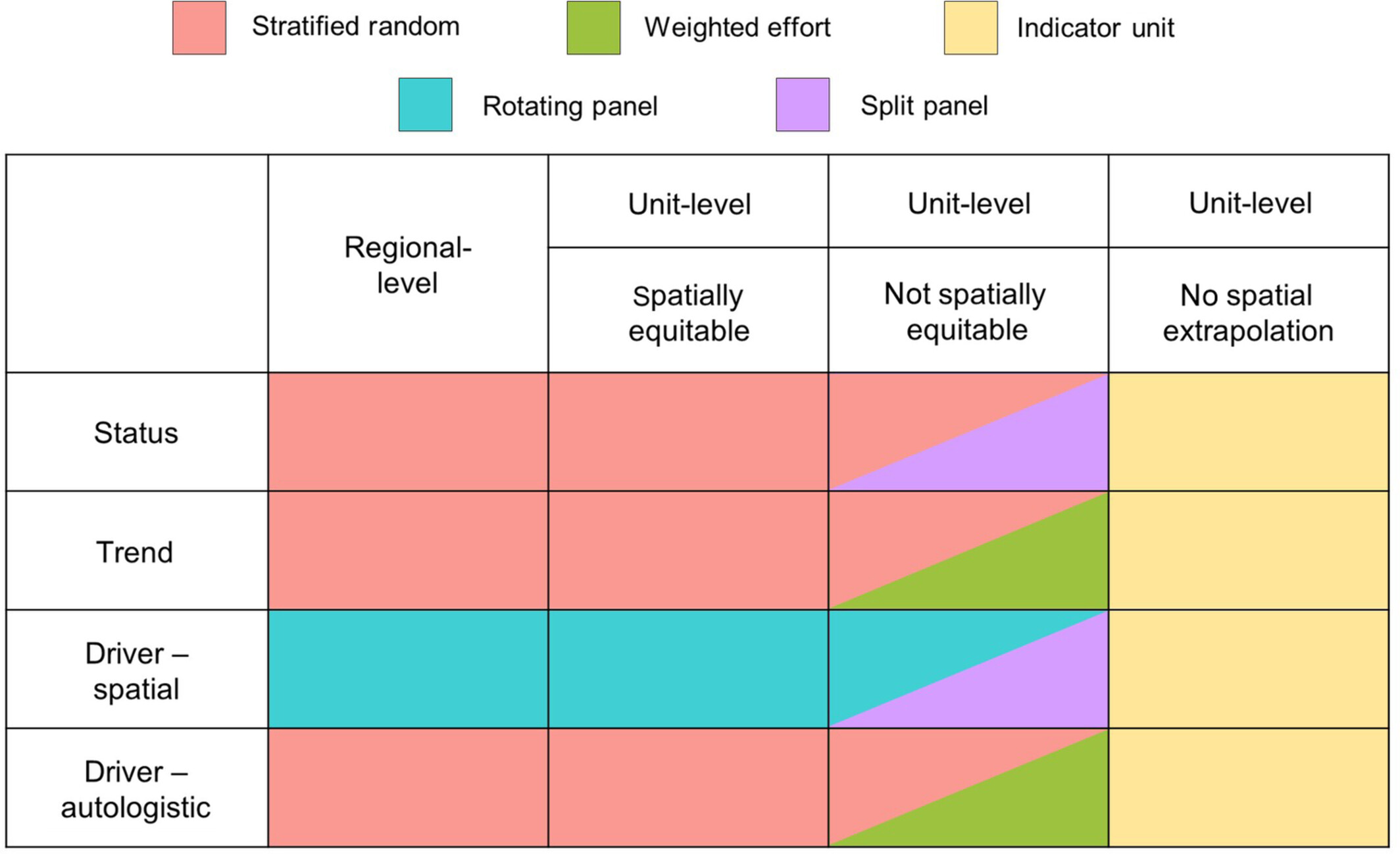
Papers & Reports A comparison of monitoring designs to assess wildlife community parameters across spatial scales
Authors: Alexander D Wright; Evan HC Grant; E F Zipkin
Outlet: Ecological Applications
Dedicated long-term monitoring at appropriate spatial and temporal scales is necessary to develop effective conservation plans. Using an amphibian monitoring program for a network of U.S. National Parks, we compare monitoring program designs. Designs that reduce biases in parameter estimates are needed to guide conservation policy and management decisions in the face of broad scaled environmental challenges; the optimal design is sensitive to the specific objectives of a monitoring program.
Data Release Vernal pool inundation models
Authors: Jennifer M Cartwright; TL Morelli; Evan HC Grant
Date: 2020-06
This website provides an application for exploring modeling results from a U.S. Geological Survey (USGS) project titled Mapping Climate Change Resistant Vernal Pools in the Northeastern U.S. The purpose of this project was to improve understanding of the factors that control inundation patterns in vernal pools of the northeastern United States, so as to identify pools that might function as hydrologic refugia under climate change.
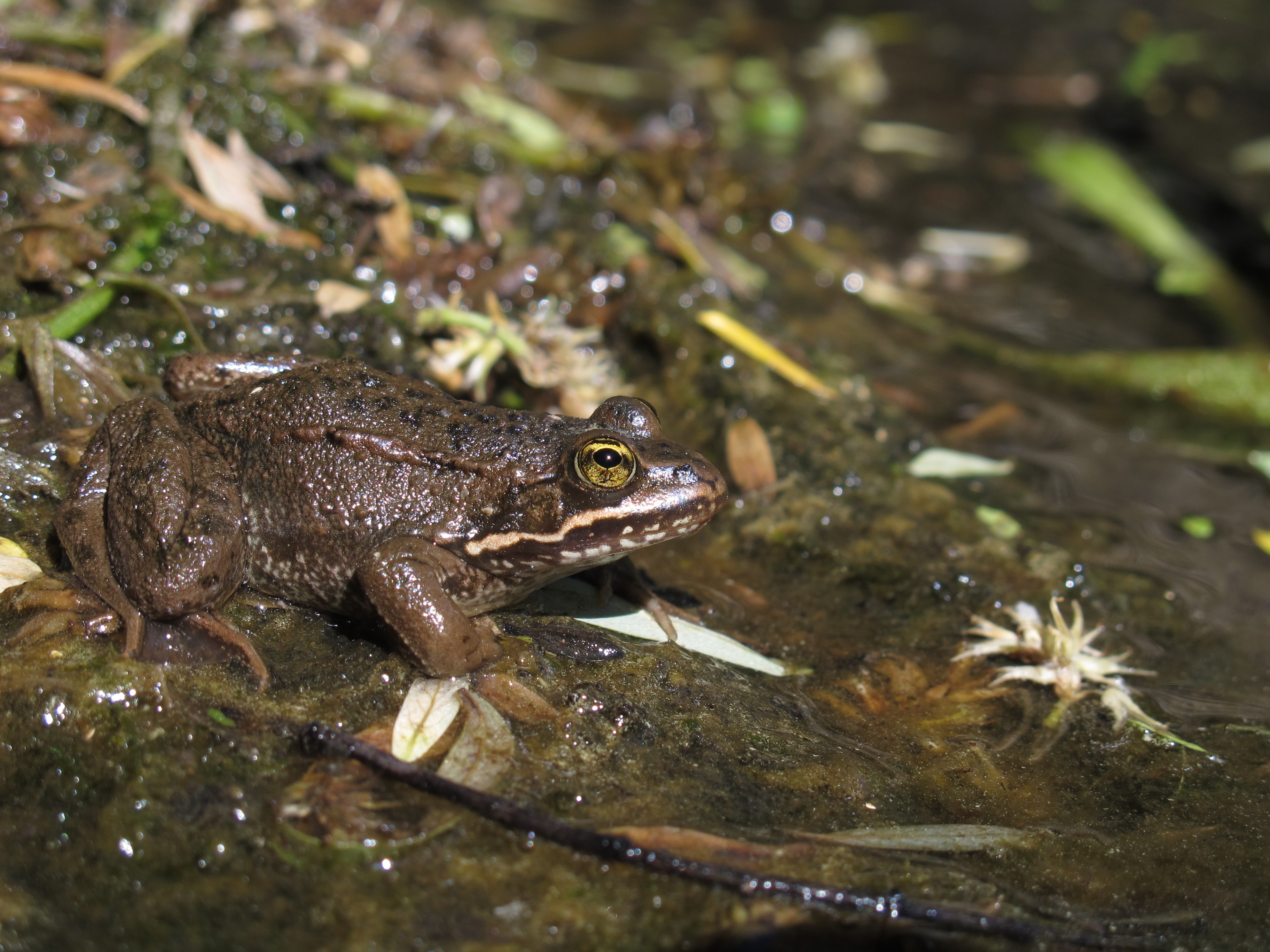
Data Release Capture-mark-recapture data for Oregon spotted frogs [Rana pretiosa] along the Deschutes River, Oregon, 2016-2019
Authors: Jennifer C Rowe; Adam Duarte; Christopher A Pearl; Brome McCreary; P K Haggerty; Michael J Adams
Date: 2021-06-04 | Outlet: Ecosphere, v. 12, no. 6, p. e03634
Altered flow regimes can contribute to dissociation between life history strategies and environmental conditions, leading to reduced persistence reported for many wildlife populations inhabiting regulated rivers. The Oregon spotted frog Rana pretiosa is a threatened species occurring in floodplains, ponds, and wetlands in the Pacific Northwest with a core range in Oregon, USA. All life stages of R. pretiosa are reliant on aquatic habitats, and inundation patterns across the phenological timeline can have implications for population success. We conducted capture–mark–recapture (CMR) sampling of adult and subadult R. pretiosa at three sites along the Deschutes River downstream from two dams that regulate flows. We related the seasonal extent of inundated habitat at each site to monthly survival probabilities using a robust design CMR model. We also developed matrix projection models to simulate population dynamics into the future under current river flows. Monthly survival was strongly associated with the extent and variability of inundated habitat, suggesting some within-season fluctuations at higher water levels could be beneficial. Seasonal survival was lowest in the winter for all three sites, owing to limited water availability and the greater number of months within this season relative to other seasons. Population growth for the two river-connected sites was most strongly linked to adult survival, whereas population growth at the river-disconnected site was most strongly tied to survival in juvenile stages. This research identifies population effects of seasonally limited water and highlights conservation potential of enhancing survival of particularly influential life stages.
Papers & Reports Multi-species amphibian monitoring across a protected landscape: critical reflections on 15 years of wetland monitoring in Grand Teton and Yellowstone national parks
Authors: Andrew M Ray; Blake R Hossack; W R Gould; S F Spear; Debra A Patla; P. Stephen Corn; R W Klaver; Paul E Bartelt; D Thoma; K Legg; R Daley; Charles R Peterson
Outlet: Ecological Indicators
Papers & Reports ANAXYRUS BOREAS (Boreal Toad Eggs). PREDATION
Authors: Benjamin Lafrance; Nina Moore; David S Pilliod; Erin Muths
Date: 2022 | Outlet: Herpetological Review
We observed multiple toads in amplexus and depositing egg strings among the vegetation. The following night (2230 h on 28 May 2021) a convergence of over a dozen Western Tiger Salamander (Ambystoma mavortium) individuals was observed consuming A. boreas eggs that had been deposited 24-48 hours earlier
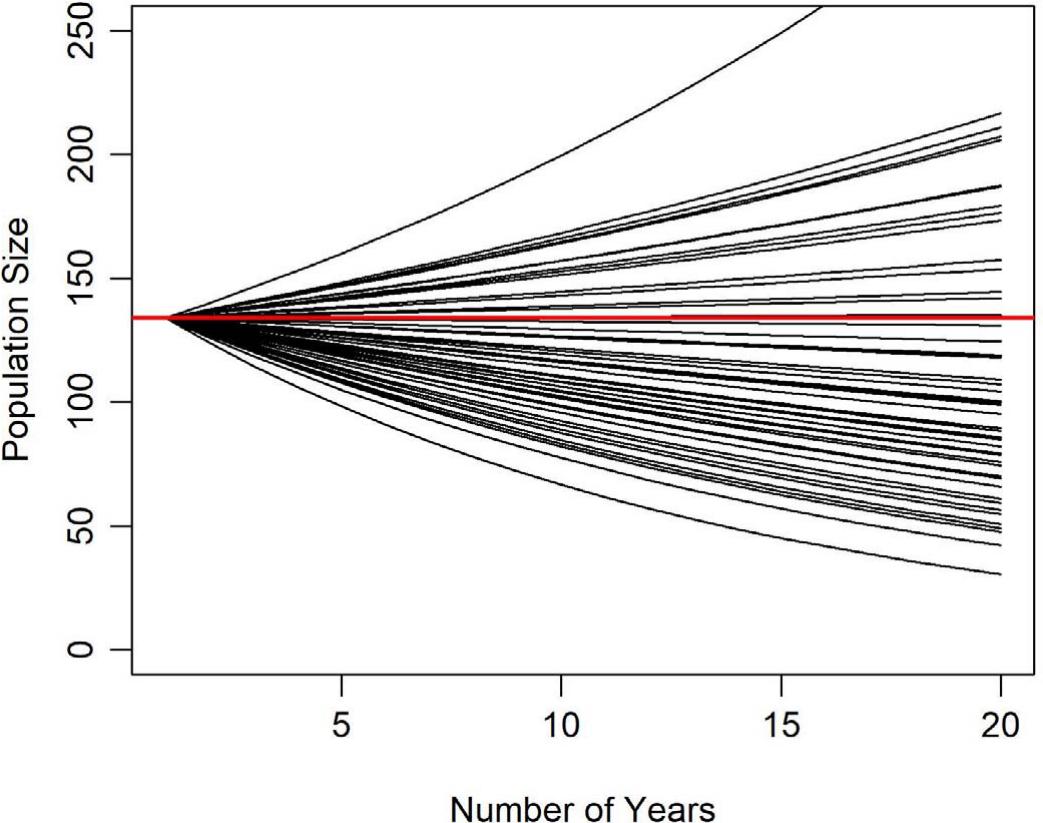
Papers & Reports Range-Wide Population Projections for The Northern Red-Bellied Cooter (Pseudemys rubriventris)
Authors: Jill Fleming; Jennifer F Moore; Hardin J Waddle; Julien A Martin; Evan HC Grant
Date: 2022-09-26 | Outlet: Journal of Herpetology 56:362-369
Northern Red-Bellied Cooters (Pseudemys rubriventris) have a disjunct distribution with a relictual population in southeastern Massachusetts and a larger range across the mid-Atlantic United States. The relictual population is currently listed with protections under the U.S. Endangered Species Act but the status of the population in the remainder of the species' range has not been assessed, and there is concern that it may be at risk of extinction without protection. The U.S. Fish and Wildlife Service requires scientific information of the species' status to inform conservation decisions. There is little empirical information available from P. rubriventris[I/] populations and, furthermore, the majority of what exists comes from the disjunct northern subpopulation. To fill data gaps in the species' life history and reduce geographic bias, we supplement available data from P. rubriventris[I/] with demographic rate estimates from other Pseudemys species to parameterize an age-structured population projection model. Our estimate of mean population growth rate was https://0.987 (0.92–1.04), indicating that P. rubriventris[I/] populations may be in decline. However, there was considerable uncertainty in our results, with 35% of projections resulting in stable or increasing populations. Additional uncertainty about parameter values, geographic variation, and current threats limit the assessment. We discuss the merits and limitations of our population projection modeling (PPM) approach where other analytical methods are precluded by lack of available data.
Papers & Reports Evaluating the effect of expert elicitation techniques on population status assessment in the face of large uncertainty
Authors: Jennifer F Moore; Julien A Martin; Hardin J Waddle; Evan HC Grant; Jill Fleming; Eve Bohnett; Thomas SB Akre; Donald J Brown; M T Jones; Jessica R Meck; Kevin Oxenrider; Anthony Tur; Lisabeth L Willey; Fred Johnson
Date: 2022-03-15 | Outlet: Journal of Environmental Management
We estimated population growth rate of wood turtles using a stage-structured projection matrix. The model was parameterized based on expert elicitation. The aggregation method used affected model estimates. There was evidence of a (possibly rapid) population decline.
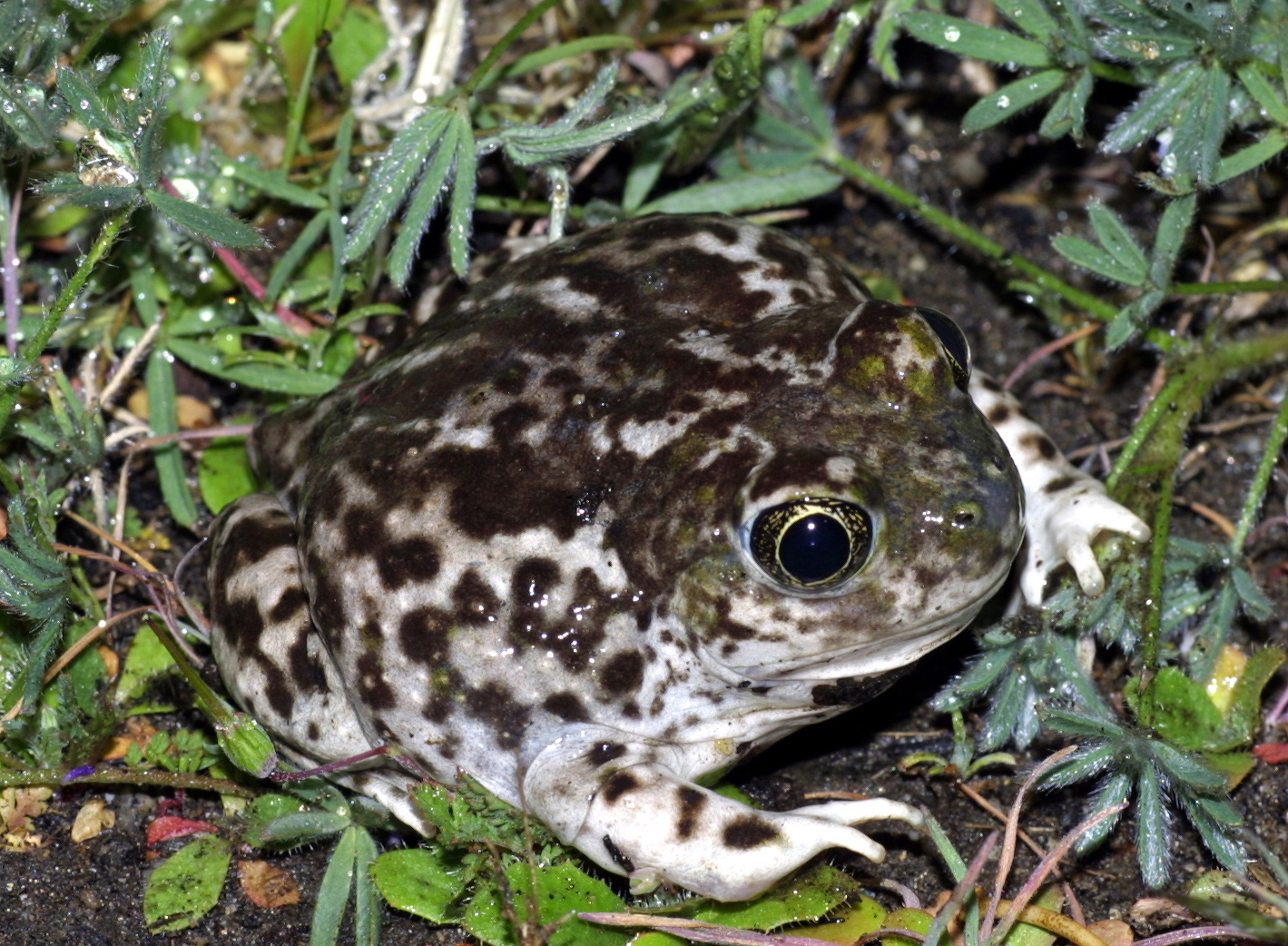
Papers & Reports Projecting the remaining habitat for the western spadefoot (Spea hammondii) in heavily urbanized southern California
Authors: Jonathan P Rose; Brian J Halstead; Robert H Packard; Robert N Fisher
Date: 2022-01 | Outlet: Global Ecology and Conservation 33:e01944
Extensive urbanization in coastal southern California has reduced natural habitat in this biodiversity hotspot. To better conserve ecological communities, state and federal agencies, along with local jurisdictions and private stakeholders, developed regional conservation plans for southern California. Although many protected areas exist within this region, the patchwork nature of these protected areas might not provide good coverage for species that require multiple habitat components, such as amphibians with complex life histories. Because of declines in the past century, the status of the western spadefoot (Spea hammondii) in southern California is of concern to state and federal wildlife agencies. Species distribution models (SDMs) can aid in determining
the conservation status of imperiled species by projecting where suitable habitat remains and how much is protected from further development. We built SDMs that integrated site occupancy data from systematic pitfall trapping surveys and presence-only data from biodiversity databases and citizen science platforms to project the current distribution of western spadefoots in southern California. Western spadefoot occurrence was positively related to the cover of grassland or shrub/scrub and the % sand in the soil within a 1000 m buffer, and was negatively related to slope, elevation, and distance to ephemeral streams or vernal pools. Most of the remaining unprotected habitat for western spadefoots is in the southern half of its historical range in western San Diego and Riverside counties. A few large tracts of spadefoot habitat exist on U.S. Department of Defense lands and smaller tracts remain on ecological reserves owned by state and local government agencies. Only small patches of habitat remain in the northern half of this clade’s historical range in Ventura, Orange, Los Angeles, and San Bernardino counties. Existing regional conservation plans provide ostensible spatial coverage of the majority of extant habitat for western spadefoots in southern California, but most of the habitat within the jurisdiction of these plans lacks formal protection, exposing this species to further declines as urbanization continues in the 21st century.
the conservation status of imperiled species by projecting where suitable habitat remains and how much is protected from further development. We built SDMs that integrated site occupancy data from systematic pitfall trapping surveys and presence-only data from biodiversity databases and citizen science platforms to project the current distribution of western spadefoots in southern California. Western spadefoot occurrence was positively related to the cover of grassland or shrub/scrub and the % sand in the soil within a 1000 m buffer, and was negatively related to slope, elevation, and distance to ephemeral streams or vernal pools. Most of the remaining unprotected habitat for western spadefoots is in the southern half of its historical range in western San Diego and Riverside counties. A few large tracts of spadefoot habitat exist on U.S. Department of Defense lands and smaller tracts remain on ecological reserves owned by state and local government agencies. Only small patches of habitat remain in the northern half of this clade’s historical range in Ventura, Orange, Los Angeles, and San Bernardino counties. Existing regional conservation plans provide ostensible spatial coverage of the majority of extant habitat for western spadefoots in southern California, but most of the habitat within the jurisdiction of these plans lacks formal protection, exposing this species to further declines as urbanization continues in the 21st century.
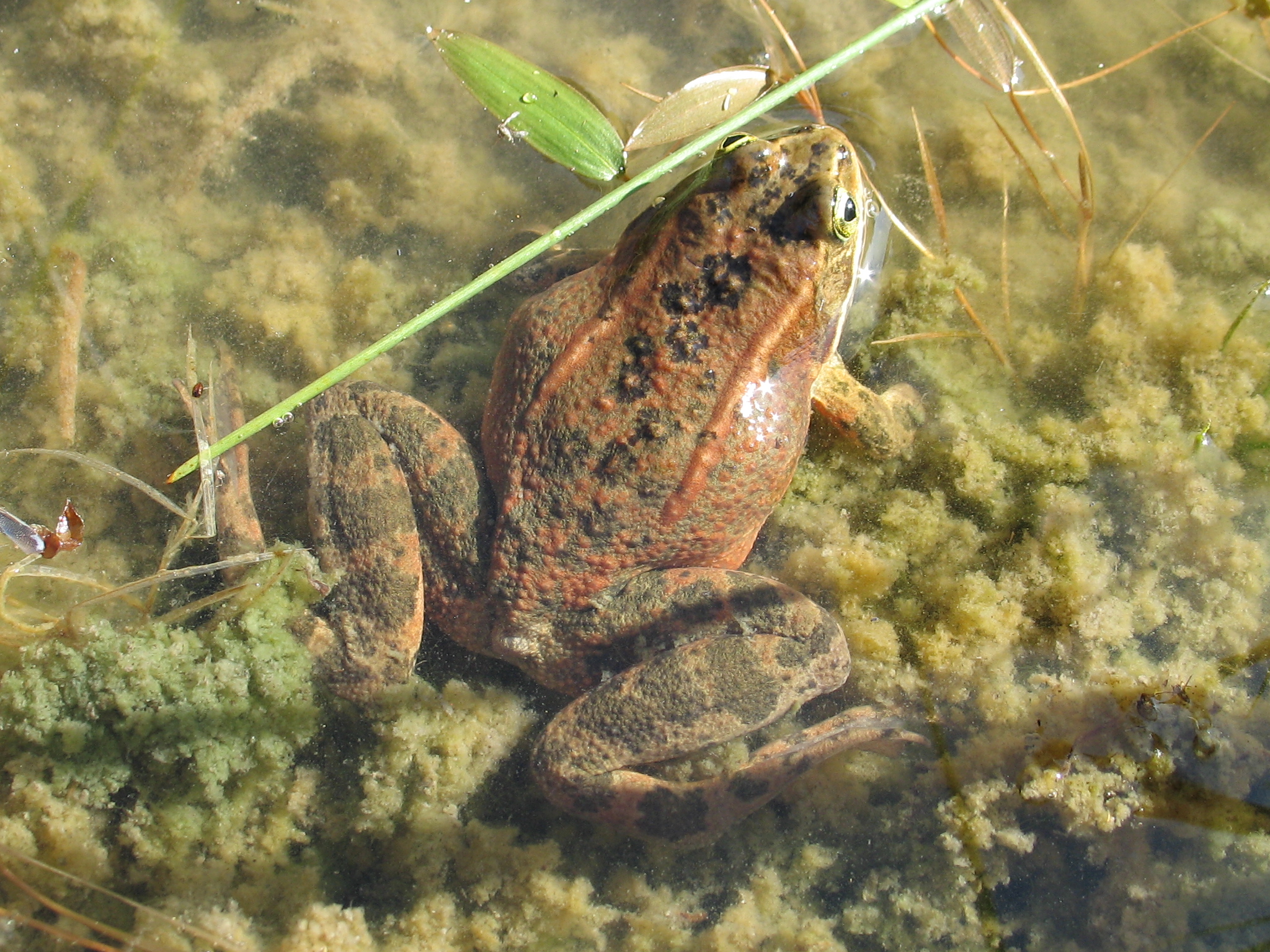
Papers & Reports Late-season movement and habitat use by Oregon spotted frog (Rana pretiosa) in a large reservoir in Oregon, USA
Authors: Christopher A Pearl; Jennifer C Rowe; Brome McCreary; Michael J Adams
Date: 2022-03-04 | Outlet: Journal of Herpetology
Dam-created reservoirs are common landscape features that can provide habitat for amphibians, but their water level fluctuations and nonnative predators can differ markedly from more natural habitats. We compared fall movement and habitat use by the Oregon Spotted Frog (Rana pretiosa) in the reservoir pool with nearby river and pond habitats at Crane Prairie Reservoir in central Oregon, USA. Movement rate of frogs in the river and ponds declined as water temperature cooled. Reservoir frogs moved further than those in the river or ponds, and their movement rate increased as water temperature cooled. Most frog locations across all site types were in aquatic herbaceous vegetation. We did not find shifts in habitat between early and late fall. Increased movement and the lack of habitat shift in our reservoir frogs deeper into fall contrast with R. pretiosa in non-reservoir sites in this study and others. Consistent use of vegetation by reservoir frogs throughout the fall could indicate cover use in presence of fish predators. Our study provides additional detail on the range of habitats used by R. pretiosa in fall and suggests areas for further work to improve survival in constructed sites with abundant fish predators.
Data Release Report to NECSC: Adaptive capacity in a forest indicator species
Authors: Evan HC Grant; David AW Miller; David J Muñoz; S C Sterrett; Adrianne B Brand; T D Dubreiul; M O'Donnell; R Schilder
Outlet: ScienceBase
Data contain metabolic rates of red-backed salamanders (Plethodon cinereus) exposed to different thermal regimes, and the movements of salamanders marked with PIT tags and exposed to electromagnetic fields.
Data Release Hydrological measurements of 300 US temporary wetlands from 2004-2014
Authors: Courtney L Davis; David AW Miller; Evan HC Grant; Brian J Halstead; Patrick M Kleeman; Susan C Walls; William J Barichivich
Date: 2018 | Outlet: ScienceBase
This dataset includes hydrological measurements of 300 US temporary wetlands from 2004-2014.
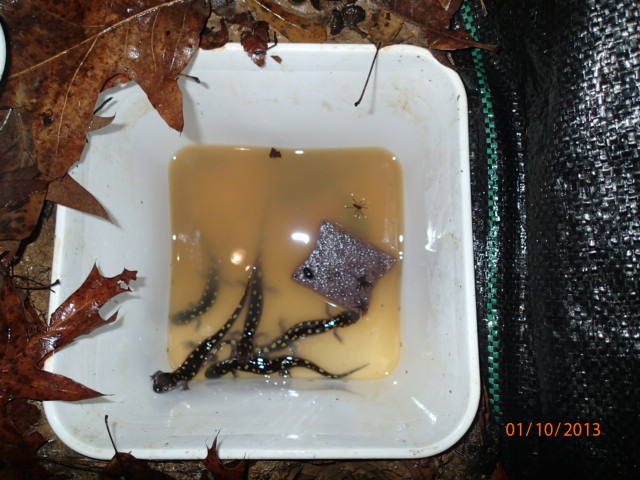
Data Release Data from a road ecology study of Spotted Salamanders along the Natchez Trace Parkway, Mississippi, in 2012-2013
Authors: Brad M Glorioso; Hardin J Waddle
Date: 2025-03-25 | Outlet: ScienceBase
This dataset contains study results examining the effect of road mortality on migrating salamanders along the Natchez Trace Parkway in Mississippi from 2012-2013. A combination of methods were used to assess the movement of salamanders to and from the breeding pond. Environmental variables such as air and water temperature, water salinity, and relative humidity were also collected during the study. A traffic counting device was also installed at the edge of the study area to monitor the number of vehicles passing through the area during migration events. Surveys to quantify egg masses in the breeding pond were also completed during the study.
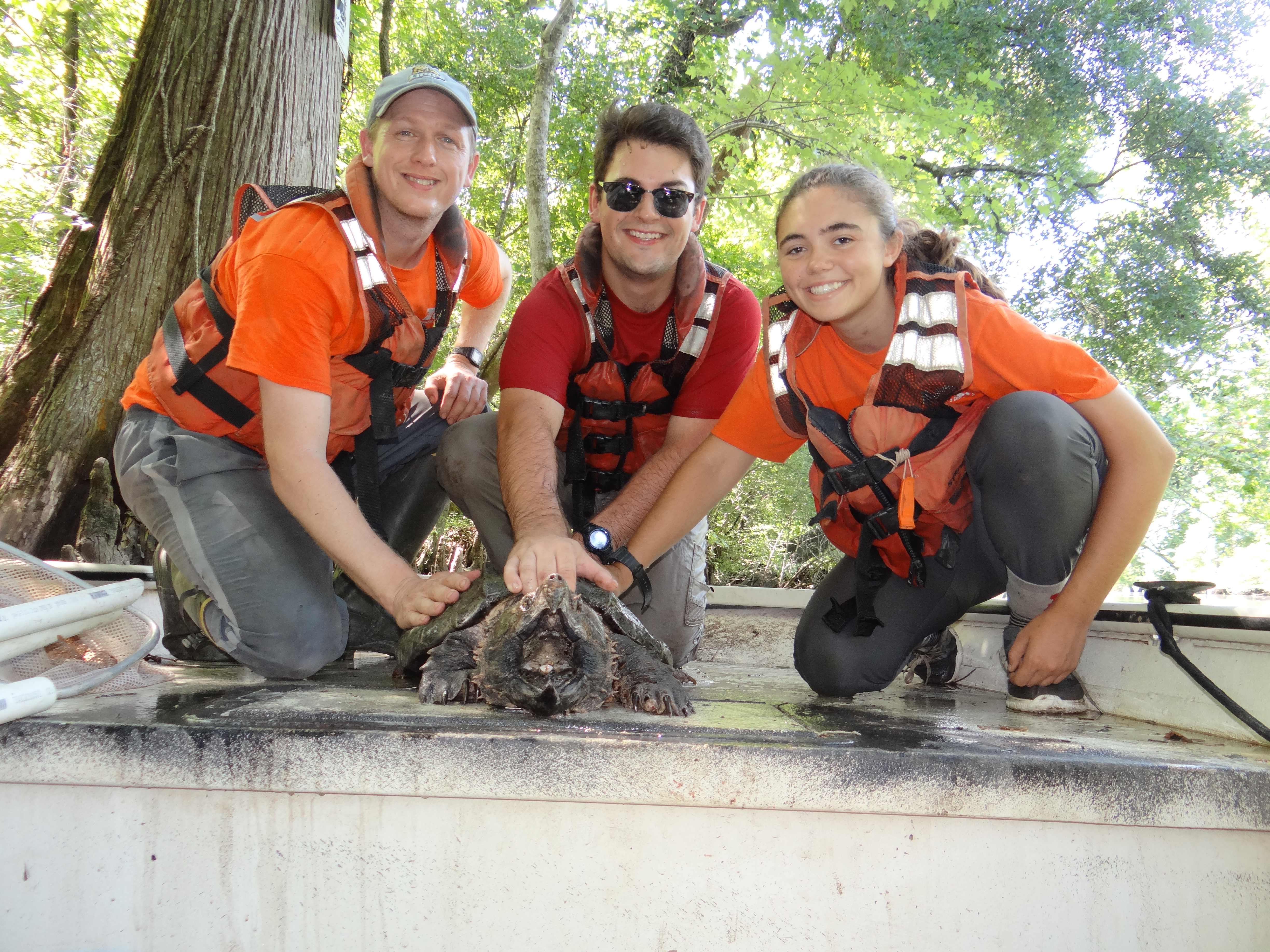
Data Release Data from a turtle trapping effort targeting alligator snapping turtles (Macrochelys temminckii) in the Atchafalaya Basin beginning in 2019
Authors: Brad M Glorioso; Hardin J Waddle
Date: 2021-10-25 | Outlet: ScienceBase
This dataset contains data from an ongoing trapping effort beginning in 2019 targeting alligator snapping turtles (Macrochelys temminckii) in the Atchafalaya Basin of south-central Louisiana.
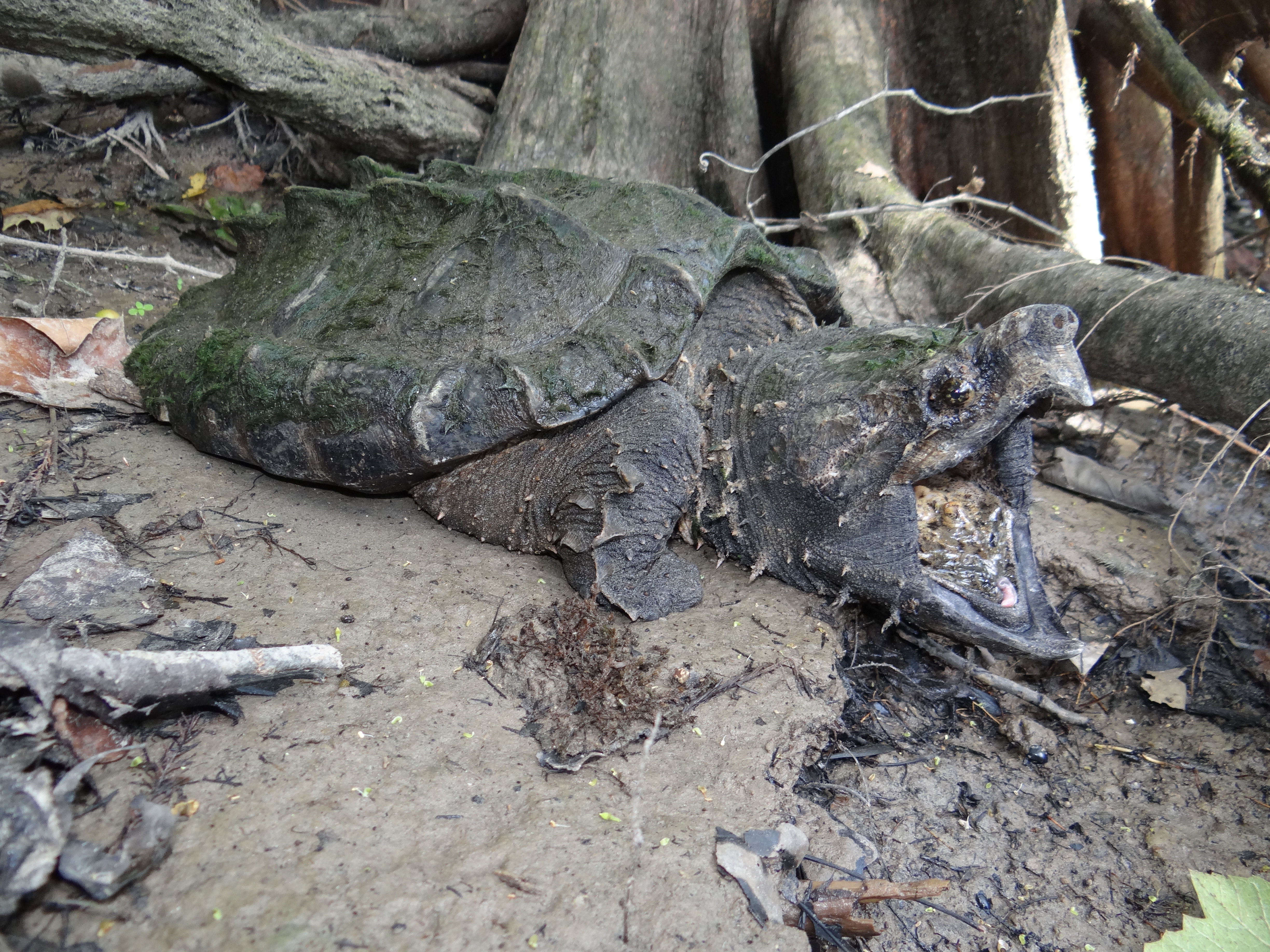
Data Release Data from a 2019 occupancy survey of alligator snapping turtles, Macrochelys temminckii, in south-central Louisiana
Authors: Brad M Glorioso; Hardin J Waddle
Date: 2021-09-14 | Outlet: ScienceBase
This dataset contains data on trapping methodology, turtle captures, and environmental variables from a trapping effort targeting alligator snapping turtles (Macrochelys temminckii) in south-central Louisiana in 2019.
Data Release Chiricahua leopard frog - Arizona: influence of landscape features on landscape resistance and colonization dynamics (presence data, wind speed, air temp; hydroperiod spatial coordinates)
Authors: Erin Muths; P E Howell; Blake R Hossack; J Chandler
Date: 2018 | Outlet: Figshare
Data used in the manuscript presenting a novel spatially explicit modeling framework for narrowing the divide between these disciplines to advance understanding of the effects of landscape structure on metapopulation dynamics.
Data Release complex ecological relationships-boreal toads-disease
Authors: Erin Muths; Brittany A Mosher; Kathryn P Huyvaert; Larissa L Bailey
Outlet: Dryad
Data used in manuscript that examines several potential factors influencing disease dynamics in the boreal toad–disease system: geographic isolation of populations, amphibian community richness, elevational differences, and habitat permanence.
Data Release Chorus frog density and population growth, Cameron Pass, Colorado, 1986-2020
Authors: Erin Muths
Outlet: USGS
Data used in Bayesian formulation of an open population capture-recapture model with >30 years of data to examine intrinsic and extrinsic factors regulating two populations of adult boreal chorus frogs (Pseudacris maculata).
Data Release Effects of Snowpack, Temperature, and Disease on Demography in a Wild Population of Amphibians
Authors: Erin Muths
Outlet: USGS
Data used in an assessment of the effects of snowpack, temperature and disease on demography in boreal toads in Wyoming.