
Search ARMI Database
Search term(s)
Contribution Number
Search Results
1290 record(s) found.
Data Release Time to detection data for Point Reyes pond-breeding amphibians, 2017
Authors: Brian J Halstead; Patrick M Kleeman; Jonathan P Rose
Date: 2018-12-14 | Outlet: USGS - Science Base
Occupancy models provide a reliable method of estimating species distributions while accounting for imperfect detectability. The cost of accounting for false absences is that detection and nondetection surveys typically require repeated visits to a site or multiple-observer techniques. More efficient methods of collecting data to estimate detection probabilities would allow additional sites to be surveyed for the same amount of effort, which would support more precise estimation of covariate effects to improve inference about underlying ecological processes. Time-to-detection surveys allow the estimation of detection probability based on a single site visit by one observer, and therefore might be an efficient technique for herpetological occupancy studies. We evaluated the use of time-to-detection surveys to estimate the occupancy of pond-breeding amphibians at Point Reyes National Seashore, California, USA, including variables that affected detection rates and the probability of occurrence. We found that detection times were short enough, and occupancy was high enough, to reliably estimate the probability of occurrence of three pond-breeding amphibians at Point Reyes National Seashore, and that survey and site conditions had species-specific effects on detection rates. In particular, pond characteristics affected detection times of all commonly detected species. Probability of occurrence of Sierran Treefrogs (Hyliola sierra) and Rough-skinned Newts (Taricha granulosa) was negatively related to the detection of fish and pond area. Time-to-detection surveys can provide an efficient method for estimating detection probabilities and accounting for false absences in occupancy studies of reptiles and amphibians.
Data Release Shasta Salamanders Surveys for the Shasta-Trinity National Forest (ver. 2.0, July 2020)
Authors: Brian J Halstead; Patrick M Kleeman
Date: 2019-11-26 | Outlet: USGS - Science Base
The Shasta salamander (Hydromantes shastae) has been petitioned for listing under the Endangered Species Act. The greatest threat to the species is likely habitat loss that will be caused by the increase in elevation of Shasta Lake that will occur with proposed increases in the height of Shasta Dam to increase water storage capacity and maintain cold water for Chinook salmon (Oncorhynchus tshawytscha). Another potential threat is the fungus Batrachochytrium salamandrivorans, which has not yet been detected in North America but is lethal to related salamanders (Hydromantes strinatii) in Europe (Martel et al. 2014). In addition to these threats, recent genetic evidence suggests that the species as originally petitioned consists of three distinct species: H. shastae, H. samweli, and H. wintu (Bingham et al. 2018). Herein, we treat the species complex as a single entity because of difficulty distinguishing among the different species in the field. Recent work has increased knowledge about the habitat types within which Shasta salamanders can be found to include volcanic rock outcrops and areas of mature forest with scattered rocks, but no outcrops (Nauman and Olson 2004). To our knowledge, however, surveys to date have not accounted for the possibility of false absences, though Nauman and Olson (2004) used reference sites to ensure that Shasta salamanders were available on the surface to be detected. Systematic surveys that quantify and account for detection probabilities are needed to distinguish between true and false absences and their results would contribute information about habitat suitability and the distribution of the species. This information is vital to estimate what portion of the species complex would be lost to inundation when the elevation of Shasta Lake is raised and to identify potential refugia or recipient sites for translocations.
Data Release Site and Survey Data for Amphibian Surveys in Yosemite National Park, 2018
Authors: Brian J Halstead; Patrick M Kleeman
Date: 2020-11-19 | Outlet: USGS - Science Base
These data represent occupancy surveys conducted in long-term monitoring sites in Yosemite National Park in 2018 for three anurans, the Yosemite Toad (Anaxyrus canorus), the Sierran Treefrog (Pseudacris sierra), and the Sierra Nevada Yellow-legged Frog (Rana sierrae). The data include independent double-observer surveys and time-to-detection data to calculate detection probabilities and account for false negatives, or the failure to detect a species at a site where it occurs.
Data Release Site and Survey Data for Dixie Valley Toads in Churchill County, Nevada, 2019
Authors: Brian J Halstead; Patrick M Kleeman
Date: 2020-11-19 | Outlet: USGS - Science Base
These data include site- and survey-specific information for occupancy surveys of Dixie Valley Toads (Anaxyrus williamsi) collected in the Dixie Valley, Churchill County, Nevada, in May 2019. The data include both multiple surveys of the same sites and time-to-detection information to quantify detection probabilities and account for imperfect detection in assessments of Dixie Valley Toad occupancy.
Papers & Reports Water Temperature and Availability Shape the Spatial Ecology of a Hot Springs Endemic Toad (Anaxyrus williamsi)
Authors: Brian J Halstead; Patrick M Kleeman; Jonathan P Rose; Kristen J Fouts
Date: 2021-02-26 | Outlet: Herpetologica
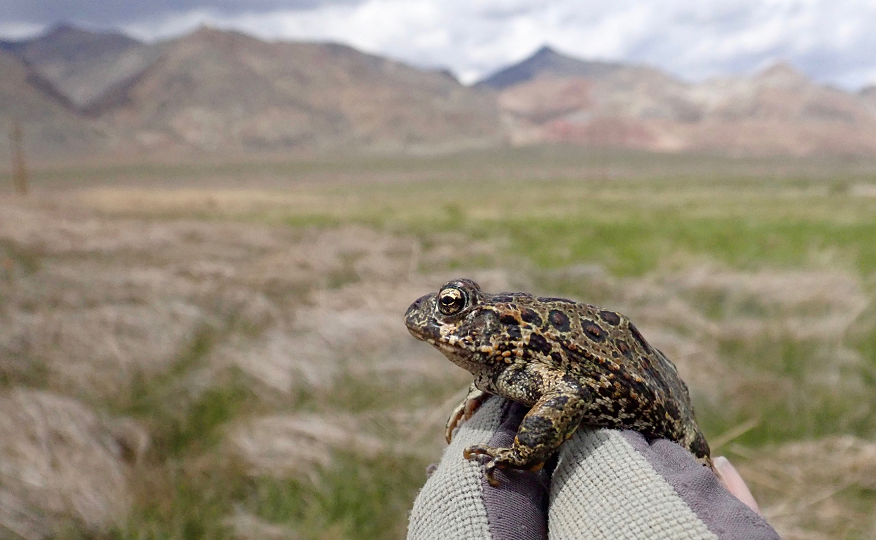
Desert amphibians are limited to exploiting ephemeral resources and aestivating or to inhabiting scarce refuges of permanent water, such as springs. Understanding how amphibians use these resources is essential for their conservation. Dixie Valley Toads (Anaxyrus williamsi) are precinctive to a small system of cold and hot springs in the Dixie Valley, Nevada, USA. The toads have been petitioned for listing under the US Endangered Species Act, and information about how they use terrestrial and aquatic resources will help managers to conserve the toads and identify threats like geothermal energy development that might affect these toads. We used radiotelemetry to study the seasonal home ranges, movements, and habitat associations of Dixie Valley Toads in autumn 2018 and spring 2019. We found that toads were very closely associated with water in both seasons, with most observations occurring in water, especially for males in spring and all toads in the autumn. Even when found in terrestrial habitat, toads were a median distance of 4.2 m (95% credible interval = 3.3–5.3) from water; 95% of the time in spring and autumn, toads were within 14 m of water. Dixie Valley Toad habitat selection indicated a similar pattern, with selection in both spring and autumn for locations closer to water and for warmer water and substrates than at nearby available locations. In autumn, toads also avoided bare ground and terrestrial graminoids. Dixie Valley Toads selected brumation sites in, over (within dense vegetation), or near water, often near springs where water depths and temperatures are likely stable through the winter. The reliance of Dixie Valley Toads on water in spring, autumn, and during brumation suggests that alteration to historical flows and water temperatures are likely to affect the toads. Changes to the hydrothermal environment when toads are brumating could be particularly detrimental, potentially killing inactive toads.
Papers & Reports Estimating the survival of unobservable life stages for a declining frog with a complex life-history.
Authors: Jonathan P Rose; Sarah J Kupferberg; Clara A Wheeler; Patrick M Kleeman; Brian J Halstead
Date: 2021-02-15 | Outlet: Ecosphere 12(2):e03381
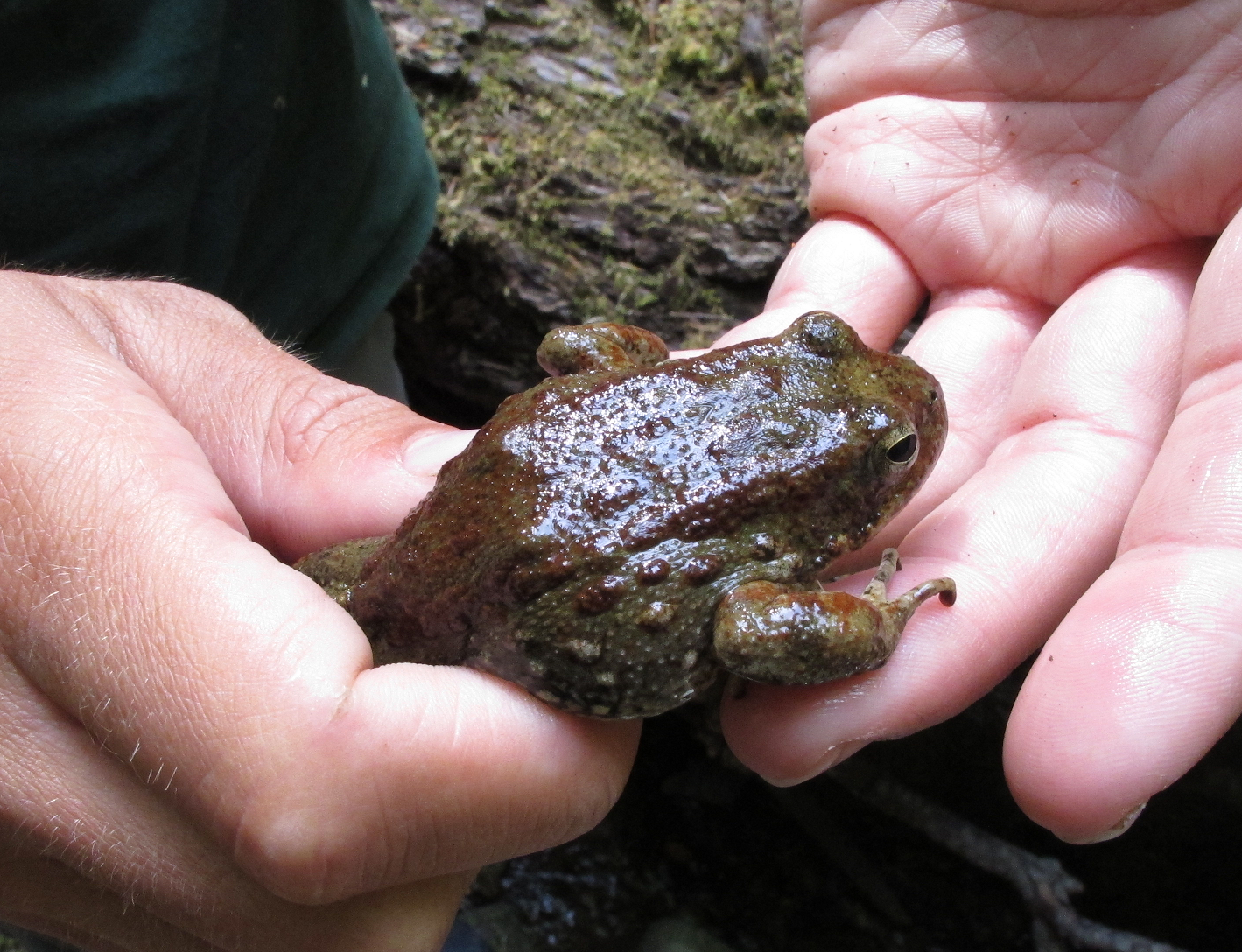
Demographic models enhance understanding of drivers of population growth and inform conservation efforts to prevent population declines and extinction. For species with complex life histories, however, parameterizing demographic models is challenging because some life stages can be dif?cult to study directly. Integrated population models (IPMs) empower researchers to estimate vital rates for organisms that have cryptic or widely dispersing early life stages by integrating multiple demographic data sources. For a stream-inhabiting frog(Rana boylii) that is declining through much of its range in Oregon and California, USA, we collected egg-mass counts and capture–mark–recapture data on adults from two populations in California to ?t IPMs that estimate adult abundance and the survival rate of both marked and unobserved life stages. Estimates of adult abundance based on long-term monitoring of egg-mass counts showed that study populations ?uctuated greatly inter-annually but were stable at longer timescales (i.e., decades). Adult female survival during 5–6 yr of capture–mark–recapture study periods was nearly equal in each population. Survival rate of R. boylii eggs to the subadult stage is low on average (0.002) but highly variable among years depending on post-oviposition stream ?ow. Population viability analysis showed that survival of adult and subadult life stages has the greatest proportional effect on population growth; the survival of egg and tadpole life stages, however, is more malleable by management interventions. For example, simulations showed head-starting of tadpoles, salvaging stranded egg masses, and limiting aseasonal pulsed ?ows could dramatically reduce the threat of extirpation. This study demonstrates the value of integrating multiple demographic data sources to construct models of population dynamics in species with complex life histories.

Papers & Reports Conservation genomics of the threatened western spadefoot, Spea hammondii, in urbanized southern California
Authors: K M Neal; Robert N Fisher; M J Mitrovich; H B Shaffer
Date: 2020-11-27 | Outlet: Journal of Heredity 2020:613-627
Populations of the western spadefoot (Spea hammondii) in southern California occur in one of the most urbanized and fragmented landscapes on the planet and have lost up to 80% of their native habitat. Orange County is one of the last strongholds for this pond-breeding amphibian in the region, and ongoing restoration efforts targeting S. hammondii have involved habitat protection and the construction of artificial breeding ponds. These efforts have successfully increased breeding activity, but genetic characterization of the populations, including estimates of effective population size and admixture between the gene pools of constructed artificial and natural ponds, has never been undertaken. Using thousands of genome-wide single-nucleotide polymorphisms, we characterized the population structure, genetic diversity, and genetic connectivity of spadefoots in Orange County to guide ongoing and future management efforts. We identified at least 2, and possibly 3 major genetic clusters, with additional substructure within clusters indicating that individual ponds are often genetically distinct. Estimates of landscape resistance suggest that ponds on either side of the Los Angeles Basin were likely interconnected historically, but intense urban development has rendered them essentially isolated, and the resulting risk of interruption to natural metapopulation dynamics appears to be high. Resistance surfaces show that the existing artificial ponds were well-placed and connected to natural populations by low-resistance corridors. Toad samples from all ponds (natural and artificial) returned extremely low estimates of effective population size, possibly due to a bottleneck caused by a recent multi-year drought. Management efforts should focus on maintaining gene flow among natural and artificial ponds by both assisted migration and construction of new ponds to bolster the existing pond network in the region.
Papers & Reports Accommodating the role of site memory in dynamic species distribution models using detection/non-detection data
Authors: Graziella V DiRenzo; A David; Blake R Hossack; Brent H Sigafus; P E Howell; Evan HC Grant; Erin Muths
Outlet: Ecology xx:xxx-xxx
First-order dynamic occupancy models (FODOMs) are a class of state-space model in which the true state (occurrence) is observed imperfectly. An important assumption of FODOMs is that site dynamics only depend on the current state and that variations in dynamic processes are adequately captured with covariates or random effects. However, it is often difficult to measure the covariates that generate ecological data, which are often spatio-temporally correlated. Consequently, the non-independent error structure of correlated data causes underestimation of parameter uncertainty and poor ecological inference. Here, we extend the FODOM framework with a second-order Markov process to accommodate site memory when covariates are not available. Our modeling framework can be used to make reliable inference about site occupancy, colonization, extinction, turnover, and detection probabilities. We present a series of simulations to illustrate the data requirements and model performance. We then applied our modeling framework to 13 years of data from an amphibian community in southern Arizona, USA and find that site memory helps describe dynamic processes for most species. Our approach represents a valuable advance in obtaining inference on population dynamics, especially as they relate to metapopulations.
Papers & Reports The influence of species life history and distribution characteristics on species responses to habitat fragmentation in an urban landscape
Authors: Staci M Amburgey; David AW Miller; Carlton J Rochester; Katy S Delaney; Seth PD Riley; Cheryl S Brehme; Stacie A Hathaway; Robert N Fisher
Date: 2021-01-20 | Outlet: Journal of Animal Ecology
1. Fragmentation within urbanized environments often leads to a loss of native species diversity; however, variation exists in responses among-species and among-populations within species.
2. We aimed to identify patterns in species biogeography in an urbanized landscape to understand anthropogenic effects on vertebrate communities and identify species that are more sensitive or resilient to landscape change.
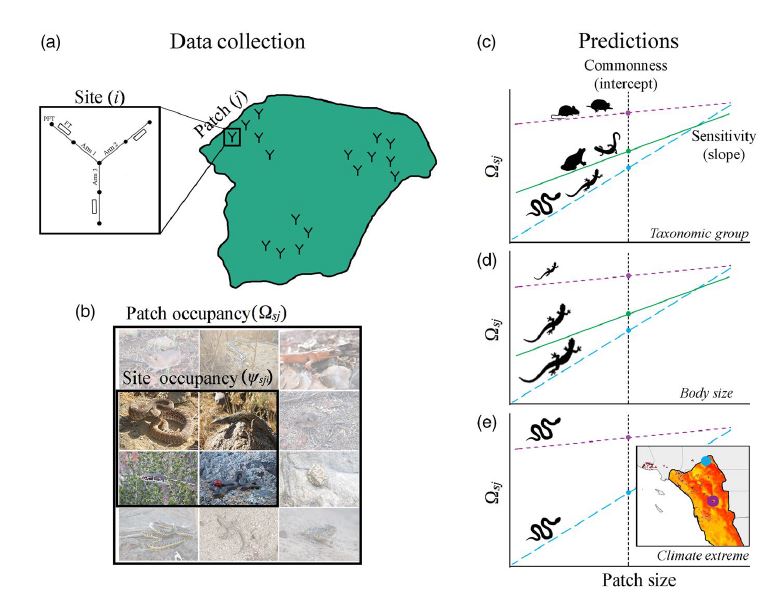
3. We investigated patterns in species richness and species responses to fragmentation in southern Californian small vertebrate communities using multispecies occupancy models and determined factors associated with overall commonness and sensitivity to patch size for 45 small vertebrate species both among and within remaining non-developed patches.
4. In general, smaller patches had fewer species, with amphibian species richness being particularly sensitive to patch size effects. Mammals were generally more common, occurring both in a greater proportion of patches and a higher proportion of the sites within occupied patches. Alternatively, amphibians were generally restricted to larger patches but were more ubiquitous within smaller patches when occupied. Species range size was positively correlated with how common a species was across and within patches, even when controlling for only patches that fell within a species’ range. We found sensitivity to patch size was greater for more fecund species and depended on where the patch occurred within a species’ range. While all taxa were more likely to occur in patches in the warmer portions of their ranges, amphibians and mammals were more sensitive to fragmentation in these warmer areas as compared to the rest of their ranges. Similarly, amphibians occurred at a smaller proportion of sites within patches in drier portions of their ranges. Mammals occurred at a higher proportion of sites that were also in drier portions of their range while reptiles did not differ in their sensitivity to patch size by range position.
5. We demonstrate that taxonomy, life history, range size, and range position can predict commonness and sensitivity of species across this highly fragmented yet biodiverse landscape. The impacts of fragmentation on species communities within an urban landscape depend on scale, with differences emerging among and within species and populations.
2. We aimed to identify patterns in species biogeography in an urbanized landscape to understand anthropogenic effects on vertebrate communities and identify species that are more sensitive or resilient to landscape change.
3. We investigated patterns in species richness and species responses to fragmentation in southern Californian small vertebrate communities using multispecies occupancy models and determined factors associated with overall commonness and sensitivity to patch size for 45 small vertebrate species both among and within remaining non-developed patches.
4. In general, smaller patches had fewer species, with amphibian species richness being particularly sensitive to patch size effects. Mammals were generally more common, occurring both in a greater proportion of patches and a higher proportion of the sites within occupied patches. Alternatively, amphibians were generally restricted to larger patches but were more ubiquitous within smaller patches when occupied. Species range size was positively correlated with how common a species was across and within patches, even when controlling for only patches that fell within a species’ range. We found sensitivity to patch size was greater for more fecund species and depended on where the patch occurred within a species’ range. While all taxa were more likely to occur in patches in the warmer portions of their ranges, amphibians and mammals were more sensitive to fragmentation in these warmer areas as compared to the rest of their ranges. Similarly, amphibians occurred at a smaller proportion of sites within patches in drier portions of their ranges. Mammals occurred at a higher proportion of sites that were also in drier portions of their range while reptiles did not differ in their sensitivity to patch size by range position.
5. We demonstrate that taxonomy, life history, range size, and range position can predict commonness and sensitivity of species across this highly fragmented yet biodiverse landscape. The impacts of fragmentation on species communities within an urban landscape depend on scale, with differences emerging among and within species and populations.
Papers & Reports Experimental evaluation of spatial capture-recapture study design
Authors: Jill Fleming; Evan HC Grant; S C Sterrett; C Sutherland
Date: 2021-07-18 | Outlet: Ecological Applications
A principal challenge impeding strong inference in analyses of wild populations is the lack of robust and long-term data sets. Recent advancements in analytical tools used in wildlife science may increase our ability to integrate smaller data sets and enhance the statistical power of population estimates. One such advancement, the development of spatial capture-recapture (SCR) methods, explicitly accounts for differences in spatial study designs, making it possible to equate multiple study designs in one analysis. SCR has been shown to be robust to variation in design as long as minimal sampling guidance is adhered to. However, these expectations are based on simulation and have yet to be evaluated in wild populations. Here we conduct a rigorously designed field experiment by manipulating the arrangement of artificial cover objects (ACOs) used to collect data on red-backed salamanders (Plethodon cinereus) to empirically evaluate the effects of design configuration on inference made using SCR. Our results suggest that, using SCR, estimates of space use and detectability are sensitive to study design configuration, namely the spacing and extent of the array, and that caution is warranted when assigning biological interpretation to these parameters. However, estimates of population density remain robust to design except when the configuration of detectors grossly violates existing recommendations.
Papers & Reports The Coyote Mountains’ Desert Snail (Sonorelix harperi carrizoensis), a Lazarus Species with the First Documentation of Live Individuals
Authors: Robert N Fisher; S R Fisher
Date: 2020-08 | Outlet: Bulletin Southern California Academy of Sciences 119:49-54.
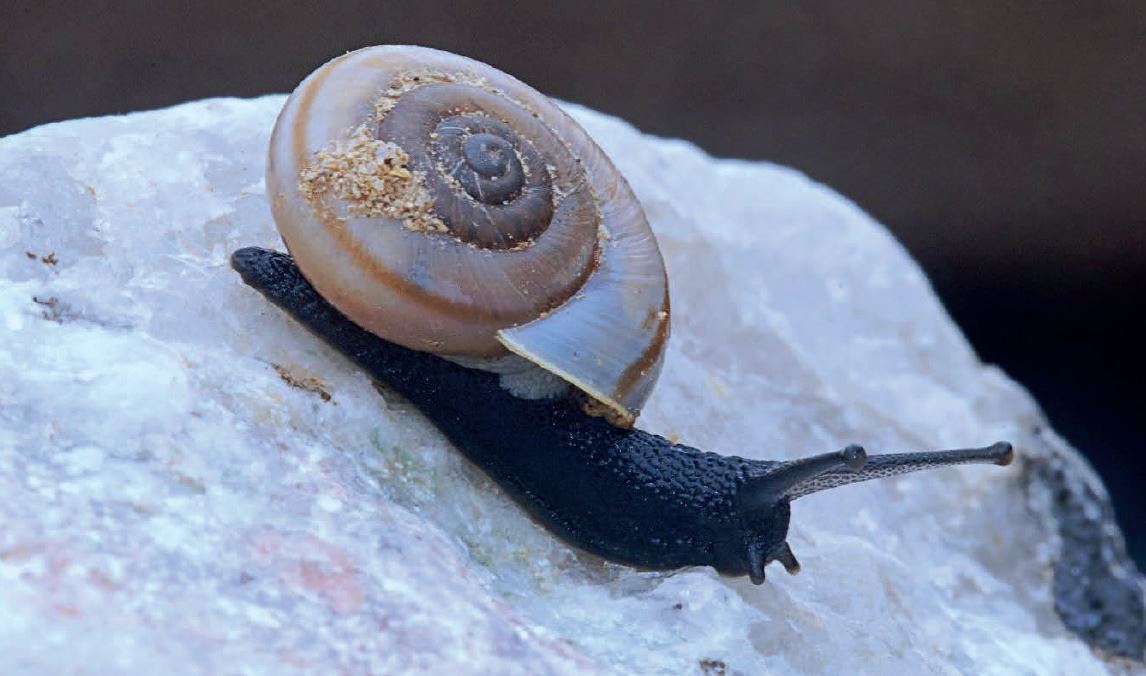
The Coyote Mountain desert snail (Sonorelix harperi carrizoensis) was described in 1937 from 30 dry shells collected the previous year. We reviewed the literature and museum records and found two additional shell collections for this subspecies from the type locality one from 1958, and one from an adjacent mountain range in 1938. There is no evidence previously of any live snails being collected from the Coyote Mountains, Imperial County, California. All shell collections of S. harperi carrizoensis have the same locality data as the type series, which is Painted Gorge, Coyote Mountains except for one recorded collection of shells from the Vallecito Mountains from 1938. Using geological maps and other data sources, a potential mesic habitat was identified in the Coyote Mountains. During recent field work for salamanders at this location we detected two live specimens of S. harperi carrizoensis approximately 2 km north of its type location. This new data confirms this subspecies is still extant and has occurred at least at two sites historically in these mountains. Despite the presence of mesic habitats (i.e., mosses, liverworts and ferns) at the type locality, we found no evidence of S. harperi carrizoensis or salamanders.
Data Release Data realease for manuscript: A statistical forecasting approach to metapopulation viability analysis
Authors: P E Howell; Blake R Hossack; Erin Muths; Brent H Sigafus; A Chenevert-Steffler; Richard Chandler
Date: 2020 | Outlet: Ecological Applications 2020: e02038
Data release and code for Ecological Applications paper: A statistical forecasting approach to metapopulation viability analysis

Papers & Reports Baseline Conditions and Projected Future Hydro-Climatic Change in National Parks in the Conterminous United States
Authors: William A Battaglin
Date: 2020-06-15 | Outlet: Water 2020, 12(6), 1704; https://doi.org/10.3390/w12061704
Abstract: The National Park Service (NPS) manages hundreds of parks in the United States, and many contain important aquatic ecosystems and/or threatened and endangered aquatic species vulnerable to hydro-climatic change. More effective management of park resources under future hydro-climatic uncertainty requires information on both baseline conditions and the range of projected future conditions. A monthly water balance model was used to assess baseline (1981–1999) conditions and a range of projected future hydro-climatic conditions in 374 NPS parks. General circulation model outputs representing 214 future climate simulations were used to drive the model. Projected future changes in air temperature (T), precipitation (p), and runoff (R) are expressed as departures from historical baselines. Climate simulations indicate increasing T by 2030 for all parks with 50th percentile simulations projecting increases of https://1.67 °C or more in 50% of parks. Departures in 2030 p indicate a mix of mostly increases and some decreases, with 50th percentile simulations projecting increases in p in more than 70% of parks. Departures in R for 2030 are mostly decreases, with the 50th percentile simulations projecting decreases in R in more than 50% of parks in all seasons except winter. Hence, in many NPS parks, R is projected to decrease even when p is projected to increase because of increasing T in all parks. Projected changes in future hydro-climatic conditions can also be assessed for individual parks, and Rocky Mountain National Park and Congaree National Park are used as examples.
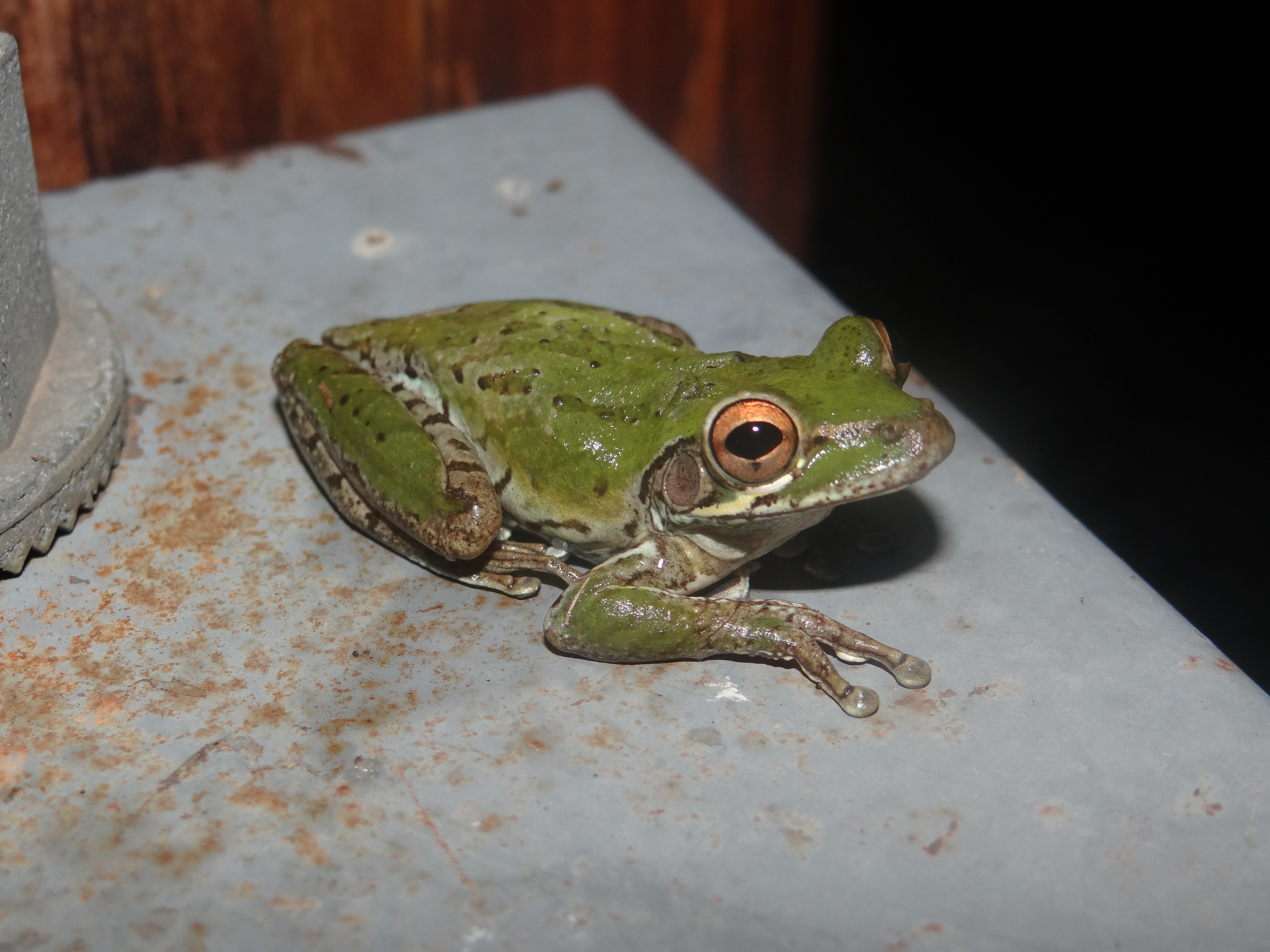
Papers & Reports Widespread Ranavirus and Perkinsea infections in Cuban Treefrogs (Osteopilus septentrionalis) invading New Orleans, USA
Authors: N Galt; Matthew S Atkinson; Brad M Glorioso; Hardin J Waddle; M Litton; Anna E Savage
Date: 2021-04-30 | Outlet: Herpetological Conservation and Biology
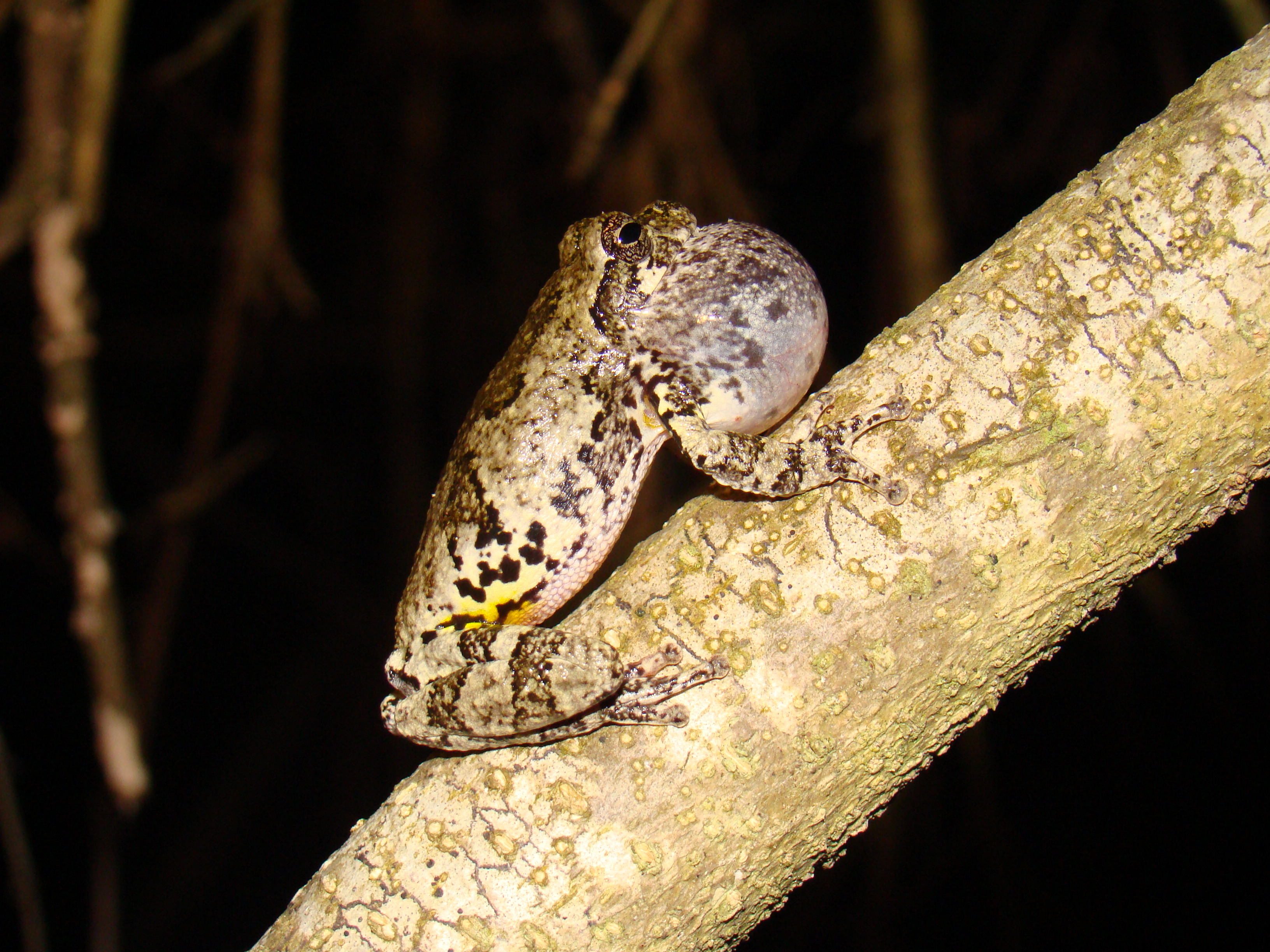
Data Release Data from time-constrained visual encounter surveys and acoustic surveys in the Atchafalaya Basin conducted from 2008 through 2016
Authors: Brad M Glorioso; Hardin J Waddle
Date: 2020-08-13
This dataset contains data from time-constrained visual encounter surveys conducted in the Atchafalaya River Basin in south central Louisiana from February 2008 through July 2016. In addition, it contains vocalization data collected concurrently with the visual encounter surveys and data on presence of tadpoles and larvae. All participants in surveys are included in the dataset. Information for each site, each sample, and each observation is included.
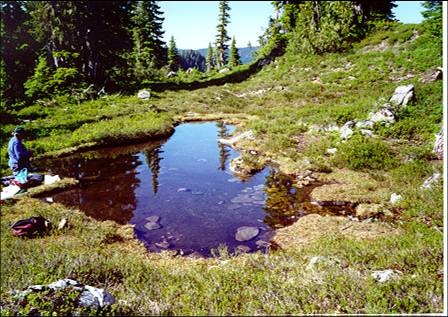
Data Release North Coast and Cascades Network consolidated amphibian database (1984-2005)
Authors: Stephanie K Galvan; Michael J Adams; B Samora; S E Stonum; P J Happe; R S Glesne; A Rawhouser
Date: 2020-10-20
This data set is an amalgamation of twenty-nine original data sets, which represent amphibian surveys in the seven national parks comprising the North Coast and Cascades Network (NCCN) of the National Park Service. The data were collected from 1984-2005, and include the localities of 19 species of amphibians at various life stages, 18 native to the Pacific Northwest and one invasive species
Papers & Reports Rapid assessment indicates context-dependent mitigation for amphibian disease risk
Authors: Riley F Bernard
Date: 2021-07-06 | Outlet: Wildlife Society Bulletin
Batrachochytrium salamandrovorans (Bsal) is a fungal pathogen that can cause the emerging infectious disease Bsal chytridiomycosis in some amphibians, and is currently causing dramatic declines in European urodeles. To date, Bsal has not been detected in North America but has the potential to cause severe declines in naïve hosts if introduced. Therefore, it is critical that wildlife managers are prepared with effective management actions to combat the fungus. Research has been initiated to identify strategies; however, managers need guidance to prepare for an outbreak until results are available. Here, we conducted a workshop with participants of a Bsal symposium to describe the expected effect of eleven management actions that could be implemented for Bsal in three salamander communities in the northwestern, northeastern, and southeastern United States. Participants expected variation in the proposed management actions to decrease pathogen transmission and increase host survival, but also expected that the selection of a management action may depend on the specific membership of the amphibian community. Collectively, this assessment will help refine research and modeling priorities in an effort to mitigate the risk of Bsal to native U.S. amphibians.
Papers & Reports Principles and mechanisms of wildlife population persistence in the face of disease
Authors: Robin E Russell; Graziella V DiRenzo; Katrina E Alger; J Szymanski; Evan HC Grant
Outlet: Frontiers in Ecology and Evolution
Emerging infectious diseases can result in species declines and hamper recovery efforts for at-risk populations. Generalizing considerations for reducing the risk of pathogen introduction and mitigating the effects of disease remains challenging and inhibits our ability to provide guidance for species recovery planning. Given the growing rates of emerging pathogens globally, we identify key principles and mechanisms for maintaining sustainable populations in the face of emerging diseases (including minimizing the risk of pathogen introductions and their future effects on hosts). Our synthesis serves as a reference for minimizing the risk of future disease outbreaks, mitigating the deleterious effects of future disease outbreaks on species extinction risk, and a review of the theoretical and/or empirical examples supporting these considerations.
Papers & Reports A latent process model approach for improving the utility of indicator species
Authors: Jill Fleming; C Sutherland; S Sterrett; Evan HC Grant
Outlet: Oikos
The state of an ecosystem is governed by dynamic biotic and abiotic processes, which can only be partially observed. Costs associated with measuring each component limit the feasibility of comprehensive assessments of target ecosystems. Instead, indicator species are recommended as a surrogate index. While this is an attractive concept, indicator species have rarely proven to be an effective tool for monitoring ecosystems and informing management decisions. One deficiency in the existing theoretical development of indicator species may be overcome with the incorporation of latent (i.e., unobservable) states. Advancements in quantitative ecological models allow for latent-state models to be tested empirically, facilitating the robust evaluation and practical use of indicator species for ecosystem science and management. Here, we extend the existing conceptual models of indicator species to include a direct relationship between an indicator species, ecosystem change drivers, and latent processes and variables. Our approach includes explicit consideration of important estimation uncertainty and narrows the range of values a latent variable may take by relating it to measurable attribute(s) of an indicator species. We demonstrate the utility of this approach by relating a commonly cited indicator species, the red-backed salamander (Plethodon cinereus), to a typical latent process of interest – ecosystem health.
Papers & Reports When Introduced Prey Violates Trophic Hierarchy: Conservation of an Endangered Predator
Authors: Richard Kim; Brian J Halstead; E Routman; Julie Andersen
Date: 2021-03-03 | Outlet: Biological Conservation 256
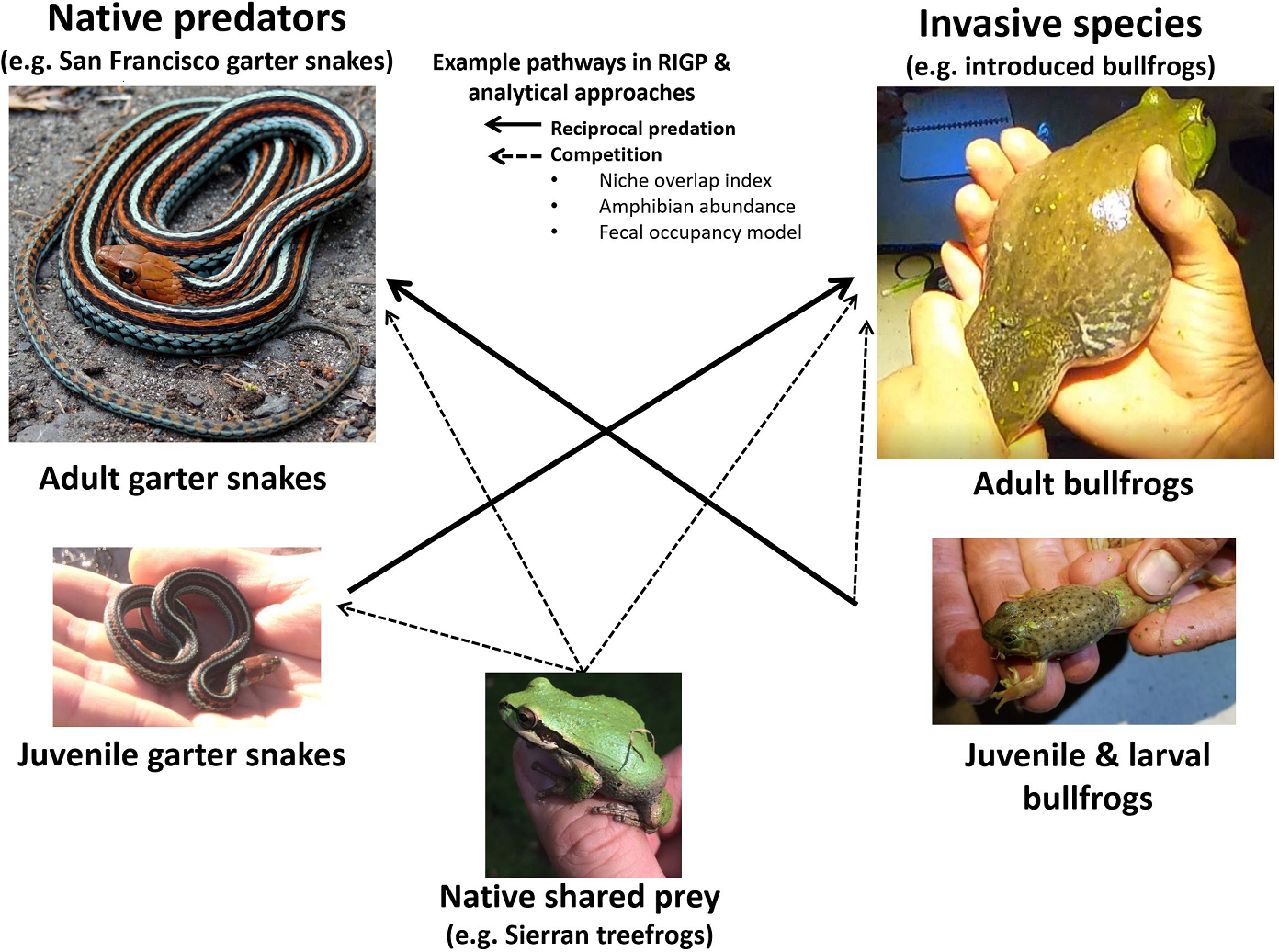
Introduced species often disrupt established food webs, but some native predators can come to rely on introduced prey. Understanding the net effects of the non-natives on imperiled predators is crucial for planning conservation measures. The invasive American bullfrog (Lithobates catesbeianus) can be prey, predator, and competitor for the critically endangered San Francisco garter snake (Thamnophis sirtalis tetrataenia). We examined the seasonal prey use of a San Francisco garter snake population that co-occurs with American bullfrogs to examine intraguild predation between these species. Juvenile and adult snakes mainly consumed native anurans instead of American bullfrogs, and this diet pattern peaked in spring, a critical foraging period for the snakes. In spring, large adult American bullfrogs also foraged heavily on native anurans and displayed a high degree of diet overlap with San Francisco garter snakes. Invasive American bullfrogs are detrimental to San Francisco garter snakes mainly through seasonal competition rather than reciprocal predation. Removal of invasive species provided further evidence that eliminating American bullfrogs can benefit San Francisco garter snakes by reducing predation pressure on their shared amphibian prey. Better understanding the interactions of invasive species with native species of conservation concern informs management practices and improves conservation outcomes.