Search ARMI Database
Search term(s)
Contribution Number
Search Results
1290 record(s) found.

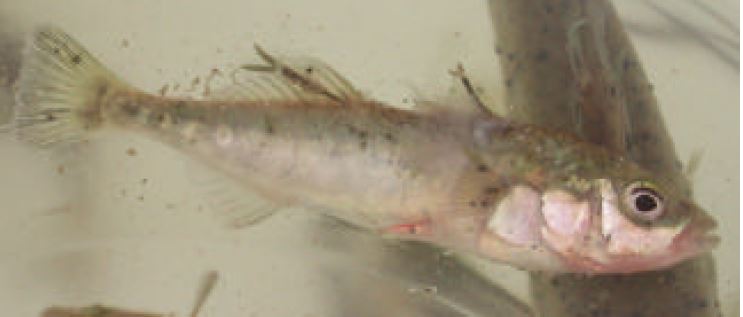
Papers & Reports Associations between environmental pollutants and larval amphibians in wetlands contaminated by energy-related brines are potentially mediated by feeding traits

News & Stories New USGS Study Paves a Path Forward for Amphibians, Reptiles, and Roadways
In a new study, U.S. Geological Survey (USGS) scientists ranked more than 160 species and sub-species of reptiles and amphibians in terms of their vulnerability to vehicle strikes and habitat fragmentation from roadways. Their results are published in the journal Landscape Ecology.
Although most of the public associates vehicle strikes with mammals, reptiles and amphibians can also encounter cars on the road. These animals are often either too small for the driver to notice, or too slow to escape the car's path. Some species also migrate long distances or have relatively large territories, and may need to risk crossing a roadway to access important habitat. Some species avoid roads altogether, which potentially reduces the amount of available habitat and separates populations that would otherwise mix and increase genetic diversity.
Currently, transportation planning agencies like the California Department of Transportation (Caltrans) use underpasses, overpasses, and physical barriers to reduce the negative effects of roadways on wildlife. However, they can't manage these side-effects for every species because of limited funding or resources. Species at highest risk of negative road impacts are difficult to identify due to a lack of available data or research, particularly on reptiles and amphibians. As a result, resource managers had to identify high risk species by professional opinion or by the few studies related specifically to roads.
To help provide Caltrans and other transportation agencies with the information needed to prioritize species for management, USGS researchers used road ecology literature to develop an objective ranking system for 166 species and subspecies of native Californian reptiles and amphibians. In the ranking system, an animal's vulnerability to vehicle strikes or habitat fragmentation depended on the way members of the species used the space around them, and on different aspects of their life history. For instance, species with large home ranges and seasonal migrations were more likely to encounter roads. Likewise, species that took time to reach sexual maturity and had fewer young were more likely to be affected by the loss of members of their population from vehicle strikes. The scientists found that all turtle and tortoise species, 72% of snakes, 50% of frogs and toads, 18% of lizards, and 17% of salamander species in California ranked at "high" or "very high" risk from potential negative road impacts. Species at very high risk included listed Federal or State endangered or threatened species, like the California red-legged frog (Rana draytonii), Mohave desert tortoise (Gopherus agassizii), and the San Francisco gartersnake (Thamnophis sirtalis tetrataenia). Snakes, turtles, and tortoises tended to rank at higher risk for negative road impacts, since many migrate or have large home ranges, tend not to avoid roads, are long lived, and give birth to relatively few young.
Species that use both terrestrial and aquatic habitats may be particularly susceptible to reduced habitat connectivity. The giant gartersnake (Thamnophis gigas), for example, is a semi-aquatic species found in the Central Valley of California. After losing more than 90% of its historical wetland habitats to agriculture and other forms of human development, this federally and state-listed snake now relies on remaining wetlands, rice fields, and agricultural canals for aquatic habitat. Roads separating the species' terrestrial and aquatic habitat could affect its populations. "Overall, this is meant to be a first step in identifying reptile and amphibian species that may be at highest risk from roads within their habitat. We hope this assessment will help transportation planning agencies and species managers by highlighting species that may need special attention. This can include considering further research and implementing terrestrial and aquatic mitigation solutions to reduce mortality and to maintain or enhance population connectivity," says Cheryl Brehme, lead author and biologist with the USGS Western Ecological Research Center.
This research was funded by the USGS and Caltrans. For more information, read the paper online and explore the project webpage on WERC's website. Amphibian research in this study falls within the national, USGS-led Amphibian Research and Monitoring Initiative (ARMI).
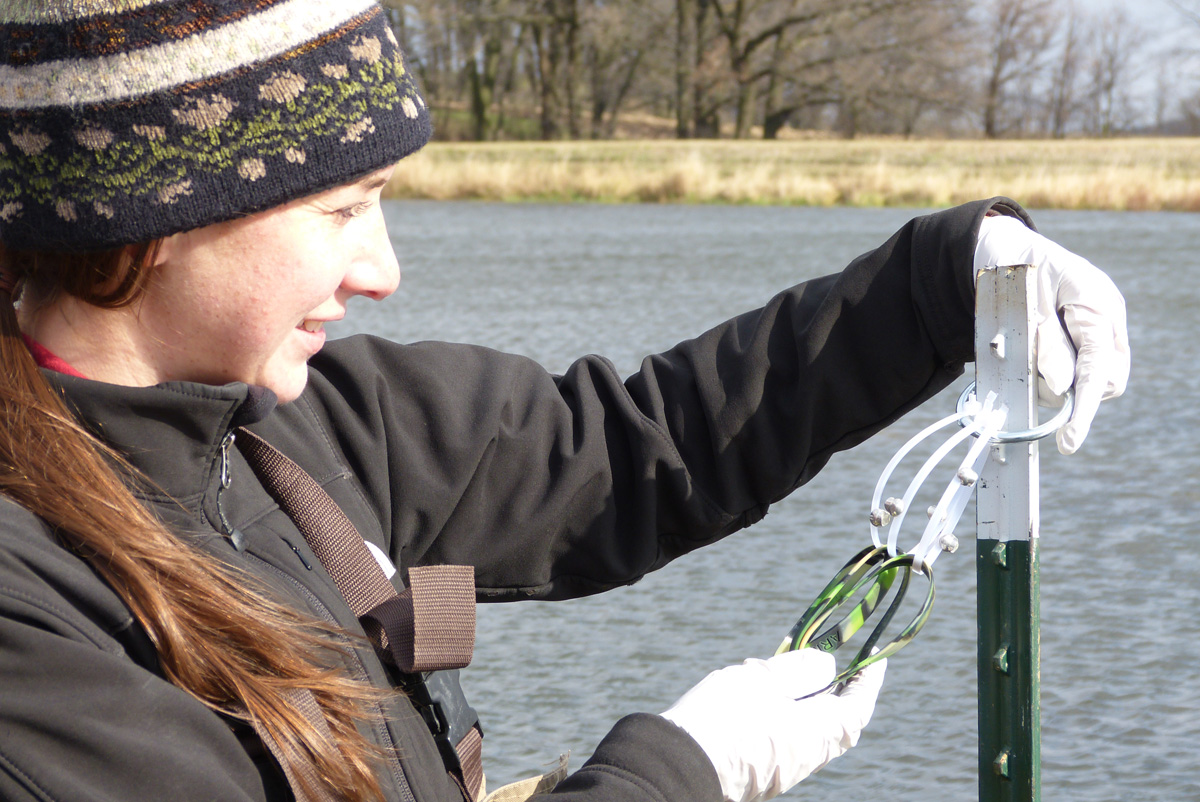
Papers & Reports Exploring the amphibian exposome in an agricultural landscape using telemetry and passive sampling
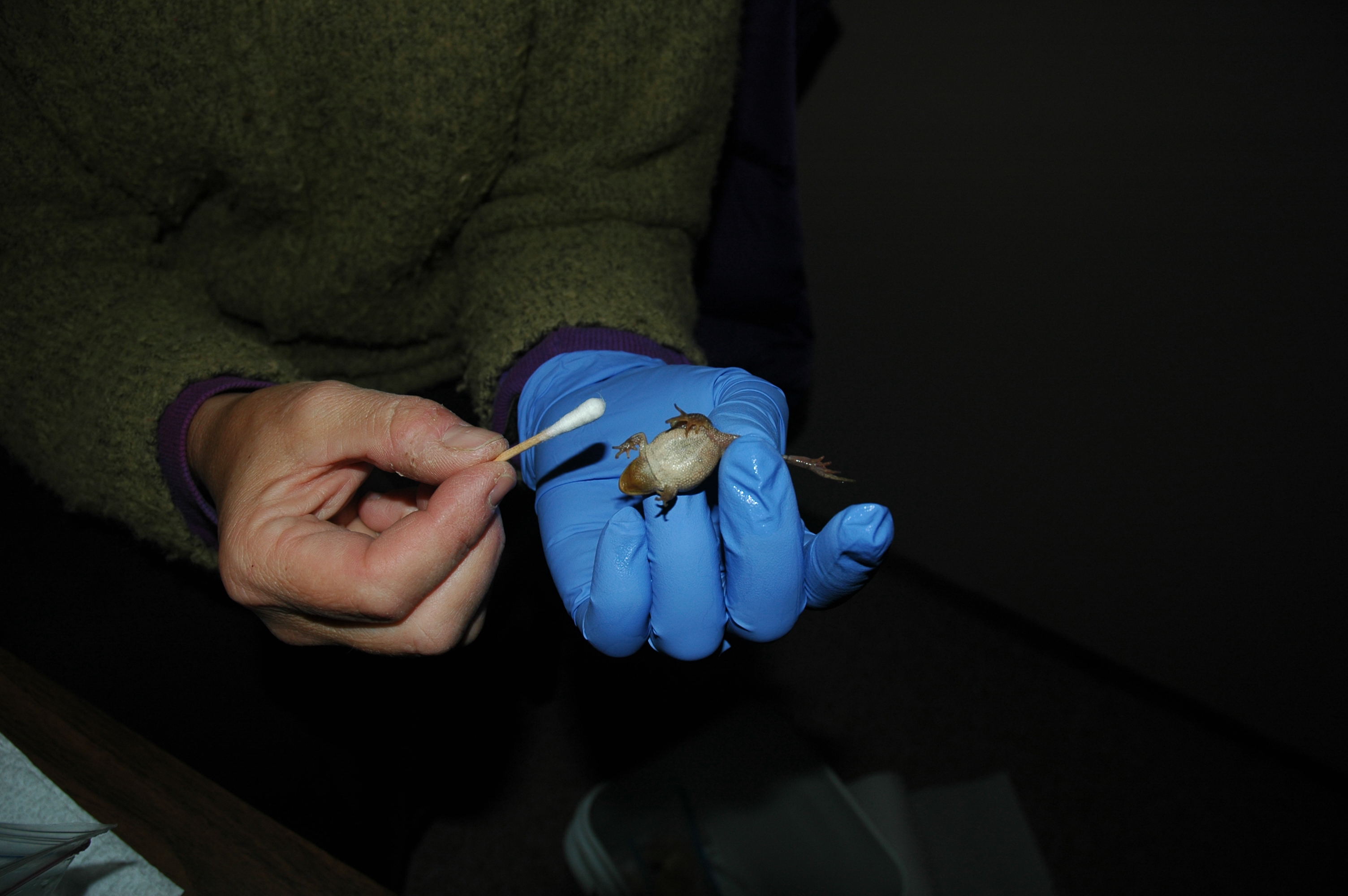
Papers & Reports Beyond the swab: ecosystem sampling to understand the persistence of an amphibian pathogen
and measuring host-pathogen dynamics. However, this process is often masked, in
part due to a reliance on host-based pathogen detection methods. The amphibian
pathogens Batrachochytrium dendrobatidis (Bd) and B. salamandrivorans (Bsal) are
pathogens of global conservation concern. Despite having free-living life stages, little is
known about the distribution and persistence of these pathogens outside of their
amphibian hosts. We combine historic amphibian monitoring data with contemporary
host- and environment-based pathogen detection data to obtain estimates of Bd
occurrence independent of amphibian host distributions. We also evaluate differences
in filter- and swab-based detection probability and assess inferential differences arising
from using different decision criteria used to classify samples as positive or negative.
Water filtration-based detection probabilities were lower than those from swabs but
were >10%, and swab-based detection probabilities varied seasonally, declining in the
early fall. The decision criterion used to classify samples as positive or negative was
important; using a more liberal criterion yielded higher estimates of Bd occurrence than
when a conservative criterion was used. Different covariates were important when
using the liberal or conservative criterion in modeling Bd detection. We found evidence
of long-term Bd persistence for several years after an amphibian host species of
conservation concern, the boreal toad (Anaxyrus boreas boreas), was last detected.
Our work provides evidence of long-term Bd persistence in the ecosystem and
underscores the importance of environmental samples for understanding and
mitigating disease-related threats to amphibian biodiversity.
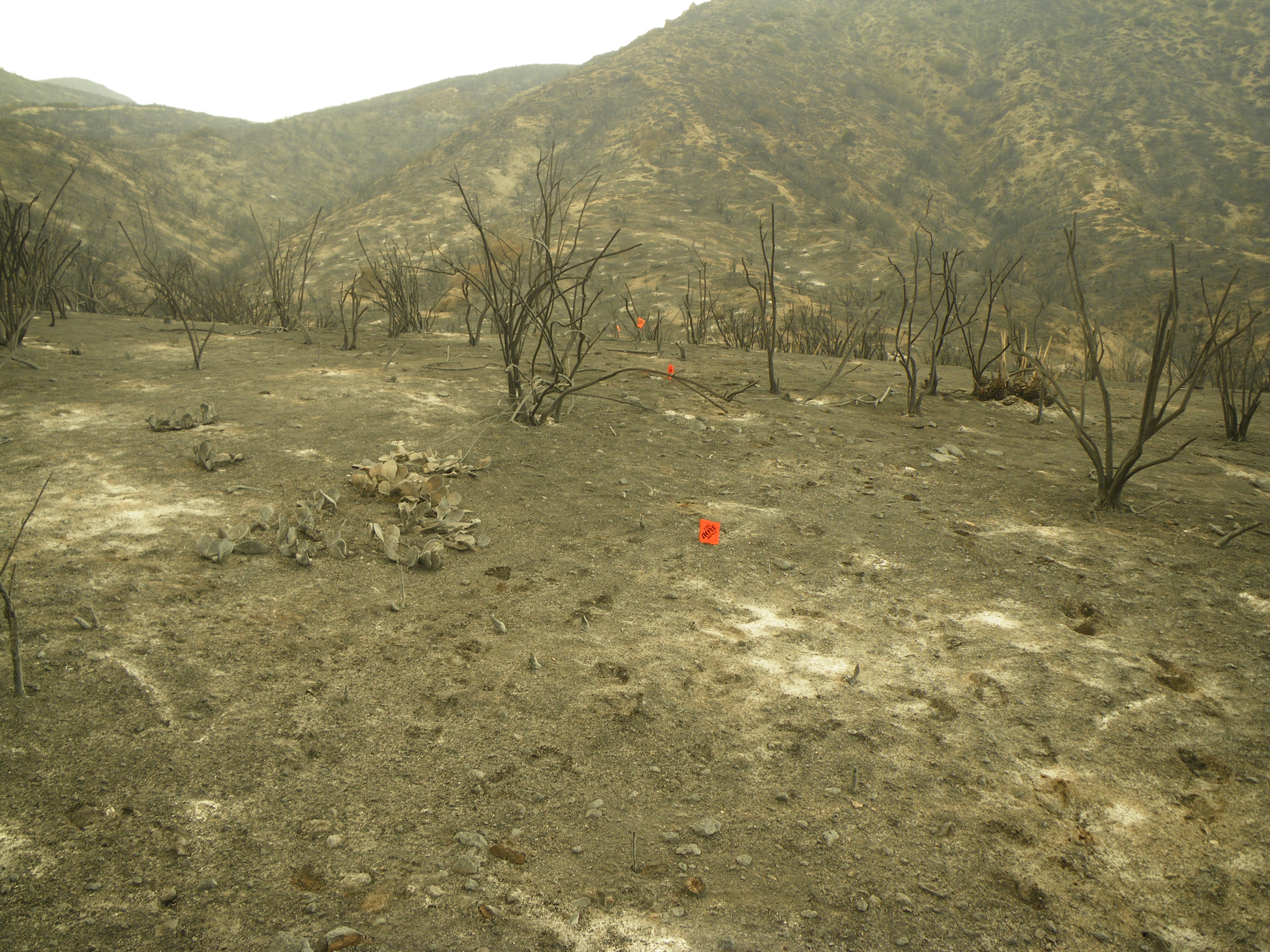
Papers & Reports Prioritizing conserved areas threatened by wildfire for monitoring and management
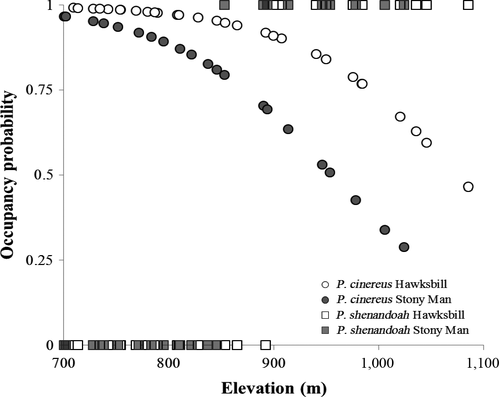
Papers & Reports Evidence that climate sets the lower elevation range limit in a high-elevation endemic salamander
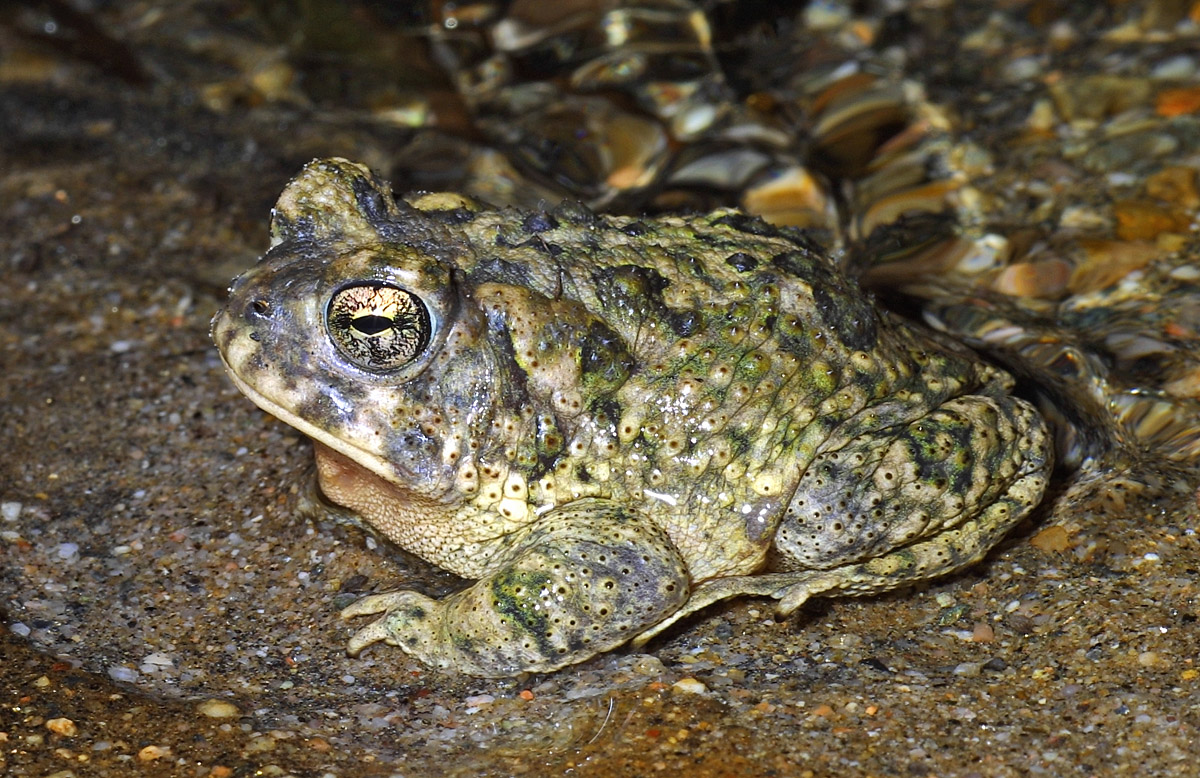
Papers & Reports Multi-scale effects of land cover and urbanization on the habitat suitability of an endangered toad.
both terrestrial and aquatic environments.
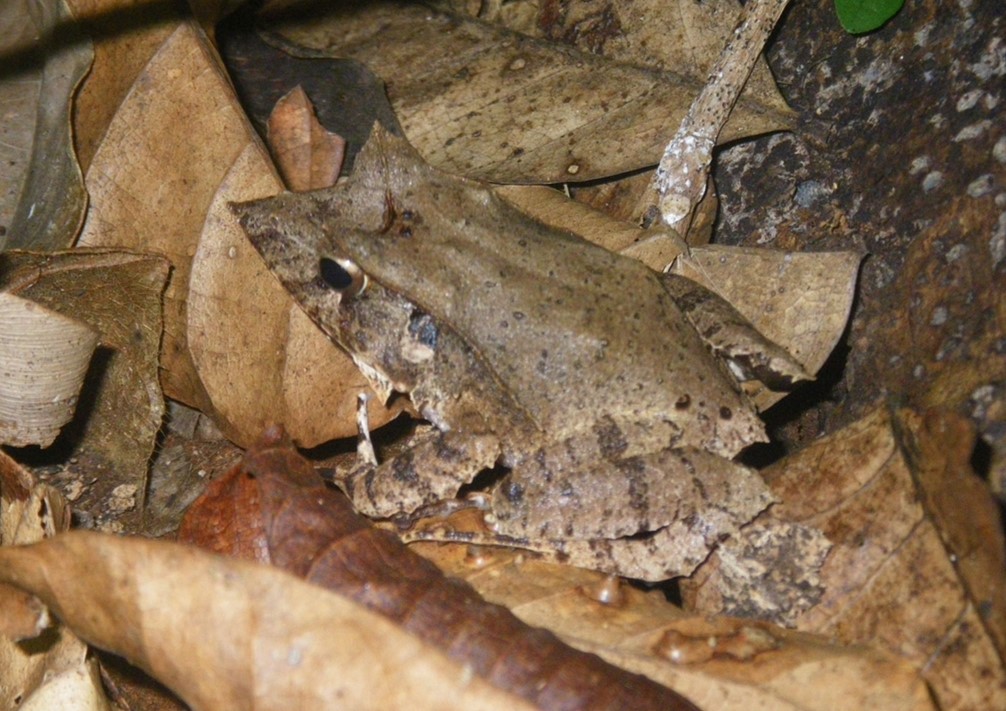
Papers & Reports Amphibians of the Pacific: natural history and conservation.
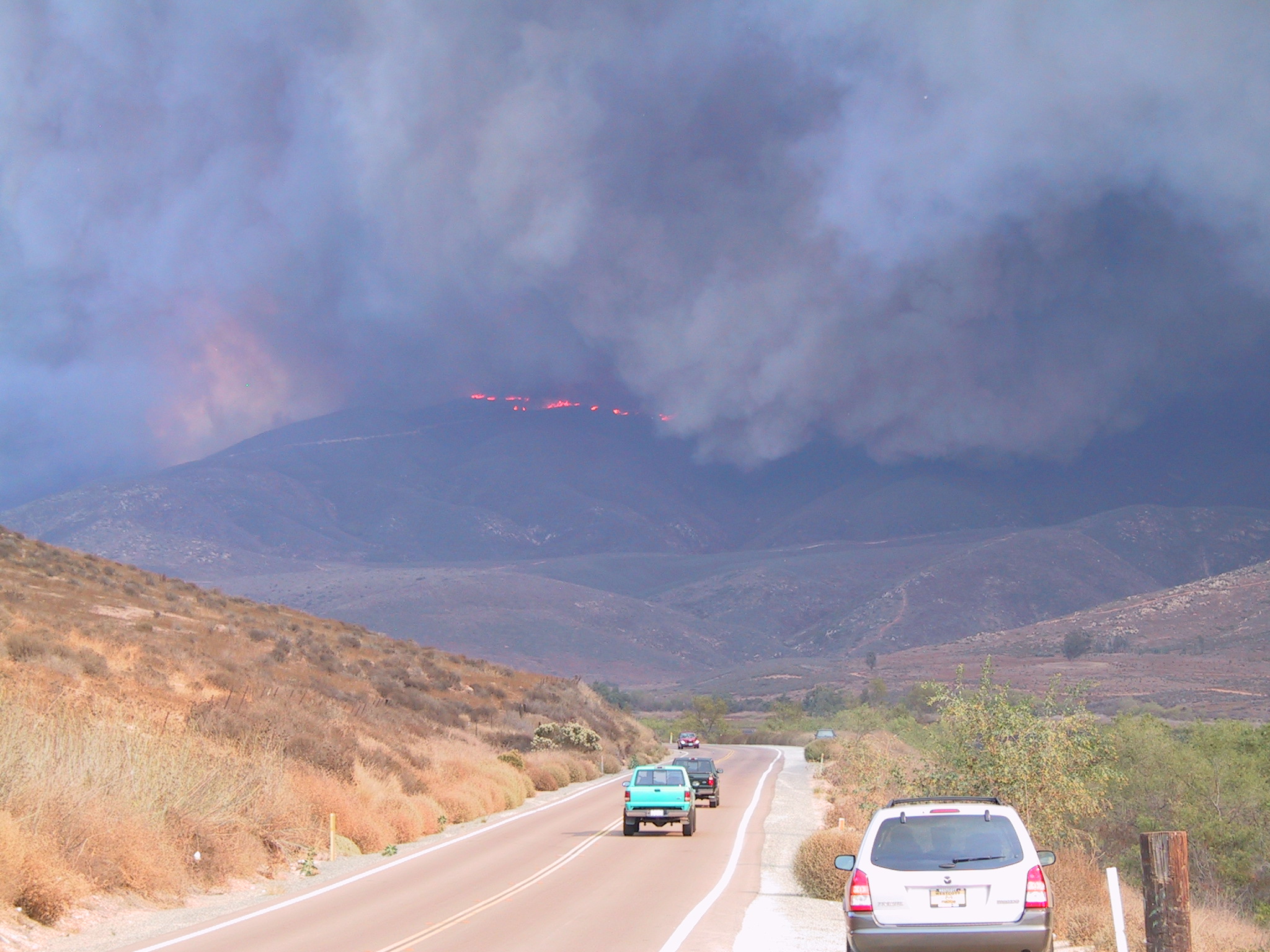
Papers & Reports Setting priorities for private land conservation in fire-prone landscapes: Are fire risk reduction and biodiversity conservation competing or compatible objectives?
strategies, and then projected the mean risk of fires destroying structures and the area and configuration of important habitat types in San Diego County, California, USA. We found clear differences in both fire risk projections and biodiversity impacts based on the way conservation lands are prioritized for selection, but these differences were split between two distinct groupings. If no conservation lands were purchased, or if purchases were prioritized based on cost or likelihood of development, both the projected fire risk and biodiversity impacts were much higher than if conservation lands were purchased in areas with high fire hazard or high species richness. Thus, conserving land focused on either of the two objectives resulted in nearly equivalent mutual benefits for both. These benefits not only resulted from preventing development in sensitive areas, but they were also due to the different housing patterns and arrangements that occurred as development was displaced from those areas. Although biodiversity conflicts may still arise using other fire management strategies, this study shows that mutual objectives can be attained through land-use planning in this region. These results likely generalize to any place where high species richness overlaps with hazardous wildland vegetation.
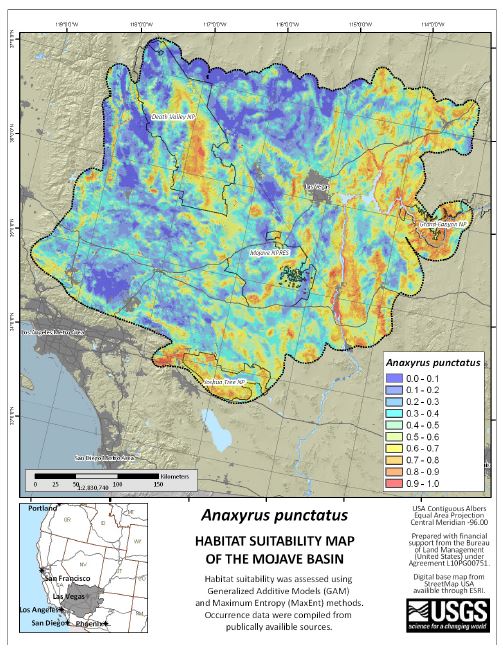
Papers & Reports Mapping habitat for multiple species in the Desert Southwest.
populations, and species’ abilities to adapt to changing environmental conditions. Understanding these
factors will help managers select appropriate project sites and possibly mitigate for anticipated effects of management activities. We used species distribution models to map habitat for 15 species across the Mojave Ecoregion to aid regional land-use management planning. Models were developed using a common 1 × 1 kilometer resolution with maximum entropy and generalized additive models. Occurrence data were compiled from multiple sources, including VertNet (http://vertnet.org/index.php), HerpNET (http://www.herpnet.org), and MaNIS (http://manisnet.org), as well as from internal U.S. Geological Survey databases and other biologists. Background data included 20 environmental covariates representing terrain, vegetation, and climate covariates. This report summarizes these environmental covariates and species distribution models used to predict habitat for the 15 species across the Mojave Ecoregion.
Papers & Reports Chapter D. Summary and conclusions.
Papers & Reports Chapter C. Anuran abundance and health at selected springs in the Mojave network parks.
Papers & Reports Conservation and recovery of the mountain yellow-legged frog in southern California, USA.
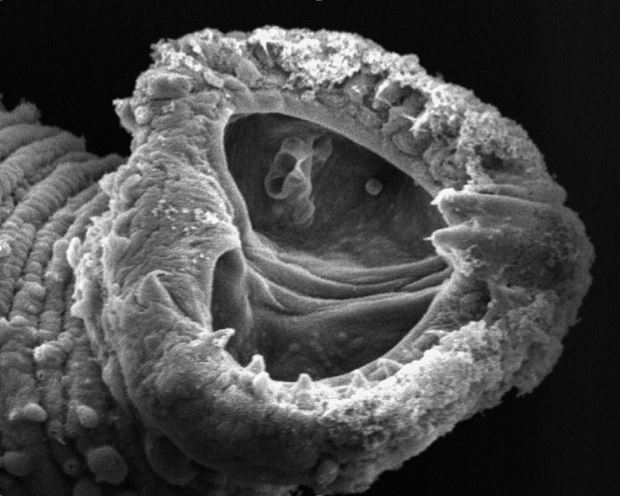
Papers & Reports Chapter 6. Voucher specimens: Appendix C. Field parasitology techniques for reptile surveys.
and preserved properly, species- level diagnostic characters (i.e., morphological characters) are usually destroyed. In addition, improper preservation of parasites severely limits,
or more likely prevents, studies based on DNA from those specimens.
Papers & Reports Chapter 4. Planning and associated data: Data quality assurance and quality control.
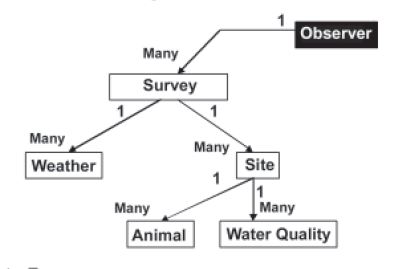
Papers & Reports Chapter 4. Planning and associated data: Databases, metadata, and integrated data management.
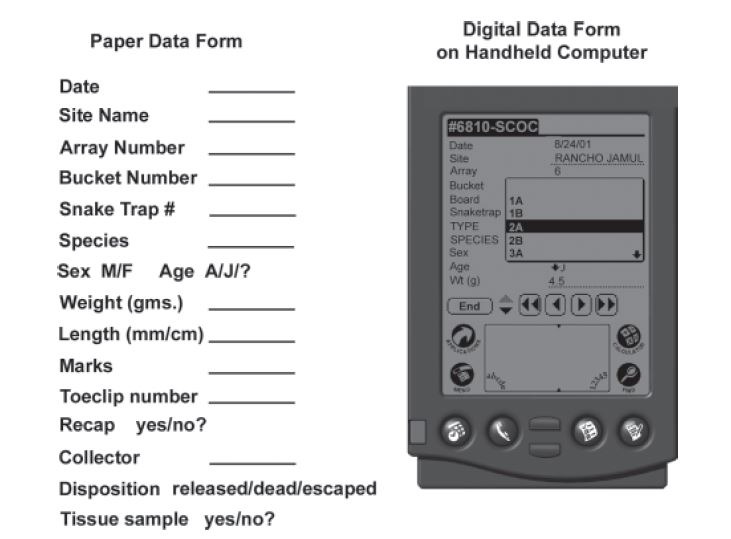
Papers & Reports Chapter 4. Planning and associated data: Handheld computers for digital data collection.
Papers & Reports Thamnophis hammondii (two-striped garter snake): Prey.