
Search ARMI Database
Search term(s)
Contribution Number
Search Results
1290 record(s) found.
Papers & Reports Amphibian dynamics in constructed ponds on a wildlife refuge: developing expected responses to hydrological restoration

Papers & Reports Large-scale recovery of an endangered amphibian despite ongoing exposure to multiple stressors
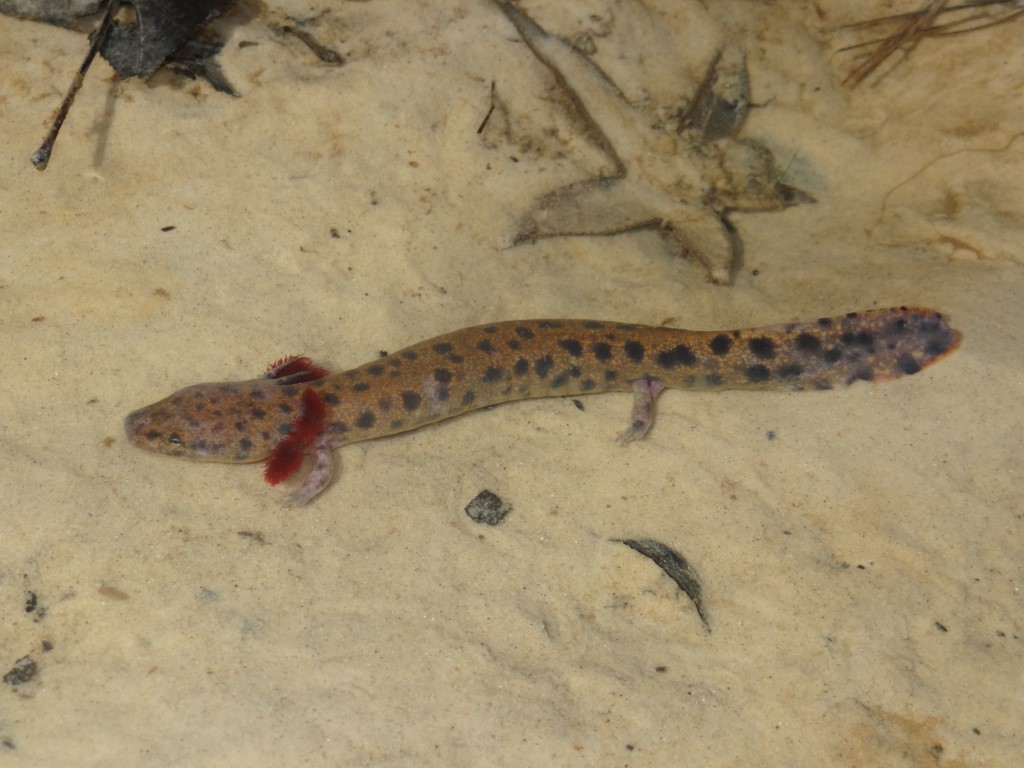
Papers & Reports Estimating occurrence and detection probabilities for stream-breeding salamanders in the Gulf Coastal Plain
Papers & Reports Life history plasticity does not confer resilience to environmental change in the mole salamander (Ambystoma talpoideum)
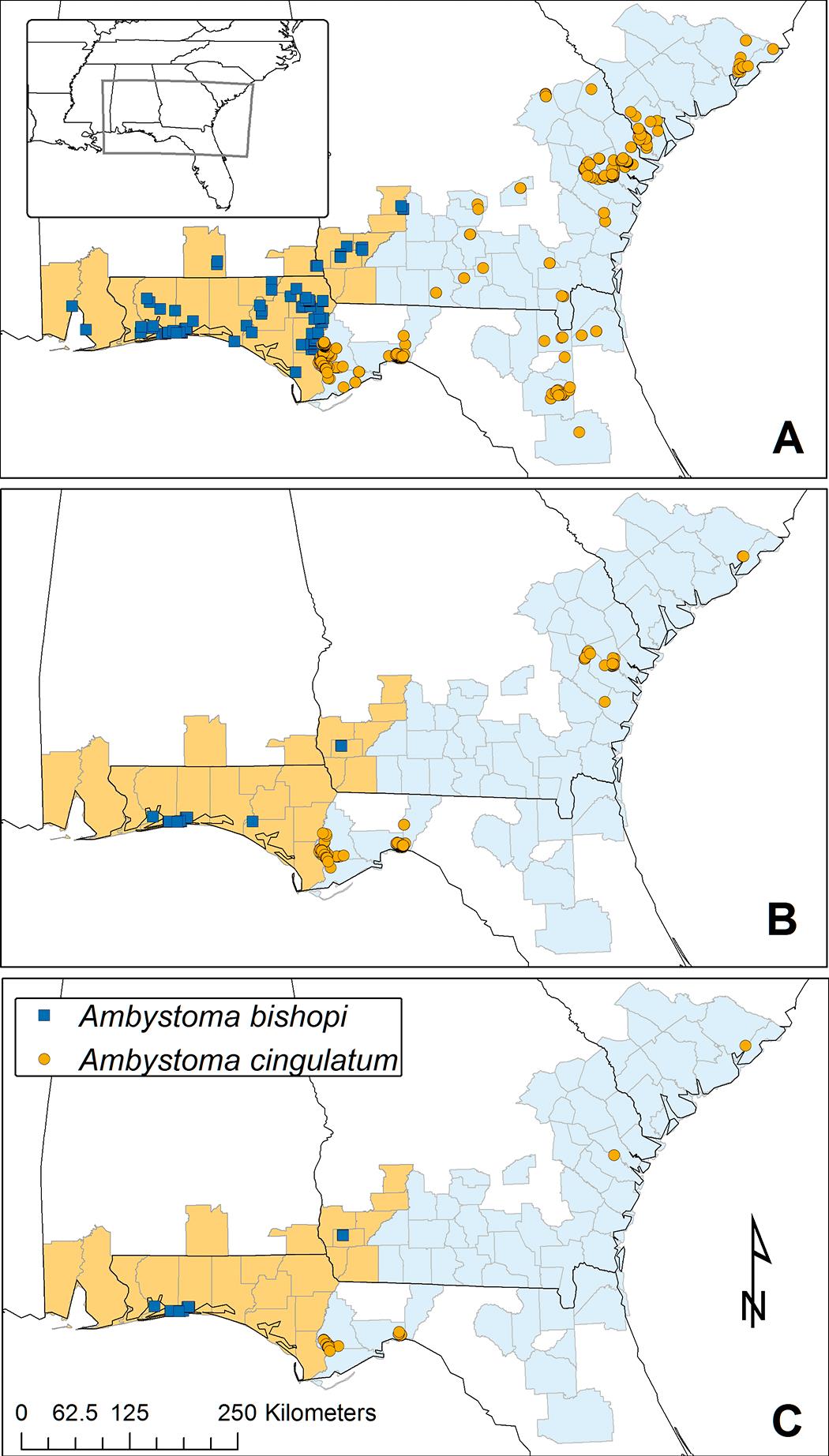
Papers & Reports Extinction Debt as a Driver of Amphibian Declines: an Example with Imperiled Flatwoods Salamanders
Papers & Reports Species interactions and the effects of climate variability on a wetland amphibian metacommunity
Papers & Reports Influence of climate drivers on colonization and extinction
temperature, precipitation, and evapotranspiration (i.e., climate drivers) are likely to alter flooding regimes of wetlands and affect the vital rates, abundance, and distributions of wetland-dependent species. Amphibians may be among the most climate-sensitive wetland-dependent groups as many species rely on shallow or intermittently flooded wetland habitats for breeding. Here, we integrated multiple years of high-resolution gridded climate and amphibian monitoring data from Grand Teton and Yellowstone National Parks to explicitly model how variations in climate drivers and habitat conditions affect the occurrence and breeding dynamics (i.e., annual extinction and colonization rates) of amphibians. Our results showed that models incorporating climate drivers outperformed models of amphibian breeding dynamics that were exclusively habitat based. Moreover, climate-driven variation in extinction rates, but not colonization rates, disproportionately influenced amphibian occupancy in monitored wetlands. Long-term monitoring from national parks coupled with high-resolution climate data sets will be crucial to describing population dynamics and characterizing the sensitivity of amphibians and other wetland-dependent species to climate change. Further, long-term monitoring of wetlands in national parks will help reduce uncertainty
surrounding wetland resources and strengthen opportunities to make informed, science-based
decisions that have far-reaching benefits.
News & Stories ARMI scientists Blake Hossack (NOROCK), Brent Sigafus (SBSC) and Erin Muths (FORT), and ARMI post doc Thierry Chambert traveled to Sonora, Mexico, to survey for Sonoran Tiger Salamanders in May 2016
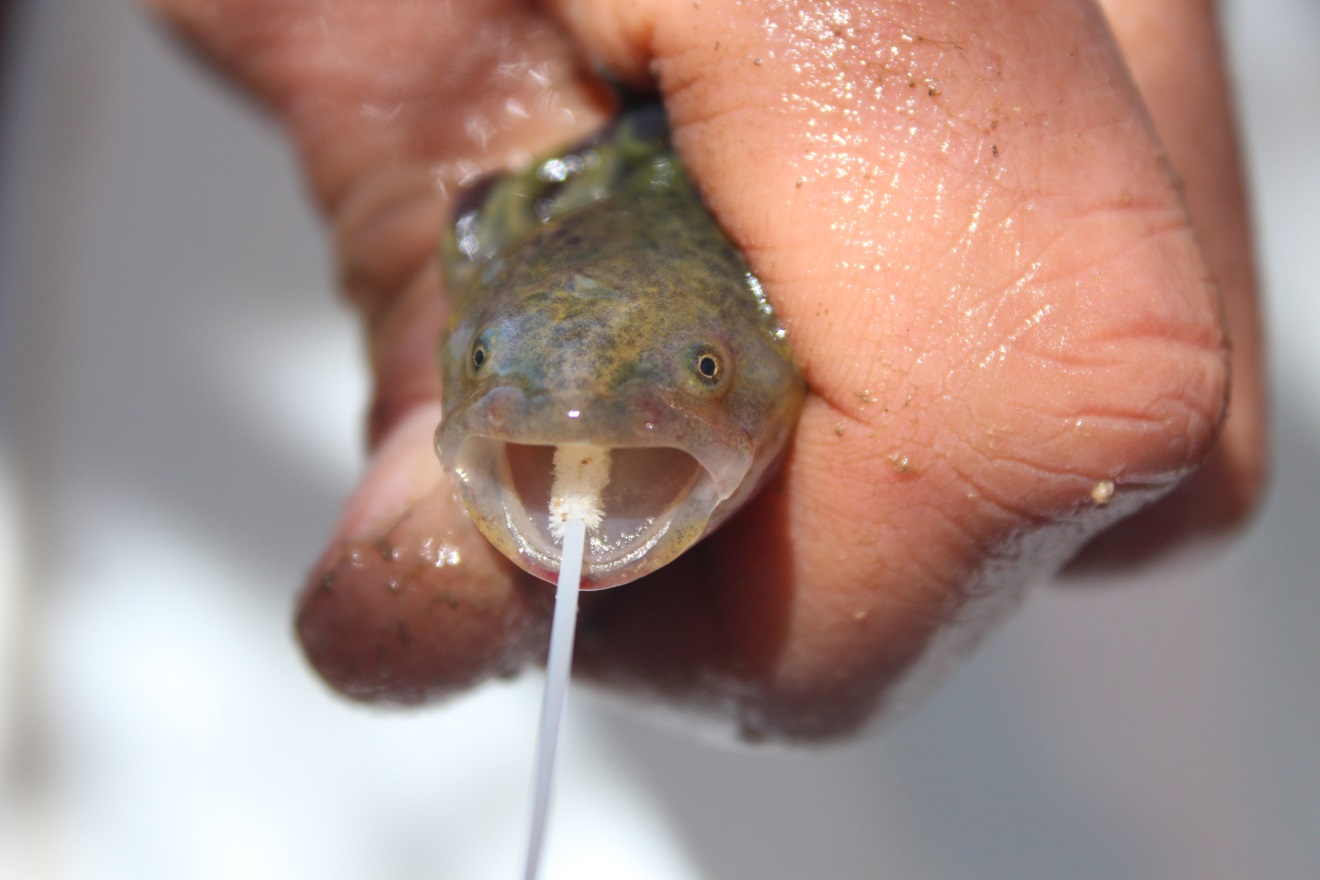
ARMI scientists Blake Hossack (NOROCK), Brent Sigafus (SBSC) and Erin Muths (FORT), and ARMI post doc Thierry Chambert traveled to Sonora, Mexico, to survey for Sonoran Tiger Salamanders in May. Reports existed of the presence of this salamander in Sonora, but the spatial extent of its range is unknown. The Sonoran Tiger Salamander is federally endangered in the US and is found only in the San Rafael Valley in southern Arizona. The identification of additional populations in nearby Sonora has implications for multiple conservation concerns including population biology, genetics, and disease. Data collected about its presence and abundance across the border will contribute to the identification of management objectives and subsequent implementation of conservation actions. The surveys were a collaborative effort with logistical support from Naturalia (http://www.naturalia.org.mx/) that included the expertise of Naturalia employees Daniel Toyos and Ramon Babuca. The trip also benefitted from assistance from Guillermo Molina (Instituto Tecnológico Superior De Cananea), Julio Lemos Espinal (UNAM), and students David Hurtado and Aline Estrella. Jim Rorabaugh contributed much to the trip by sharing knowledge of the Sonoran system gained from his previous expeditions focused on salamanders in Mexico. The effort was based at Rancho Los Fresnos, a Naturalia property located north of the town of Cananea and adjacent to the US–Mexico border. The group sampled a variety of sites on Rancho Los Fresnos, as well as surrounding ranches and locations to the south of Cananea. Tiger salamanders reside primarily in man-made or modified earthen stock tanks. These habitats were seined for salamanders and water samples were collected to test for environmental DNA (eDNA) from salamanders, invasive American bullfrogs, federally-threatened (USA) Chiricahua leopard frogs, and pathogens that cause amphibian diseases. Buccal swabs were collected from captured salamanders for genetic analyses (there is uncertainty in determining the difference among closely related salamanders in the field); and skin swabs were collected to test for disease (both Batrachochytrium salamandrivorans and B. dendrobatidis). This ongoing project has already produced one publication (Hossack et al. 2016. Notes on the Distribution of Tiger Salamanders (Presumed Ambystoma mavortium stebbinsi) in Sonora, Mexico. Herpetological Review 47(2): 177-180), and another is in preparation (Hossack et al. Informing recovery of an imperiled, endemic salamander: coupled dynamics and test of drought-mediated coexistence with invasive predators).
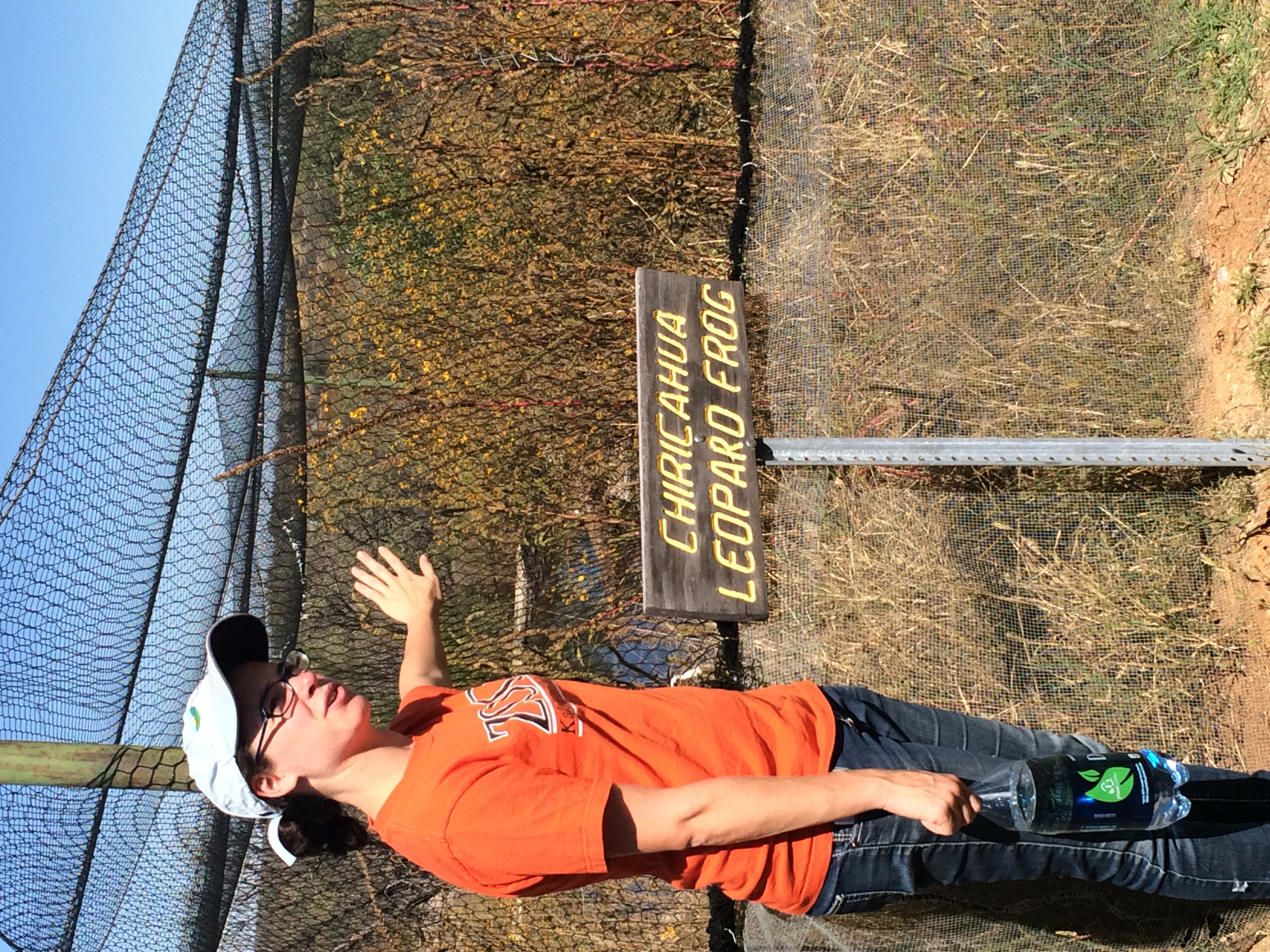
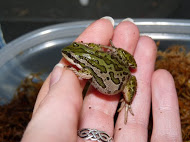
Papers & Reports Survival estimates for reintroduced populations of the Chiricahua Leopard Frog (Lithobates chiricahuensis)
Papers & Reports Phenotypic plasticity in developmental rate is insufficient to offset high tadpole mortality in rapidly drying ponds
this is especially important in temporary aquatic systems that contain organisms with complex life cycles.
We investigated the potential for phenotypic plasticity in timing of and size at metamorphosis to mitigate
effects of altered habitat conditions, specifically shortened hydroperiod (duration of water in ponds)
and altered predator-prey dynamics, in the pond-breeding boreal chorus frog (Pseudacris maculata). We
simulated reduced hydroperiod and concentrated predator cue in the laboratory to understand potential
benefits and costs of plasticity. Tadpoles developed faster in response to the combined effects of reduced
hydroperiod and increased concentration of predator cue, potentially due to reduced conspecific density.
In contrast, there was no effect of reduced hydroperiod or predator cue on size at metamorphosis. Alone,
this result suggests that phenotypic plasticity may allow P. maculata to escape the negative effects of rapidly
drying ponds. However, tadpole survival was significantly lower in reduced hydroperiod treatments
relative to all other treatments, suggesting that even if plasticity acts as a buffer against reduced hydroperiod
by facilitating metamorphosis, heightened mortality may offset benefits of this rapid response. Our
results add to previous studies of plastic responses in amphibians by disentangling the costs and benefits
of plasticity in habitats with multiple, simultaneous stressors. We show that while plasticity may accelerate
metamorphosis, similar, heightened levels of mortality are experienced regardless of plasticity. This
implies that plasticity may not completely buffer populations against the effects of altered habitat conditions,
such as those that occur with climate change or urbanization.
Papers & Reports Mitigating amphibian chytridiomycosis in nature

News & Stories New Research Confirms Continued, Unabated and Large-Scale Amphibian Declines: Local Action Key to Reversing Losses
LAUREL, Md. -- New U.S. Geological Survey-led research suggests that even though amphibians are severely declining worldwide, there is no smoking gun – and thus no simple solution – to halting or reversing these declines.
“Implementing conservation plans at a local level will be key in stopping amphibian population losses, since global efforts to reduce or lessen threats have been elusive,” said Evan Grant, a USGS research wildlife biologist who led the study published in Scientific Reports today. “This research changes the way we need to think about amphibian conservation by showing that local action needs to be part of the global response to amphibian declines, despite remaining questions in what is causing local extinctions.”
Amphibian declines are a global phenomenon that this new research demonstrates has continued unabated in the United States since at least the 1960's, and which are occurring even in protected national parks and refuges. Scientists have broadly linked declines to environmental factors like climate, human influence such as land-use change, and contaminants and disease, but have not been able to use actual scientific data on a large scale to discern causes of the ongoing disappearance of amphibian populations.
The new study is the first to test this linkage at a continental scale, and finds that the presence and intensity of the four main threats – human influence, disease, pesticide application, and climate change varies substantially across the US. The causes of the declines are more variable – and more locally driven – across the United States than had been assumed.
For example, the research provides evidence that the average decline in overall amphibian populations is 3.79 percent per year, which supports previous USGS-led research findings from 2013 that showed a similar rate of loss, though the new research finds that the decline rate is more severe in some regions, such as the West Coast and the Rocky Mountains. If this rate remains unchanged, these species would disappear from half of the habitats they occupy in about 20 years.
"Losing 3 or 4 percent of amphibian populations might not sound like a big deal but small losses year in and year out quickly lead to dramatic and consequential declines,” said USGS ecologist Michael Adams, a study coauthor and the lead for the USGS Amphibian Research and Monitoring Initiative, which studies amphibian trends and causes of declines.
David Miller, a professor at Penn State University and the lead biometrician in the study, summarized the extent of the effort.
"This study involved a truly comprehensive and collaborative effort to bring together data from researchers across the United States,” Miller said. “We combined nearly half a million actual observations of 84 species across 61 study areas to answer questions about the causes of wide-scale amphibian declines.”
The research, “Quantitative evidence for the effects of multiple drivers on continental-scale amphibian declines,” was led by Evan Grant, USGS; David Miller, Penn State University; Erin Muths, USGS; and 22 others. The study was published in the open-access journal Scientific Reports. Read the full text version here: http://www.nature.com/articles/srep25625
News & Stories Amphibians in the news
This week, our very own eccentric biologist, Robert Fisher, gave an interview on KPCC about amphibian declines in Southern California.
The follow up article was posted online. You can view it here: http://www.scpr.org/news/2016/05/23/60926/california-s-amphibians-threatened-by-climate-chan/
Elsewhere, Evan Grant communicated with VOA News, Field and Stream magazine, and UPI.com in hope of reaching out to the public on the current state of Amphibians.
Their stories can be viewed here: http://www.voanews.com/content/mht-unabated-amphibian-decline-found-to-have-myriad-causes/3342617.html
Here: http://www.fieldandstream.com/blogs/field-notes/new-research-confirms-large-scale-amphibian-die-off
And here: http://www.upi.com/Science_News/2016/05/23/Amphibians-in-continued-global-decline/8341464025350/
Update: One more article to add to the flurry of recent amphibian updates: http://www.natureworldnews.com/articles/22906/20160525/are-amphibians-about-to-go-extinct-the-amphibian-crisis-is-worse-than-you-think.htm
Papers & Reports Using spatial capture-recapture to elucidate population processes and space-use in herpetological studies
Papers & Reports INFORMING RECOVERY OF THE ENDANGERED SONORAN TIGER SALAMANDER: 10-YEAR TRENDS IN OCCUPANCY OF SALAMANDERS, INVASIVE PREDATORS, AND THEIR CO-OCCURRENCE
Papers & Reports Climate-mediated competition in a high-elevation salamander community
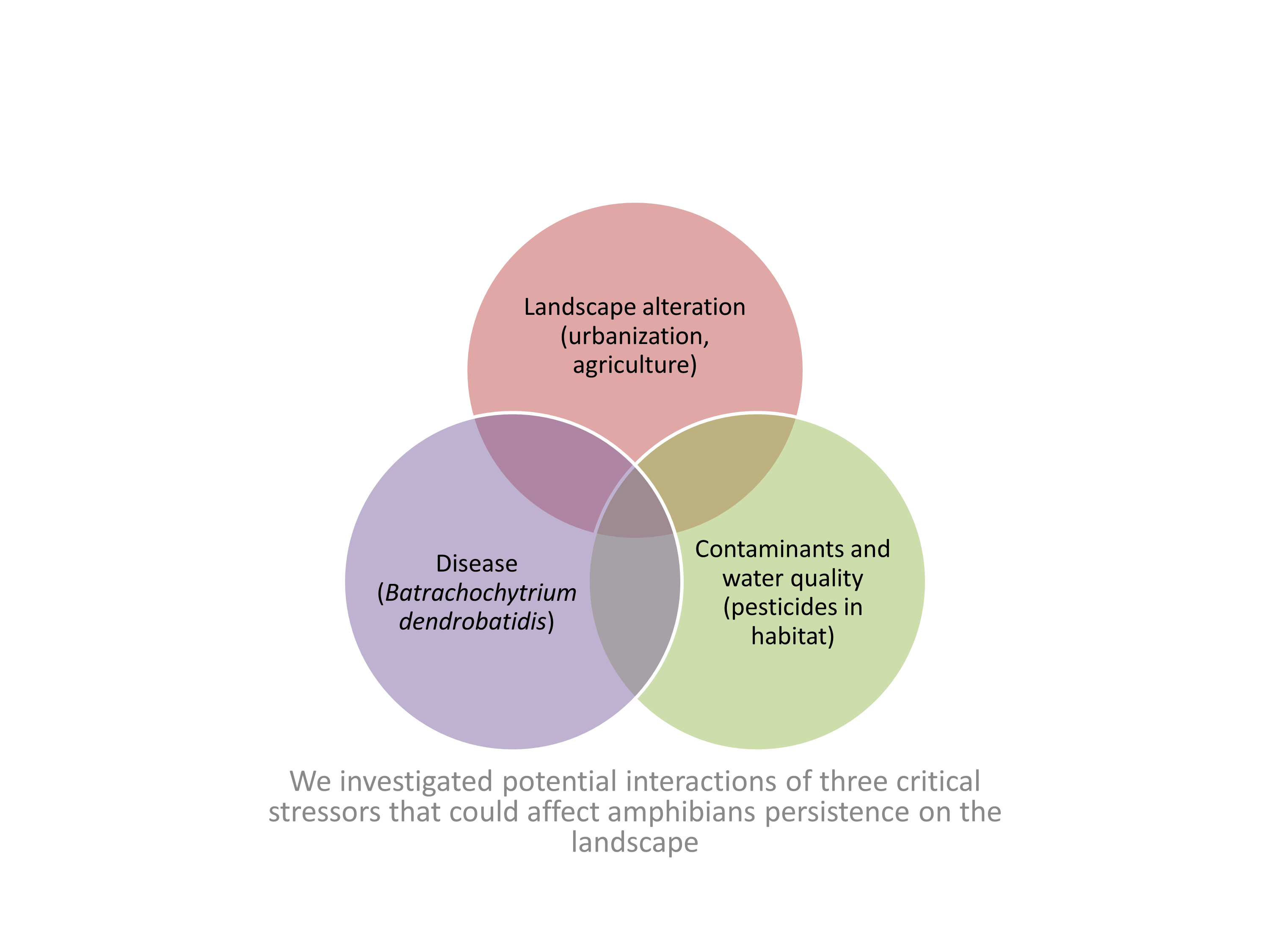
Papers & Reports Potential Interactions Among Disease, Pesticides, Water Quality and Adjacent Land Cover in Amphibian Habitats in the United States
Data were collected from a range of locations and amphibian habitats and represent some of the first field-collected information aimed at understanding the interactions between pesticides, land use, and amphibian disease. These interactions are of particular interest to conservation efforts as many amphibians live in altered habitats and may depend on wetlands embedded in these landscapes to survive.