Search ARMI Database
Search term(s)
Contribution Number
Search Results
1292 record(s) found.
Papers & Reports Disease in a dynamic landscape: Host behavior and wildfire reduce amphibian chytrid infection
Papers & Reports History and status of the California red-legged frog (Rana draytonii) in the Sierra Nevada, California, USA.
Papers & Reports Interactive effects of wildfire, forest management, and isolation on amphibian and parasite abundance
populations and communities worldwide, including host–parasite relationships. Research in
temperate forests has shown that wildfire can negatively affect amphibians, but this research
has occurred primarily outside of managed landscapes where interactions with human
disturbances could result in additive or synergistic effects. Furthermore, parasites represent a
large component of biodiversity and can affect host fitness and population dynamics, yet they
are rarely included in studies of how vertebrate hosts respond to disturbance. To determine
how wildfire affects amphibians and their parasites, and whether effects differ between
protected and managed landscapes, we compared abundance of two amphibians and two
nematodes relative to wildfire extent and severity around wetlands in neighboring protected
and managed forests (Montana, USA). Population sizes of adult, male long-toed salamanders
(Ambystoma macrodactylum) decreased with increased burn severity, with stronger negative
effects on isolated populations and in managed forests. In contrast, breeding population sizes
of Columbia spotted frogs (Rana luteiventris) increased with burn extent in both protected and
managed protected forests. Path analysis showed that the effects of wildfire on the two species
of nematodes were consistent with differences in their life history and transmission strategies
and the responses of their hosts. Burn severity indirectly reduced abundance of soil-transmitted
Cosmocercoides variabilis through reductions in salamander abundance. Burn severity also
directly reduced C. variabilis abundance, possibly though changes in soil conditions. For the
aquatically transmitted nematode Gyrinicola batrachiensis, the positive effect of burn extent on
density of Columbia spotted frog larvae indirectly increased parasite abundance. Our results
show that effects of wildfire on amphibians depend upon burn extent and severity, isolation,
and prior land use. Through subsequent effects on the parasites, our results also reveal how
changes in disturbance regimes can affect communities across trophic levels.
Papers & Reports The effects of the amphibian chytrid fungus, insecticide exposure, and temperature on larval anuran development and survival
News & Stories Making better predictions: using multispecies models to inform habitat management for amphibians
The ability to accurately predict patterns of species’ occurrences is fundamental to the successful management of animal communities. To determine optimal management strategies, it is essential to understand species-habitat relationships and how species habitat use is related to natural or human-induced environmental changes. Using five years of monitoring data in the Chesapeake and Ohio Canal National Historical Park, Maryland, USA, Northeast ARMI developed four multi-species hierarchical models for estimating amphibian wetland use that account for imperfect detection during sampling in the Chesapeake and Ohio National Historical Park (CHOH). The models were designed to determine which factors (wetland habitat characteristics, annual trend effects, spring/summer precipitation, and previous wetland occupancy) were most important for predicting future habitat use. We used the models to make predictions of species occurrences in sampled and unsampled wetlands and evaluated model projections using additional data. Using a Bayesian approach, we calculated a posterior distribution of receiver operating characteristic area under the curve (ROC AUC) values, which allowed us to explicitly quantify the uncertainty in the quality of our predictions and to account for false negatives in the evaluation dataset. We found that wetland hydroperiod (the length of time that a wetland holds water) as well as the occurrence state in the prior year were generally the most important factors in determining occupancy. The model with only habitat covariates predicted species occurrences well; however, knowledge of wetland use in the previous year significantly improved predictive ability at the community level and for two of 12 species/species complexes. Our results demonstrate the utility of multi-species models for understanding which factors affect species habitat use of an entire community (of species) and provide an improved methodology using AUC that is helpful for quantifying the uncertainty in model predictions while explicitly accounting for detection biases. Additionally, our results provide a scientific basis for implementing conservation management for amphibians in CHOH in light of future climate change and observed declines in occurrence.
Zipkin, EF, EH Campbell Grant, WF Fagan. Evaluating the predictive abilities of community occupancy models using AUC while accounting for imperfect detection. Ecological Applications Preprint http://www.esajournals.org/doi/pdf/10.1890/11-1936.1

News & Stories ARMI will be attending The World Congress of Herpetology
From August 8- 14th, ARMI scientists will be joining colleagues from around the globe at the World Congress of Herpetology at the University of British Columbia in Vancouver, British Columbia. The World Congress is a collaboration of international representatives from herpetology societies around the world with the mission to promote research, education and conservation in herpetology. Every four years, the World Congress convenes over 1,500 scientists from over 50 countries who specialize in research on amphibians and reptiles. ARMI is kicking off the Congress this year with a symposium entitled “Amphibian monitoring across the U.S.: Tracking declining populations in diverse habitats and unique assemblages. ARMI has become a global leader in amphibian decline research and monitoring, and is proud to share its research findings with the same international scientific group that first recognized and brought amphibian declines to the forefront of the science community.
The World Congress focuses on quantifying, understanding and searching for solutions to ameliorate the impacts of what scientists believe is the current expression of the world’s sixth major extinction which has impacted amphibians, and possibly reptiles, disproportionately across the planet.
More on the World Congress of Herpetology http://www.worldcongressofherpetology.org/
Abstracts: http://armi.usgs.gov/wch.php
Papers & Reports The U.S. Geological Survey Amphibian Research and Monitoring Initiative: 2011 Annual Update
Papers & Reports Frog population viability under present and future climate conditions: a Bayesian state-space approach
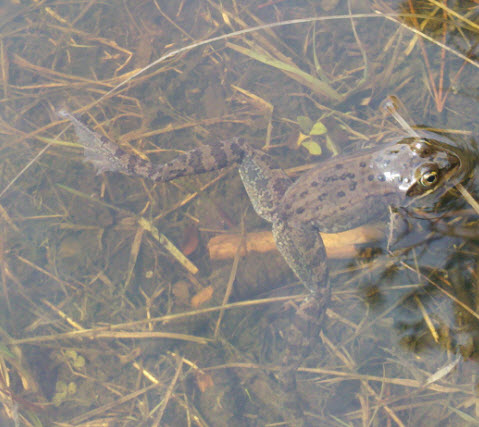
2. We used Bayesian capture–recapture methods to estimate survival and transition probabilities in a high-elevation population of the Columbia spotted frog (Rana luteiventris) over 10 years and related these rates to interannual variation in peak snowpack. Then, we forecasted frog population growth and viability under a range of scenarios with varying levels of change in mean and variance in snowpack.
3. Over a range of future scenarios, changes in mean snowpack had a greater effect on viability than changes in the variance of snowpack, with forecasts largely predicting an increase in population viability. Population models based on snowpack during our study period predicted a declining population.
4. Although mean conditions were more important for viability than variance, for a given mean snowpack depth, increases in variability could change a population from increasing to decreasing. Therefore, the influence of changing climate variability on populations should be accounted for in predictive models. The Bayesian modelling framework allows for the explicit characterization of uncertainty in parameter estimates and ecological forecasts, and thus provides a natural approach for examining relative contributions of mean and variability in climatic variables to population dynamics.
5. Longevity and heterogeneous habitat may contribute to the potential for this amphibian species to be resilient to increased climatic variation, and shorter-lived species inhabiting homogeneous ecosystems may be more susceptible to increased variability in climate conditions.
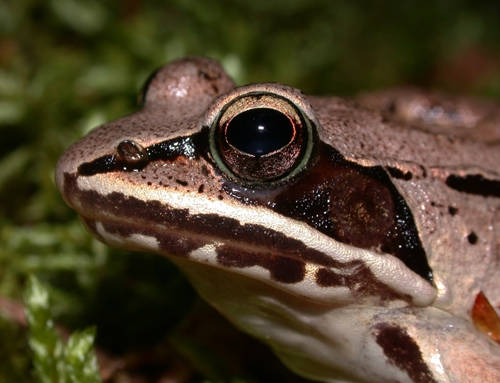
Papers & Reports The Genetic Structure of a relict population of wood frogs
Papers & Reports Rapid increases and time-lagged declines in amphibian occupancy after wildfire
Papers & Reports Effects of hydroperiod duration on survival, developmental rate, and size at metamorphosis in boreal chorus frog tadpoles ( Pseudacris maculata
News & Stories Reptiles, Amphibians in US Succumbing to Deadly Ranavirus
The Voice of America (VOA), the official external broadcast institution of the US government, recently interviewed Dr. David Green about ranaviruses, the class of viruses which has been impacting local populations of amphibians and freshwater turtles in the MidAtlantic US. The virus infection was first recognized in the early 1990s by Green in Maryland's box turtles prior to his transfer to USGS where he became the pathologist for the Amphibian Research and Monitoring Initiative (ARMI). Ranaviruses are an important emerging disease in amphibians and reptiles across the globe that is killing local populations with alarming swiftness and there is concern that ranaviruses may be the next “chytrid fungus” in amphibians and turtles. Over the past 10 years, sick and dead amphibians have been found on private, State, and Federal lands, including several National Parks and Wildlife Refuges. VOA provides a wide range of programming for broadcast on radio, TV and internet outside of the US in 44 languages.
Follow this link for full story: http://www.voanews.com/english/news/usa/Reptiles-Amphibians-in-US-Succumbing-to-Deadly-Ranavirus-147292065.html
Papers & Reports Estimating patterns and drivers of infection prevalence and intensity when detection is imperfect and sampling error occurs.
2) We developed new analytical methods to simultaneously estimate prevalence and the distribution of infection intensities based on repeated sampling of individuals in the wild. The methods are an extension of those used for occupancy estimation and address both sources of observation error. At the same time, we account for heterogeneity in detection probability that results from individual variation in infection intensity. <br />
3) We use two estimation approaches to account for detection. The first is to use the complete likelihood in a hierarchical Bayesian model, fit using Markov chain Monte Carlo sampling. The second is to estimate the detection relationship using a mark-recapture abundance estimator and uses those results to calculate weighted estimates for prevalence and mean infection intensities.<br />
4) We use data from a field survey of Batrachochytrium dendrobatidis (Bd) in Illinois amphibians to test these methods. We show that detection probability using quantitative PCR is strongly related to infection intensity, measured in zoospore equivalents. Sites in the study varied greatly in estimated prevalence and to a lesser extent in mean infection intensities of infected individuals. We did not find evidence of a relationship of snout-vent-length to infection intensity or prevalence. Naïve estimates of prevalence that do not account for detection were smaller than estimates for either of our methods, which yielded similar prevalence values for most sites. <br />
5) Uncertainty when assessing disease state is a characteristic of most diagnostic tests. The estimators presented here account for this uncertainty and thus, can improve accuracy when assessing the relationship of ecological factors to prevalence and infection intensity.

Papers & Reports Joint estimation of habitat dynamics and species interactions: disturbance reduces co-occurrence of non-native predators with an endangered toad.
2. We fit detection and non-detection data collected from repeat visits using a dynamic site occupancy model that simultaneously accounts for the temporal dynamics of a focal prey species, its predators, and its habitat. Our objective was to determine how disturbance and species interactions affect the co-occurrence probabilities of an endangered toad and recently introduced non-native predators in stream breeding habitats. To do this we determined support for alternative processes that could affect co-occurrence frequency in the system. <br />
3. Co-occurrence probabilities of toads with non-native predators in high-disturbance ephemeral streams and low-disturbance perennial streams were directly related to the differences disturbance regimes in each of the stream types. If predators were established at a site, they were rarely lost from the site except in cases when the site dried out. Once a dry site became suitable again, toads colonized them much more rapidly than predators, creating a period of predator-free space.<br />
4. We attribute the dynamics to a ‘storage effect’ where toads persisting outside of the stream environment during periods of drought rapidly colonized sites when they become suitable again. Our results demonstrate that, even in a highly connected stream network, temporal disturbance can structure frequencies with which breeding amphibians encounter non-native predators.<br />
5. Dynamic site occupancy models are a powerful tool for quantifying inter-species and species-habitat interactions. In contrast to previous methods that infer dynamic processes based on static patterns in occupancy, the approach we take allows the dynamic processes that determine species-species and species-habitat interactions to be directly estimated.

News & Stories ARMI Pathologist Dr. David Green interviewed by National Public Radio on emerging disease of amphibians and turtles.
A poorly understood disease caused a stir recently when it was implicated in the deaths of freshwater turtles and tadpoles near a construction project outside of Washington DC.
In addition to the site in Maryland, USGS scientists have already isolated ranaviruses from die-offs among more than 20 species of turtles and amphibians in mortality events ranging from one to thousands of individuals in over 25 states.
Die-offs of amphibians from ranavirus have occurred on private, State, and Federal lands, including several National Parks and Wildlife Refuges. Many of the amphibian species involved in die-offs are fairly common and widespread in the United States, but some are either declining in number or are already threatened or endangered.
Follow the link to hear the full report: http://wamu.org/programs/metro_connection/12/03/09/scientists_scramble_to_understand_a_mystery_virus
For more info on amphibian diseases, visit the USGS National Wildlife Health Center website here: http://www.nwhc.usgs.gov/

Papers & Reports Experimental investigation of false positive errors in auditory species occurrence surveys.

Papers & Reports Overwintering tadpoles and loss of fitness correlates in Polypedates braueri tadpoles that use artificial pools in a lowland agroecosystem
dynamics of native frog populations.
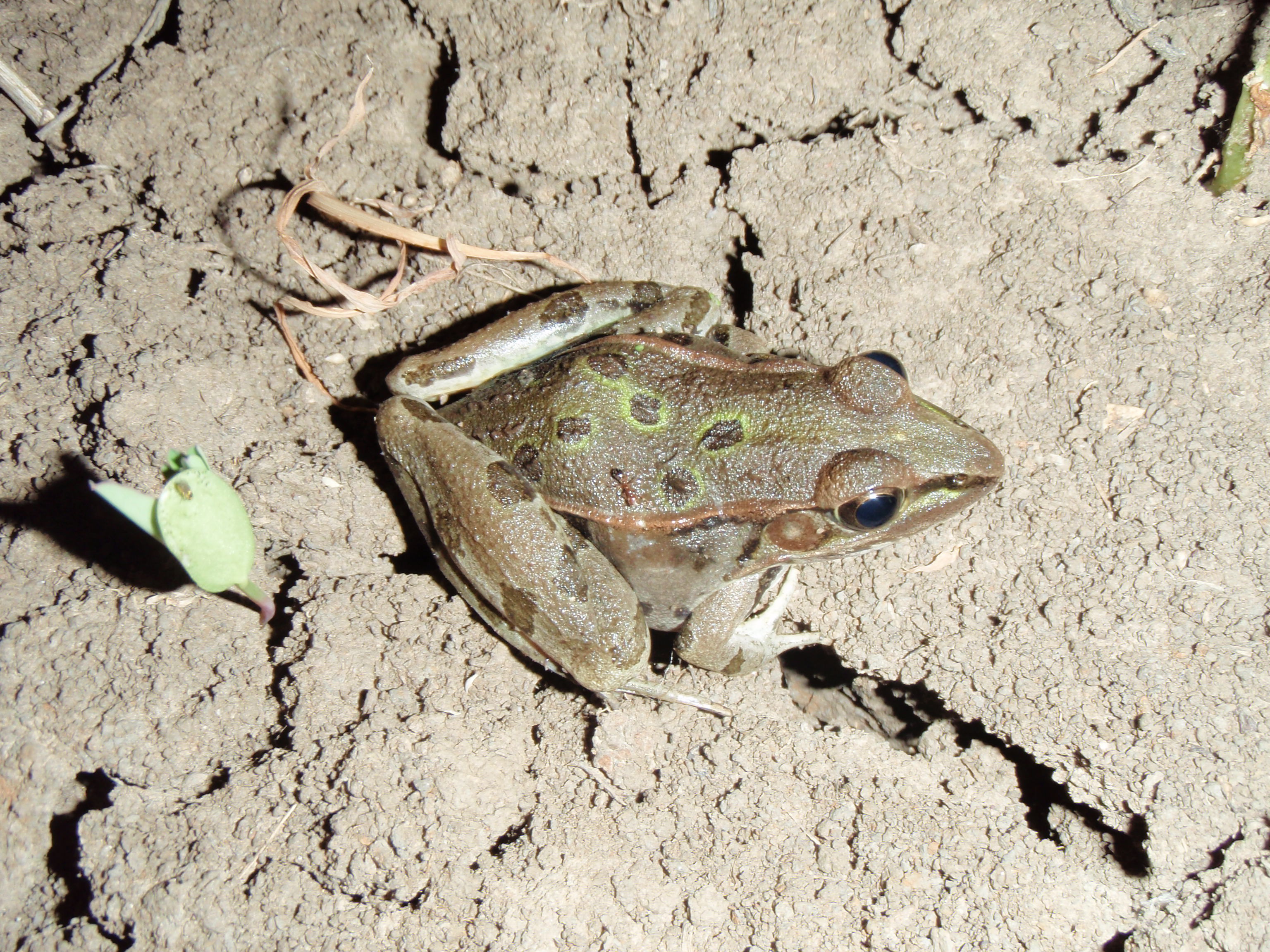
Papers & Reports A quantitative assessment of the conservation benefits of the Wetlands Reserve Program to amphibians
News & Stories ARMI scientist gives an interview on current research to reverse amphibian declines.
The global decline in amphibians requires a multi-prong approach with Federal and State agencies and Non-governmental organizations each taking up a part of the effort.
Just as in other countries, the effort in the United States requires collaboration and creative solutions.
In a recent interview conducted by Voice of America, reporter Rebecca Ward interviews several wildlife professionals about their research and management projects to reverse amphibian declines.
Dr. Evan Grant, Regional Coordinator of NE ARMI spoke with Rebecca about an adaptive management research project developed collaboratively by the ARMI program, Dr Larissa Bailey and Adam Green from Colorado State University and the US Fish and Wildlife
Service (Patuxent Research Refuge) on the manipulation of ponds to benefit wood frogs under predicted climate change scenarios. Check out the video link!