
A Star of Streamy Sunday: the Tailed Frog of the western US
Streams might not be the first kind of habitat that you think of when you think about frogs, but for Amphibian Week’s Streamy Sunday, we are expanding our “pond vision” for a vision of frogs in streams, creeks and big lakes. One great example of an amphibian that is especially adapted to streams is the Tailed Frog. There are two species of Tailed Frog. One species, Ascaphus truei, lives in the Pacific Northwest, the other one, Ascaphus montanus, lives in the northern Rocky Mountains. These frogs are some of the most mysterious denizens of the streams and forests where they occur – it is unusual to actually see one of them in the wild. Tailed Frog tadpoles hide among the cobbles (rocks) lining the bottom of their home streams; adult frogs are small (<60 mm) and colored to blend in with their surrounding habitat. When adults venture out of the stream, it is usually at night.
These species have narrow environmental tolerances, for instance, they survive within a narrow temperature range, 6-14C. A. truei seems to tolerate higher stream temperatures than A. montanus, perhaps a reflection of typical stream temperatures in their native ranges (i.e., Pacific northwest versus Rocky Mountains). In addition, Tailed Frogs show low rates of dispersal (i.e., they don’t move around much) and low population growth. Rocky Mountain tailed frogs take a very long time to reach breeding age (6-8 years after hatching) and females lay only < 50 eggs / year (compare this to a toad that can lay 5000+ eggs per year). Further, Tailed Frogs stay in the tadpole stage for 4-5 years, and need permanent streams to provide aquatic habitat. These characteristics make these species really useful in studying disturbances to their habitat, and more broadly, in understanding the entire landscape – a landscape that encompasses not only frog habitat, but habitat for other animals, including humans that like to hike, camp, and enjoy nature.
Wildfire is a landscape-scale disturbance that is becoming more common, and increasing in occurrence and in intensity. Wildfires leave behind ash. Rains that come after fire typically wash ash and other wildfire debris in creeks. Ash and debris can affect water quality and temperature and even fill in small creeks. Stream beds can be more fundamentally changed if there are larger scale landslides that alter the substrate (e.g., displacing cobble) or shift the channel configuration of the stream. It might seem odd that wildfire is so important to Tailed Frogs, but their life history (remember that they can be tadpoles for 4-5 years) dictates the need for stream habitat with appropriate in-bchannel features. Further, fires can reduce canopy cover that can significantly alter temperatures in the stream.
Tailed Frog tadpoles are specifically adapted to live and feed in fast flowing streams. Instead of mouths on the front of their head, their mouths are on the bottom of their head and their bodies are somewhat flattened. Tadpoles typically feed on algae from cobble in the stream using their scraping teeth. The mouth structure includes folds in the skin that help to create suction and hold the tadpoles onto the rock where they are feeding. Their flattened body reduces drag from the current. These adaptations allow these tadpoles to hold on tight, feed themselves, and not get swept downstream. Clearly, fire impacts like alterations to stream channel “topography” (e.g., availability of cobble), water clarity (e.g., ash content), and reductions in canopy cover that affect temperature can have out-sized impacts on Tailed Frog tadpoles.
Not only do Tailed Frogs stand out as stars for Streamy Sunday, but they also have the distinction of representing an ancient lineage of frogs. Because of this lineage, and their unique evolutionary history, some researchers don’t consider them a frog at all. Tailed Frogs are unique among species of amphibians in the United States, and even worldwide. In almost every characteristic, they are unique.
Here are a few Gee-whiz characteristics about the Tailed Frog:
- Is that really a tail? Not really - The male Tailed Frog has a fleshy extension of the cloaca. This structure is used for internal fertilization. Internal fertilization is unusual in frogs! In most frogs, females lay eggs in the water and males release sperm onto the eggs.
- Tailed frogs don’t have external eardrums (tympanum), (at least they aren’t visible. Tailed frogs are thought to “hear” by sensing vibration – something that some other frogs do with body parts like their lungs. Because Tailed Frogs live in loud, turbulent environments (e.g., fast moving streams) maybe “hearing” is not as important for these frogs.
- Unlike other frogs that live in noisy habitats like streams or waterfalls (e.g. the Kihansi Spray Toad that has a very loud “chit chitchit”. Tailed Frogs don’t call. They are voiceless – very interesting, especially in a noisy stream habitat.
- Tailed frogs possess free ribs, a characteristic of the basal (very early) group Archaeobatrachia (the taxonomic grouping that includes primitive frogs and toads). In contrast, more advanced (i.e., modern) frogs do NOT have free ribs. It has been suggested that free ribs are involved in buoyancy, an important characteristic for Tailed Frogs living in turbulent streams.
- Tailed Frogs have unique antimicrobial peptides called ascaphins that inhibit the growth of certain bacteria. These ascaphins are secreted from the frog’s skin.
- The Tailed Frog family tree is quite small. They belong in the taxonomic Family named Leiopelmatidae. Their closest relatives live in New Zealand!
ARMI researchers and colleagues have studied Tailed Frogs since the early 2000s. Research has included demography (Bury, R.B. and Adams, M.J., 1999. Variation in age at metamorphosis across a latitudinal gradient for the tailed frog, Ascaphus truei. Herpetologica, pp.283-291.); The effects of wildfire (Hossack, B.R. and Honeycutt, R.K., 2017. Declines revisited: Long-term recovery and spatial population dynamics of tailed frog larvae after wildfire. Biological Conservation, 212, pp.274-278.); How forest harvest effects headwater stream amphibian (e.g., Tailed Frogs) abundance (Duarte, A., Chelgren, N.D., Rowe, J.C., Pearl, C.A., Johnson, S.L. and Adams, M.J., 2023. Adjacent and downstream effects of forest harvest on the distribution and abundance of larval headwater stream amphibians in the Oregon Coast Range. Forest Ecology and Management, 545, p.121289.); and how climate variability affects Tailed Frog physiology (Cicchino, A.S., Ghalambor, C.K., Forester, B.R., Dunham, J.D. and Funk, W.C., 2024. Greater plasticity in CTmax with increased climate variability among populations of tailed frogs. Proceedings of the Royal Society B: Biological Sciences, 291(2034)).
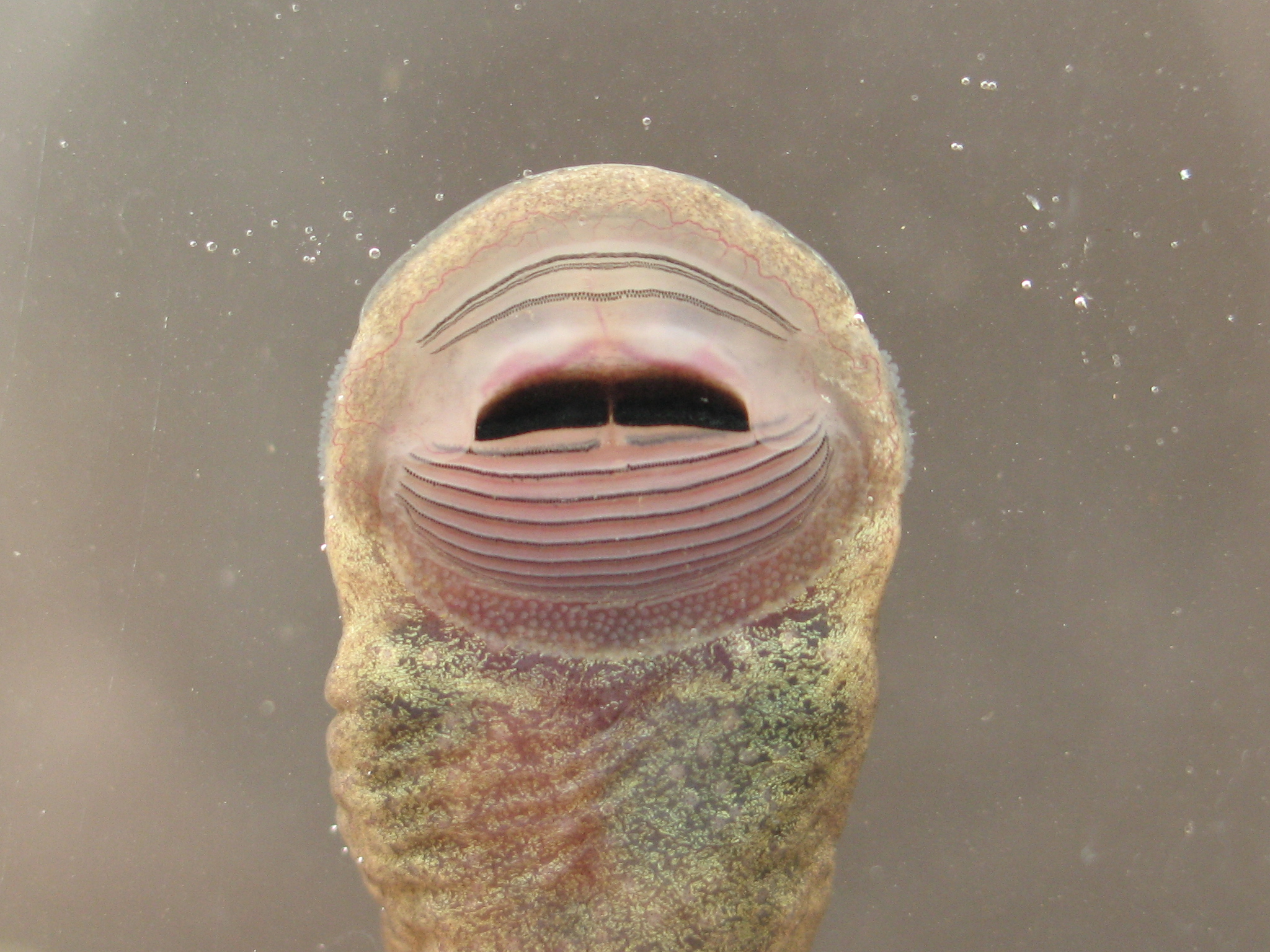
The underside of an Ascaphus truei showing its mouth.
Photo by: B. McCreary, USGS
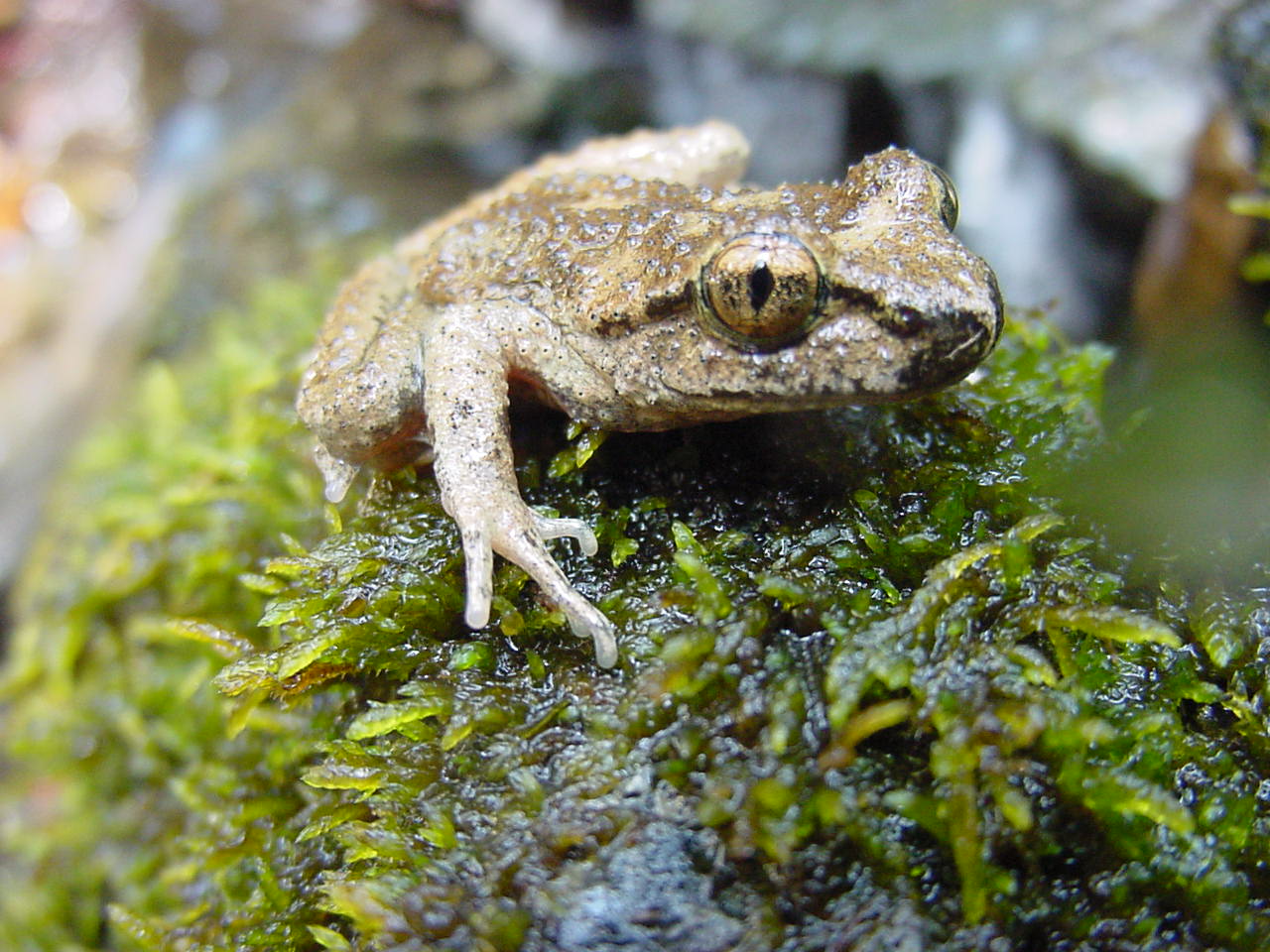
An Ascaphus truei sitting next to a stream.
Photo by: B. McCreary, USGS