
Harmful Algal Blooms (HABs) are a hidden threat to wetlands and amphibians
Many people overlook algae as just some green scum on the water’s surface, but certain types can quickly multiply in suitable conditions and cause harmful algal blooms (HABs). Blooms can occur when algae, often cyanobacteria, grow quickly, fueled by warm temperatures, stable water conditions, and increased nutrient inputs from surrounding areas. While algae are a natural and essential component of aquatic ecosystems, HABs have become problematic because they are now more common and often produce potent toxins that can affect wildlife, pets, and even human health. In large waterbodies like Lake Erie, HABs can become so big that they can be seen from space. They show up on satellite images as sweeping green swirls, an unmistakable sign of their scale and ecological impact.
Wetlands function as natural sinks that trap water, sediment, and nutrients making these important habitats susceptible to HABs. When nutrient concentrations and temperatures rise, algae can grow quickly, forming dense mats that reduce light penetration and limit photosynthesis in submerged plants. Importantly, algal toxins produced during a HAB event can impair and even cause mass mortality events for fish, amphibians, and birds that commonly live in wetlands. As algal blooms die and decompose, dissolved oxygen can be depleted, creating stressful or lethal conditions for aquatic organisms. These effects can disrupt food webs, alter habitat structure, and reduce the overall resilience of wetland ecosystems.
Amphibians—frogs, toads, salamanders, and caecilians—are highly sensitive to changes in their environment such as contaminants, disease, and HABs. Characteristics like permeable skin and aquatic life stages make amphibians especially vulnerable to both poor water quality and algal toxins. Recent research from the U.S. Geological Survey’s (USGS) Amphibian Research and Monitoring Initiative (ARMI) underscores this concern, finding that exposure to algal toxins (cyanotoxins such as microcystins and anatoxin) can impair development, alter behavior, and increase susceptibility to disease, even at concentrations previously considered low risk. Researchers also found that effects of HABs on amphibians are understudied and likely underreported because amphibians decompose rapidly, making it difficult to identify mortality events caused by HABs.
Building on this work, ARMI scientists are now investigating HAB dynamics and effects on amphibians in wetlands across the western United States. ARMI scientists are monitoring HABs in areas where amphibian declines have been documented and where threatened and endangered amphibian species like Mountain Yellow legged Frogs (Rana muscosa) and Oregon Spotted Frogs (Rana pretiosa) still occur. Monitoring can help scientists determine whether HABs represent an emerging stressor for amphibians already challenged by habitat loss, drought, and infectious diseases, ultimately informing conservation strategies for both still-common and at-risk amphibian species. USGS research article, “Effects of Harmful Algal Blooms on Amphibians and Reptiles are Under-Reported and Under-Represented”, is publicly available at: https://doi.org/10.1002/etc.5941
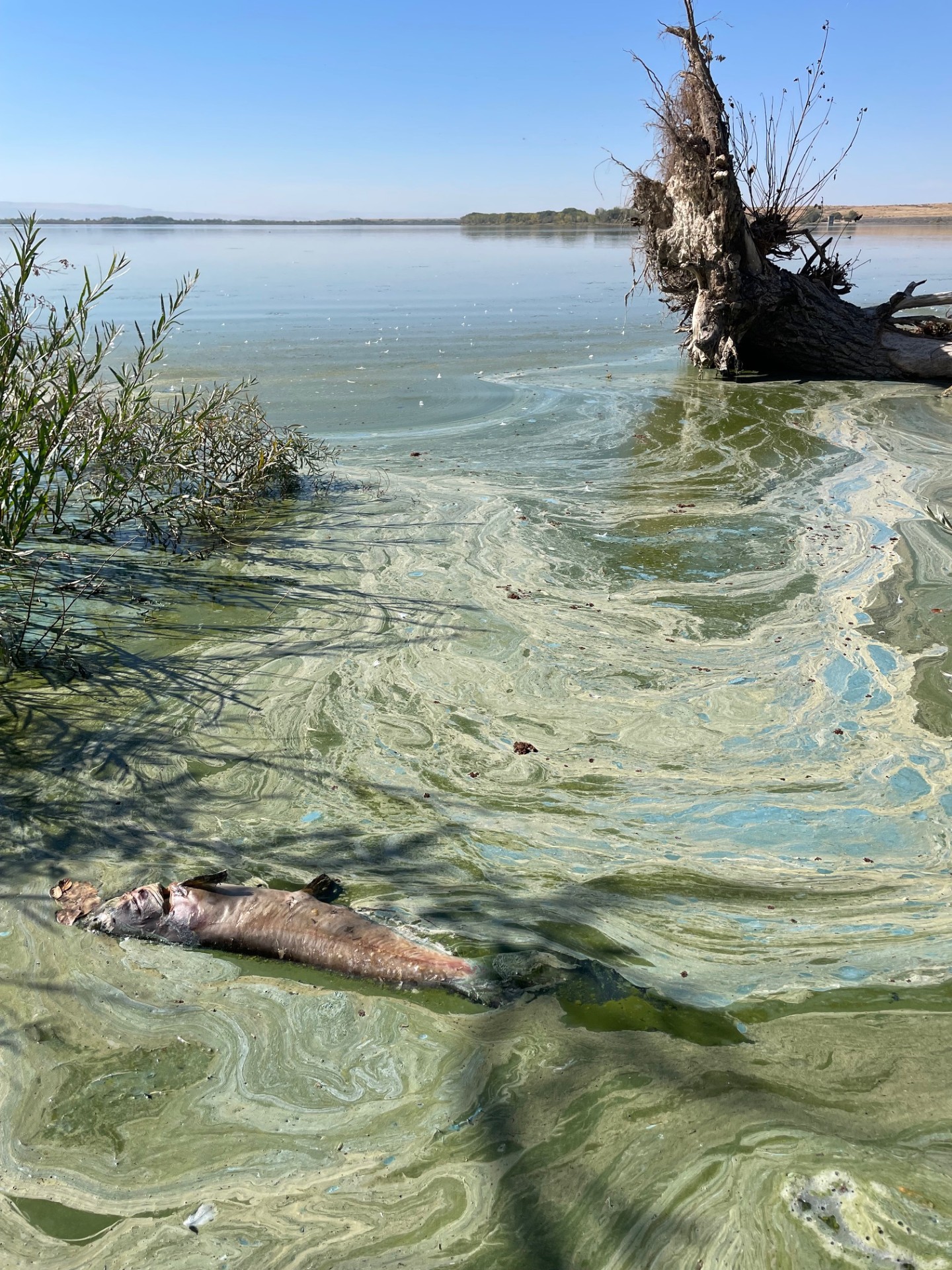
Close-up of HAB at Deer Flat National Wildlife Refuge, Idaho.
Photo by: Brian Tornabene, USGS
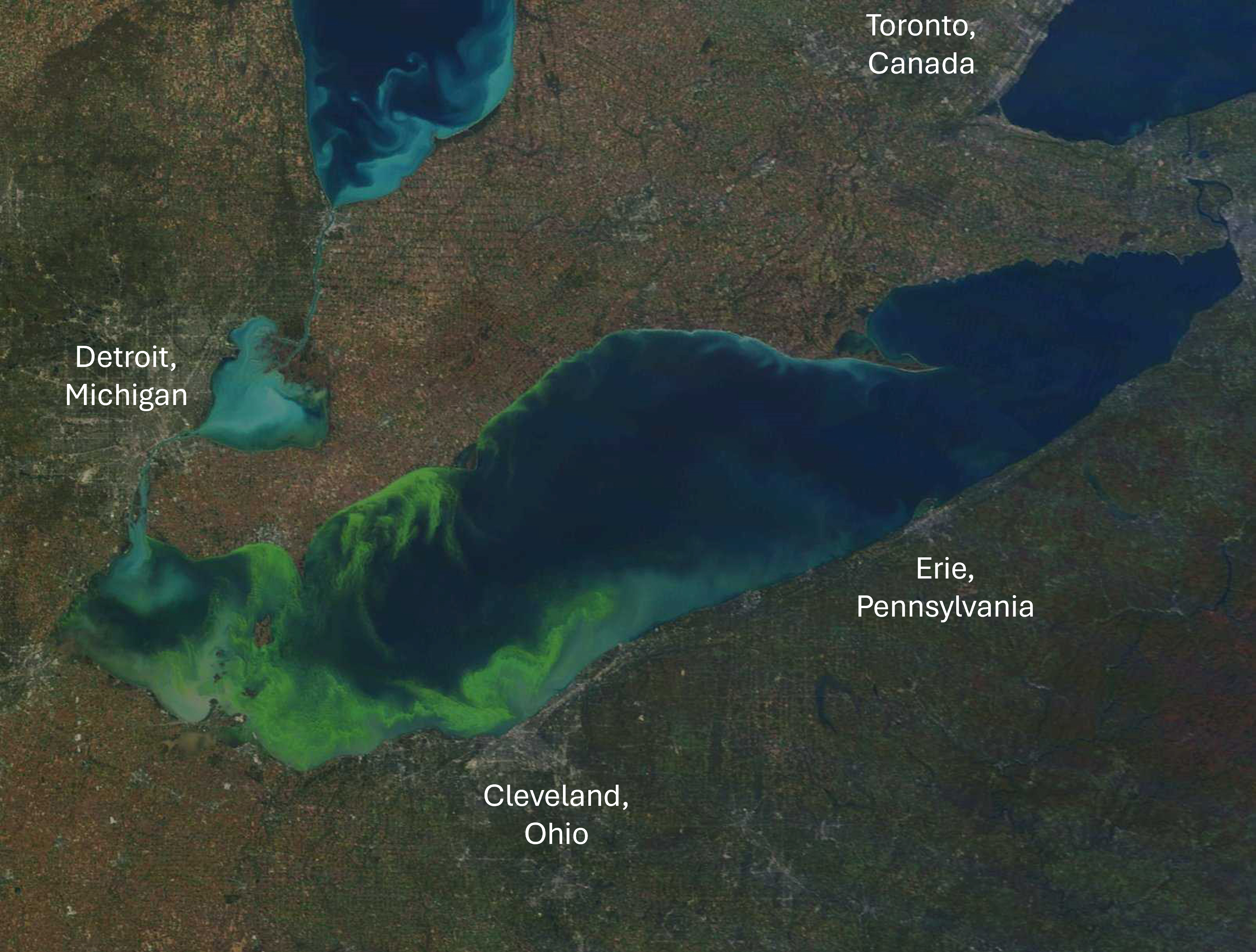
Lake Erie satellite image of HAB in 2011. Courtesy of NASA, NOAA, MODIS. Locations annotated by USGS.
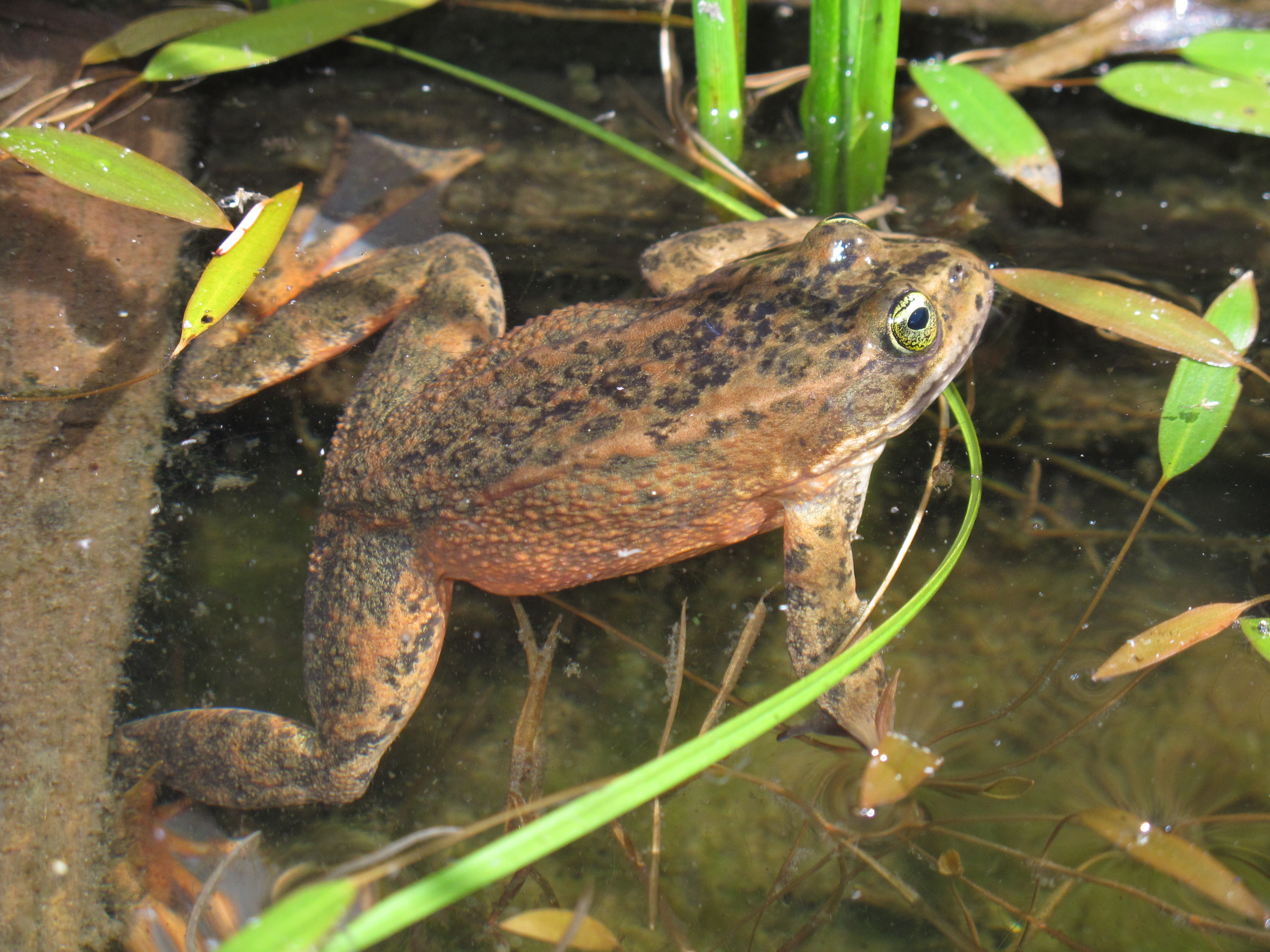
An Oregon Spotted Frog - Rana pretiosa
Photo by: USGS FRESC

A bullfrog - Lithobates catesbeianus
Photo by: Northeast ARMI Region