
Terrestrial Thursday - Life under a Log in a Changing Climate
Each Fall, as the leaves are dropping and the days are getting shorter, a black and white salamander emerges on a rainy night from its underground burrow in a forest. She travels to a nearby depression which will later fill from winter rains and become what is known as a vernal pool or temporary pond. The salamander knows this area well; it likely crawled out of the rain-filled depression in the spring as a transformed young juvenile after spending 4 to 6 months in the water as an aquatic larva. It may have even been here before as an adult to breed and is now returning to the same place to do so again – maybe even to the same specific log that it has used in the past. The salamander – a female, heavy with eggs – moves under the cloak of darkness on the wet forest floor towards the depression that will later become a pond. She bumps into male salamanders while trekking through the forest or maybe once she reaches the pond basin. After mating, the female carries on her way and squeezes underneath a log. She’s looking for a well-seasoned, moist log that is not too high up in the pond basin, but also not right down in the bottom. It has to be just right! She wants the water to eventually get to her eggs, if her log is too high in the basin, the winter rains will never flood her nest of developing young, but if her log is too low the nest may get flooded before the eggs are ready. Once she has found her log, she will deposit her clutch of eggs underneath, on the dry ground. Then she does something that no other salamander in her family (Ambystomatidae) does: she curls around them to protect them and keep them moist until the winter rains arrive and flood her nest site, causing her well-developed, gilled embryos to wriggle out of their egg cases to start life in their new aquatic world.
This salamander – known as the marbled salamander (Ambystoma opacum) – is broadly distributed throughout the eastern United States. It barely crosses the border between Connecticut and New Hampshire at the northern extent of its range. It extends to eastern Texas, Oklahoma and Missouri, then south to the Gulf Coast, including the panhandle and north central regions of Florida. At a broad scale, this wide-ranging species is generally considered “common” but, at the extreme edges of its range, such as in Florida, marbled salamanders are becoming locally uncommon. As the climate warms, Florida winters are becoming warmer and, in many years, the rains are coming later, or there’s not enough rain, or they don’t happen at all! For example, in the fall/winter of 2025/2026, 70% of Florida was under an extreme drought. And as if that was not bad enough, the southeastern U.S. was affected by a La Niña event from August 2025 through the Spring of 2026. La Niña (along with El Niño) is part of the El Niño-Southern Oscillation (ENSO), a Pacific Ocean climate pattern that has global impacts. In the Southeast, La Niña results in drier, warmer winters, whereas El Niño brings just the opposite to this region. Thus, marbled salamanders got a double whammy this past breeding season – an extreme drought in addition to experiencing an El Niño winter. Unfortunately, dry depressions did not get the rain needed to fill and become breeding ponds. The few marbled salamanders that ventured out experienced very dry conditions and, most likely, their eggs did not survive. Marbled salamanders are adapted to this kind of environmental uncertainty but these conditions are becoming more frequent and severe. Will these salamanders be able to keep up with the changes? ARMI scientists in the Southeast region are working to understand how marbled salamanders cope with such extreme conditions and whether they are persisting at the southern edge of their range.
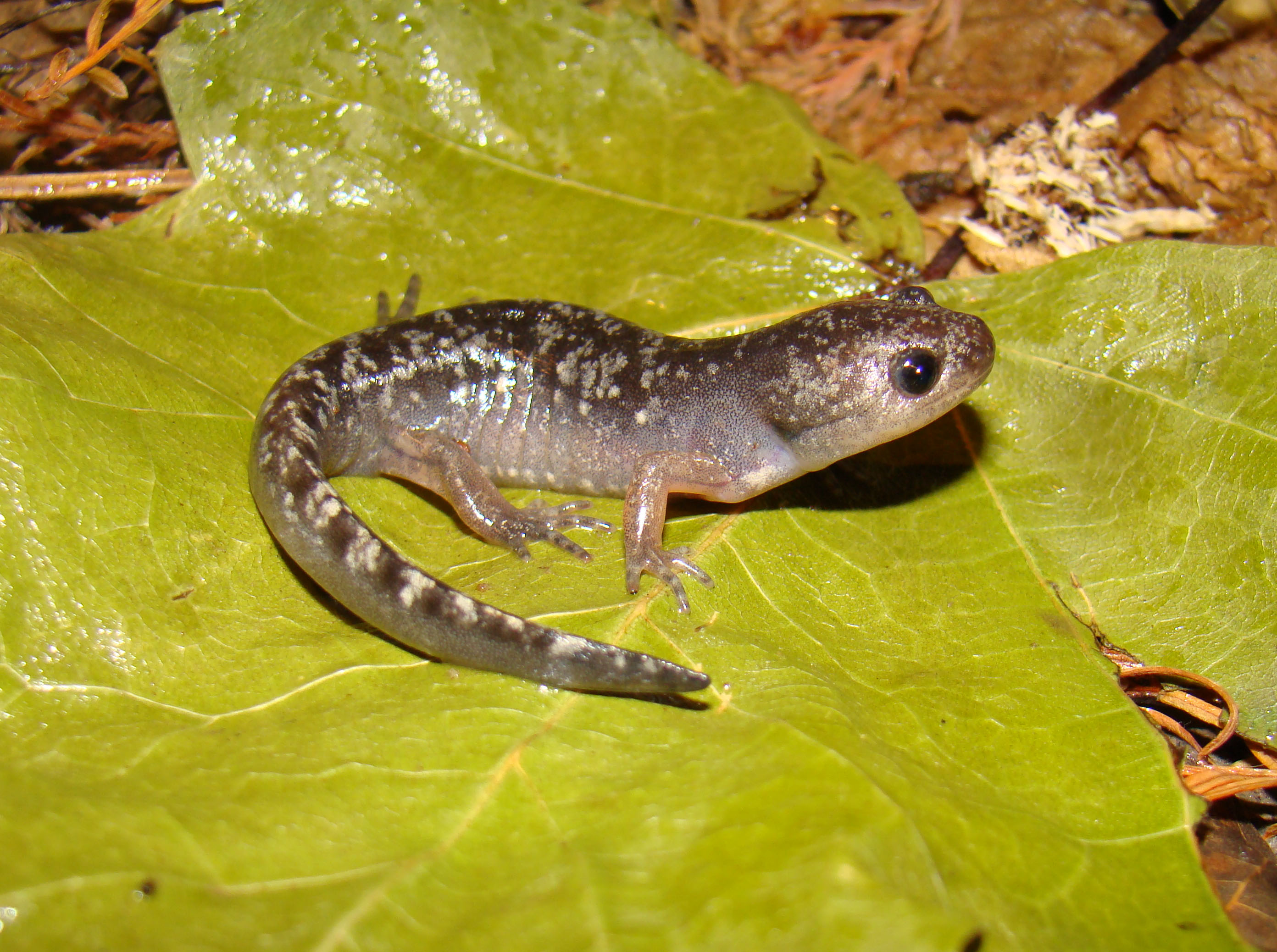
Metamorph from Atchafalaya Basin, Louisiana. Ambystoma opacum - Marbled Salamander
Photo by: Brad M. Glorioso
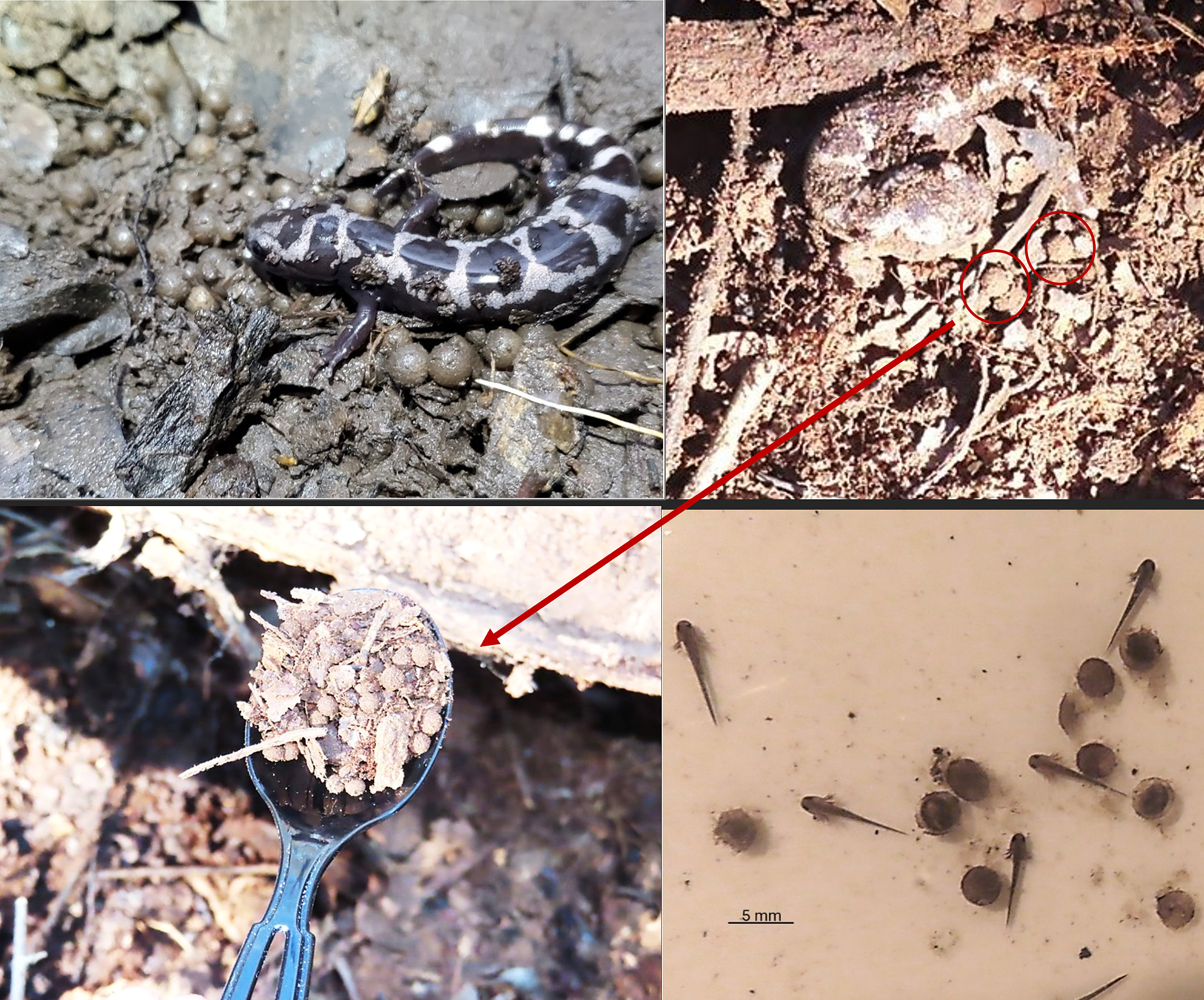
Female marbled salamander with her clutch of developing embryos. Both the female and her embryos appear to be well-hydrated. Top right: Very dehydrated female with her clutch of eggs (red circles) found in January 2026. Bottom left: Same female’s clutch of embryos after collection. Bottom right: Embyros were returned to the laboratory, rehydrated, then soon hatched into larvae. Larvae are being reared through metamorphosis to their terrestrial stage and will be returned to their wooded home next
Photo by: Susan Walls
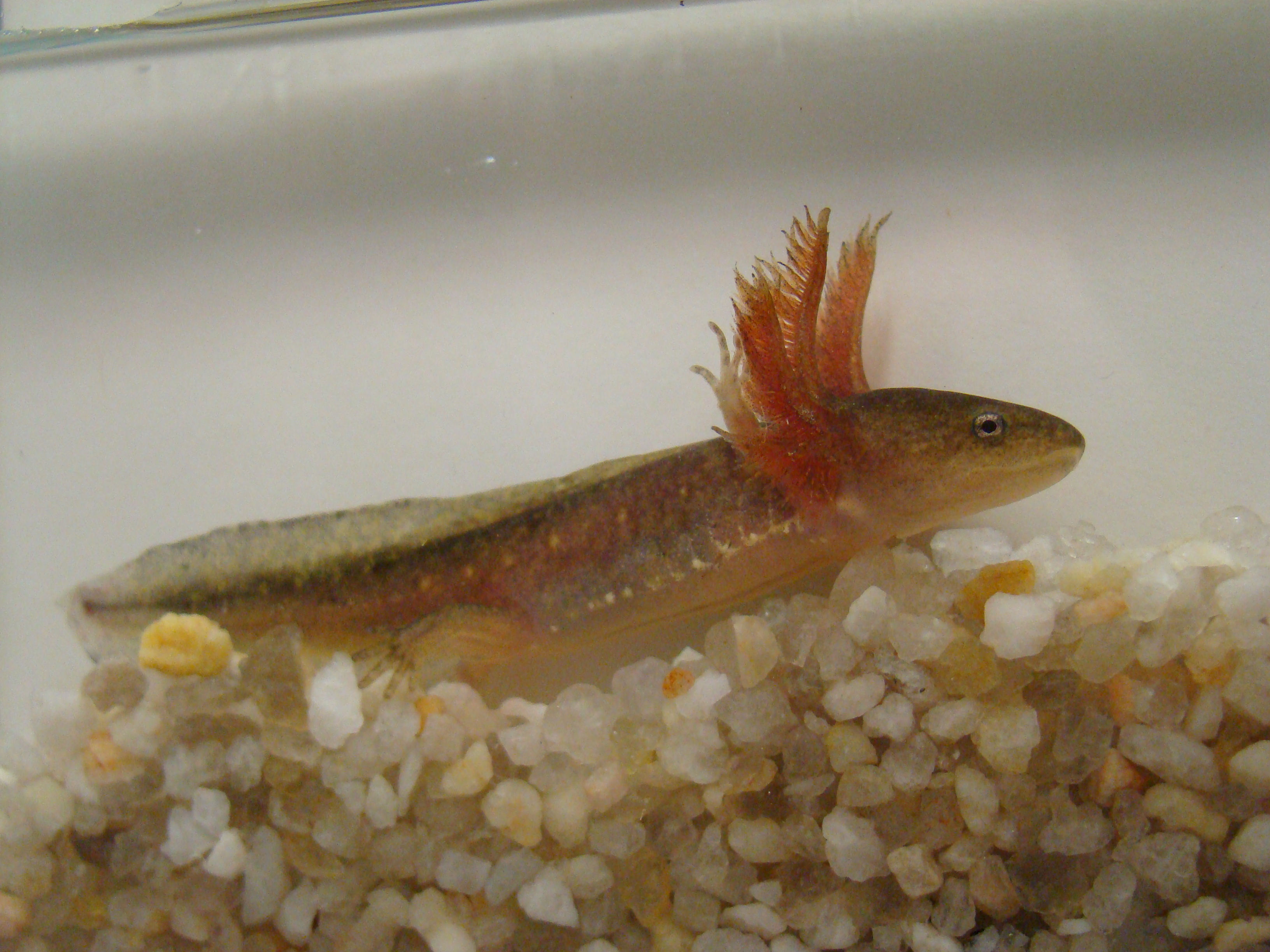
Mature larva, Atchafalaya Basin, Louisiana. Ambystoma opacum - Marbled Salamander
Photo by: Brad M. Glorioso
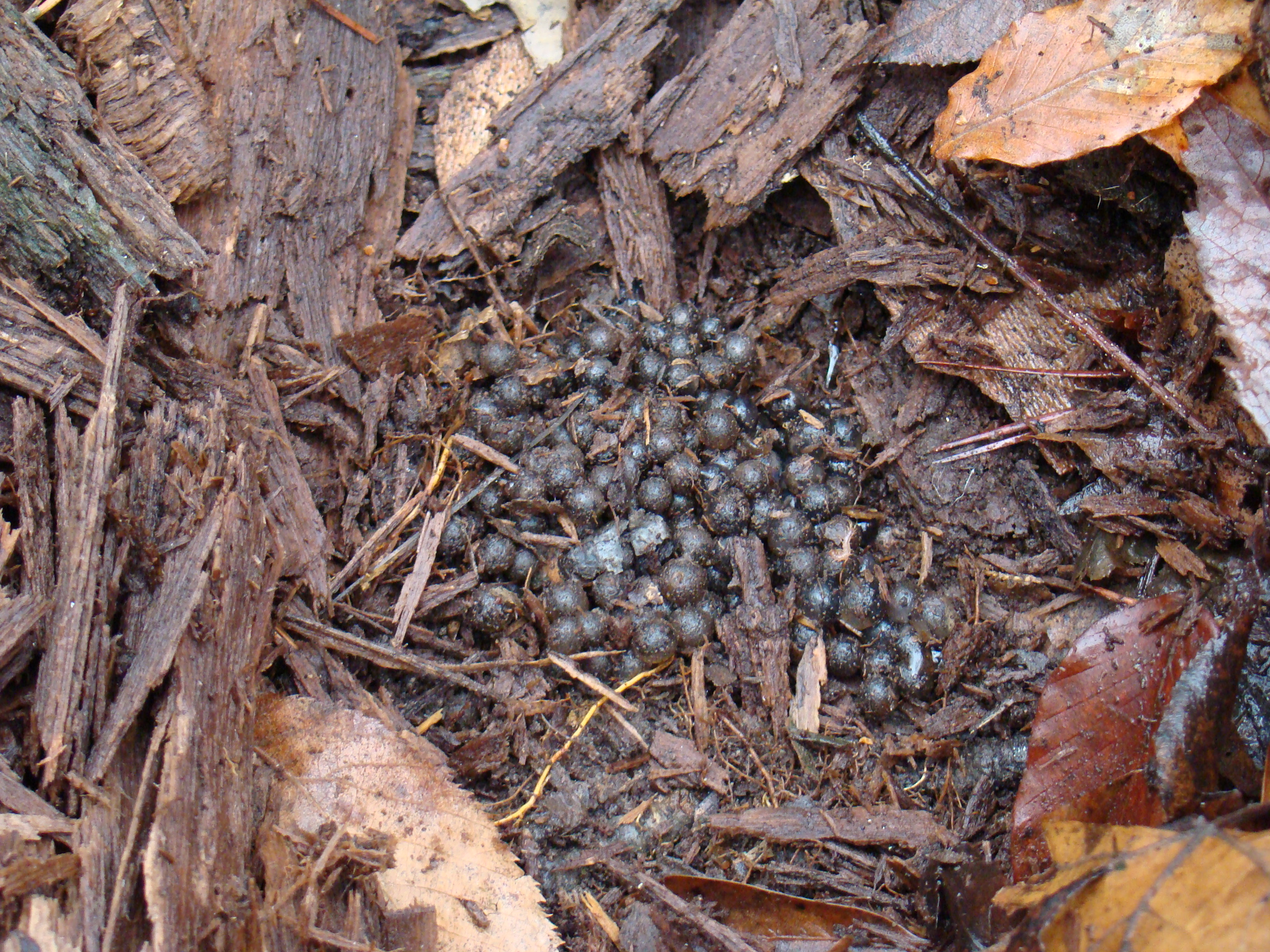
Marbled salamander nest, Natchitoches Parish, Louisiana. Ambystoma opacum - Marbled Salamander
Photo by: Brad M. Glorioso