Search ARMI Database
Search term(s)
Contribution Number
Search Results
1292 record(s) found.
Papers & Reports Compensatory effects of recruitment and survival when amphibian populations are perturbed by disease
News & Stories Advanced Tools for Acoustic Sampling of Calling Amphibians
Imagine sitting at your computer and listening to amphibians that called at a remote wetland late in the evening when no humans were present. Curious, you then decide to listen to amphibians that called at the same time on the same date at many other wetlands in different geographic regions and later analyze all the sounds amphibians, birds, and other sources produced at each wetland to visualize and compare the soundscapes in more detail. The information at your fingertips would be rich far beyond anything available to you previously. Due in part to the ongoing efforts of ARMI scientists, these imagined capabilities are now real and our ability to assess the population statuses of amphibians that call has improved dramatically.
Ecologists long have imagined how advanced digital sound recorders and analytical software could improve amphibian research and conservation. First and foremost, perhaps, such tools would provide an unprecedented ability to collect more comprehensive data on calling activity and dynamics. These tools also would help reduce or eliminate limitations associated with commonly employed human surveys of calling amphibians. These limitations often include: insufficient numbers of surveyed sites or repeat surveys to accurately reflect the presence of target species or to satisfy statistical requirements; variable, but typically undocumented, errors among surveyors in identifying sounds; non-standardized sampling methods of insufficient rigor to promote comparative surveys across large spatial scales or permit straightforward integration with data collected via satellite and other ground-based sensors; and a complete lack of archived sounds from survey sites. Only recently have cost-effective, sophisticated, digital acoustic recorders necessary to record autonomously, and frequently, during extended field deployments become available commercially. And, very importantly, software required to meaningfully analyze voluminous quantities of digital call data has been developed.
Since 2005, scientists from ARMI’s Midwest Region (ARMI-MR) have worked specifically to facilitate improvements in the development and availability of cost-effective acoustic recorders and new analytical software. We needed these tools to enable us to build partnerships and leverage resources to study amphibian populations in ways and places we could not do alone. These are key ARMI objectives to help meet regional and national goals. The recent availability of improved acoustic recorders and analytical software has proven to be the cornerstone of our region’s success in leading the development and implementation of a growing network of partners and research sites. This network is focused on assessing the statuses of amphibian populations relative to global change and related variables along environmental gradients in the United States and Canada ( https://www.umesc.usgs.gov/twgcrn.html ). Since we implemented our first network field sites in 2008, our results from using improved recorders and analytical software clearly have demonstrated their value for surveying and monitoring populations of calling amphibians.
To briefly illustrate some of these results, first listen to this five-minute recording we made at a wetland in the St. Croix National Scenic Riverway in Minnesota at 11 p.m. on June 7, 2008:
 SC4DBI108008_20080607_230000.mp3
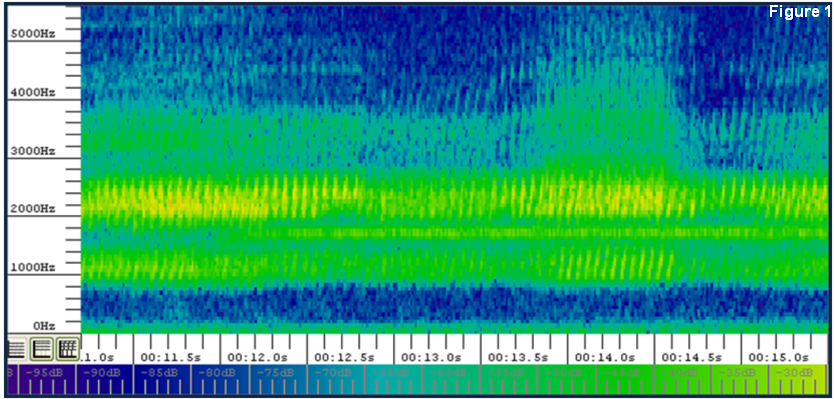
The sounds are dominated by calls from eastern gray treefrogs (Hyla versicolor), with less frequent calls of Cope’s gray treefrogs (H. chrysoscelis) and American toads (Bufo americanus). Figure 1 shows the spectrogram from 0 minutes-11 seconds to 0 minutes-15 seconds of this recording. The calls of eastern gray treefrogs and an American toad are evident in the swath of green and yellow colors spanning approximately 800-4000 Hz on the left axis. The thin band of green color spanning approximately 1600-1800 Hz that first is visible about 12 seconds into the recording is the call of an American toad. The remainder of the sounds represented here are treefrogs. Note that within the broader frequency range of treefrog sounds, the greatest sound intensity (yellow) spanned approximately 2000-2500 Hz and the next most-intense band spanned approximately 800-1400 Hz.
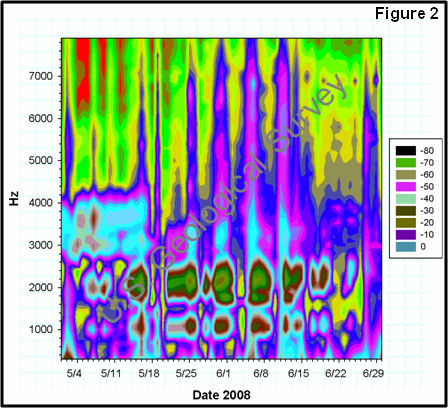
Because we scheduled this recorder to record automatically for five minutes at the top of every hour from early April through early August, we can use a contour plot to examine the frog and toad calls on June 7th within the context of all or a portion of the typical calling season for these species at this site (Figure 2). The colors in this plot indicate relative decibel levels (0 highest, -87 lowest) of sound recorded across frequencies from May 1st through June 30th of 2008. This view illustrates that the calls recorded at 11 p.m. on June 7th occurred on one of the peak calling dates for gray treefrogs and American toads at this site in 2008. It also shows when other peaks occurred. Similarly, one can interpret decibel levels in other unique frequency ranges in terms of sound events for birds, insects, humans, and other sources to characterize the entire soundscape at and near this wetland.
Thus, this relatively simple example demonstrates that we can program digital recorders to record autonomously at regular times in remote locations over an entire season and obtain remarkable recordings of calling amphibians and other sounds. We also can use sophisticated analytical and graphics software to listen to recordings and analyze them to determine if and when amphibians were calling. Using such an integrated acoustic analysis, we can measure species presence and model occupancy over time, compare data with measurements from other sensors to compare calling activity, presence, and occupancy with environmental conditions at different scales, and retain the recordings as part of rich acoustic archives for a site that can be revisited at will. These are remarkable advances in our ability to assess the statuses of populations of calling amphibians at local, regional, and broader scales over time.
Papers & Reports Using spatiotemporal models and distance sampling to map the space use and abundance of newly metamorphosed western toads (Anaxyrus boreas)

Papers & Reports Short-term response of Pacific Giant Salamanders to timber management in southwestern Oregon
News & Stories Endangered Frog Eggs Released to Wild Stream
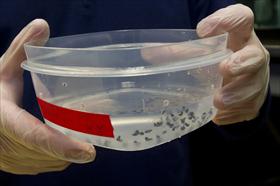
With Easter around the corner, Southern California biologists are playing bunny and hiding some 300 eggs in the wild.
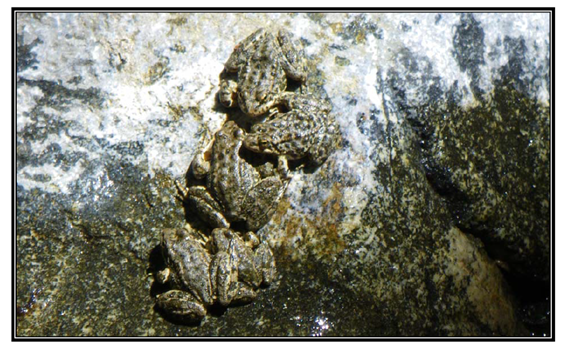
But these are tiny, gelatinous eggs that belong to Rana muscosa -- the mountain yellow-legged frog (also know as the Sierra Madre yellow-legged frog). And biologists are hiding these eggs in a chilly stream in the James San Jacinto Mountains Reserve near Idyllwild, California, in an ongoing, collaborative effort to preserve this endangered amphibian.
On April 14, researchers from USGS and the San Diego Zoo will release these eggs, which were laid by captive frogs at a zoo laboratory 90 miles away. This field expedition is part of a larger USGS-led partnership to study the Southern California population of the mountain yellow-legged frog, which is federally listed as endangered with only 200 adult frogs remaining in the wild.
USGS Western Ecological Research Center biologists Adam Backlin and Liz Gallegos lead the annual population monitoring and captures of the frogs, while the San Diego Zoo, Los Angeles Zoo and Fresno Chaffee Zoo manage captive breeding programs. The U.S. Fish and Wildlife Service and California Department of Fish and Game are responsible for the frog's management and recovery, and the University of California Reserve System protects some of their new stream homes.
"We're hoping that we also see some maturing frogs from last year's batch of released tadpoles, when we head out to release the eggs on Thursday," says Backlin, who has been preparing the eggs' new home in the 50-degrees-cold stream waters.
The eggs will be placed in a cage made of window screening, and should hatch out tadpoles over the coming weeks. The cage also helps researchers count how many tadpoles actually hatched, and protect them for a little while before they are released to their freedom -- hopefully to survive nature's hazards and grow into adult frogs that help repopulate this dwindling species.
"Researchers and managers know that the San Jacinto Reserve once had a yellow-legged frog population in the mid-1990's," says Backlin, who is based in Irvine. "This particular area is already protected land, closed off from human activities and is easy for us researchers to hike to and monitor. So it seemed a safe location to pick for a reintroduction effort."
Southern California mountain yellow-legged frogs are now only found in the San Gabriel, San Bernardino and San Jacinto mountains. A group of San Gabriels frogs were rescued after the 2009 Station Fire, and those are currently being cared for at the Fresno Chaffee Zoo.
Meanwhile, the Los Angeles Zoo also has a group of San Jacinto frogs, whose latest batch of 500 eggs will be hatched into tadpoles in preparation for a June release.
This project is one of many efforts under the USGS Amphibian Research and Monitoring Initiative, which was chartered by congressional mandate to study the troubling amphibian declines in the U.S. and around the world.
News & Stories Rice Field Herbicide Butachlor Is Toxic to Frog Tadpoles
New findings from USGS and Taiwanese researchers suggest that butachlor has significant reproductive impacts on frogs even below the recommended application concentration. Butachlor (N-butoxy-methyl-2-chloro-20,60-diethyl-actanilide) is the most commonly used herbicide on rice paddy fields in Taiwan and throughout Southeast Asia. Paddy fields are man-made habitats that are commonly used for reproduction by many species of frogs, but, little is known regarding the ecological and physiological effects of butachlor on frogs.
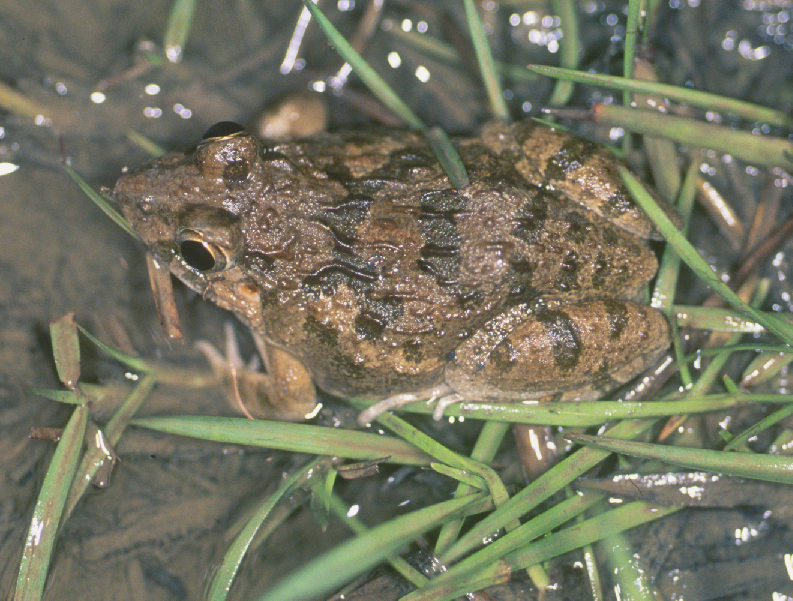
A recent study published in Ecotoxicology (Liu et al. 2011) examined acute and chronic effects of butachlor on tadpoles of the alpine cricket frog (Fejervarya limnocharis), an Asian species that breeds in rice paddies when they are first flooded. The timing coincides with typical butachlor application regimes, and because of the timing of their breeding behavior cricket frogs can be exposed to higher concentrations of butachlor than other frogs.
Tadpoles were hatched from egg masses collected from paddy fields in Taiwan, and then assigned to treatments of zero, 0.05, 0.1, 0.2, 0.4, 0.8, 1.6 and 3.2 mg/l of butachlor. All concentrations were below the recommended application rate of 4.8 mg/l of butachlor in paddy water. The experiments showed that 0.87 mg/l of butachlor would kill 50% of the tadpoles after 96 hours of exposure -- a concentration far below the recommended application rate.
Although the results suggested that cricket frog tadpoles were less sensitive than other amphibians that breed in rice paddy fields -- such as the narrow-mouthed toad (Microhyla ornata; 0.53 mg/l) and Guenther’s frog (Rana guentheri; 0.74 mg/l) -- the surviving tadpoles still exhibited a range of impacts, including delayed metamorphosis. Also, butachlor was genotoxic to tadpoles; the number of DNA strand breaks in the red blood cells of cricket frog tadpoles increased with increasing butachlor concentrations.
Butachlor likely has widespread negative impacts on many species of amphibians, although the severity depends on each species’ sensitivity, butachlor's short half-life and the pattern and timing of its application. Staggered spraying in adjacent fields may create refugia with lower butachlor concentrations, which adult frogs may be able to detect.
This study was supported by a Taiwan National Science Council Grant. Any use of trade, product, or firm names is for descriptive purposes only and does not imply endorsement by the US Government. The study is contribution 417 of the USGS Amphibian Research and Monitoring Initiative (ARMI).
For further reading:
Liu Wan-Yi, Wang Ching-Yuh, Wang Tsu-Shing, Gary M. Fellers, Lai Bo-Chi, Kam Yeong-Choy. 2011. Impacts of the Herbicide Butachlor on the Larvae of a Paddy Field Breeding Frog (Fejervarya limnocharis) in Subtropical Taiwan. Ecotoxicology 20(2): 377-394. doi: 10.1007/s10646-010-0589-6 USGS: http://www.werc.usgs.gov/ProductDetails.aspx?ID=4239
WERC Publication Brief: Rice Field Herbicide Butachlor Is Toxic to Taiwanese Frog Tadpoles. Updated April 2011. http://www.werc.usgs.gov/ProductDetails.aspx?ID=4243
WERC Point Reyes Field Station. http://www.werc.usgs.gov/pointreyes
News & Stories Management and monitoring an endangered high-elevation salamander under future climate change. A report from the Structured Decision Making Workshop, January 24-28, 2011, National Conservation Training Center, Shepherdstown, WV, USA
In many national parks, high-elevation biota are severely threatened by climate change. An assessment of the impacts of climate change is required for efficient spending of funds, proper management of rare and endangered species, and effective conservation of National Park Service biological resources. The decision facing National Park Service managers is to choose among management actions which may mitigate the potential negative effects of climate change. Resource managers at Shenandoah National Park (SHEN) need to develop a management plan and evaluate ongoing management actions with respect to P. shenandoah which anticipates the effects of climate change on the species, includes a desire to limit active management, and is sensitive to other aspects of the high-elevation ecosystem. Our ultimate goal is to develop an iterative state-based decision process, based on information from a monitoring program designed to inform decision makers on the distribution of P. shenandoah. We developed a rapid prototype of the decision during a one-week workshop at the National Conservation Training Center, which included participants from the National Park Service, Fish and Wildlife Service, University of Virginia, US Geological Survey and ARMI researchers.
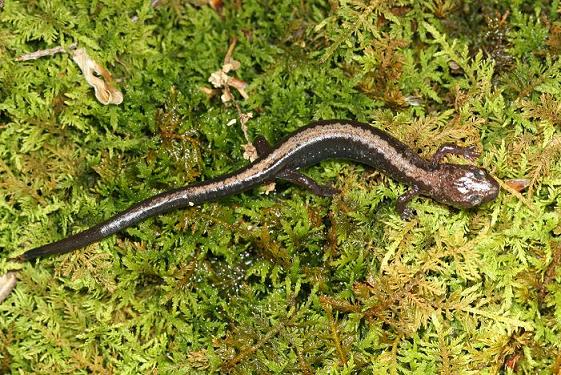
The federally endangered salamander P. shenandoah is found nowhere else on earth except within the boundaries of Shenandoah National Park, and its entire known range consists of approximately 6 square kilometers of high elevation (>900m) forested habitat, distributed across three mountain peaks. It is believed that P. shenandoah has become restricted by competition with the red backed salamander (Plethodon cinereus), which is believed to have expanded from the lowlands with a changing climate since the Pleistocene. P. shenandoah s presence is strongly influenced by elevation and aspect, presumably in relation to temperature and moisture gradients and associated central and southern Appalachian high elevation forest types.
Both temperature and humidity are expected to change in the Mid-Atlantic in the next few decades but the uncertainty among global climate models is large (Polsky et al., 2000). Global climate models generally predict warmer and wetter conditions in the Mid-Atlantic region with an increase in average temperature ranging from 1 to 5 C over the next 10 to 100 years (Hawkins et al., 2011). There is considerable uncertainty in downscaling global climate models to areas in complex mountainous terrain, and these projections need to be refined for the Shenandoah National Park.
We applied a formal, structured process for decision making, which can be summarized as comprised of 5 interrelated parts, addressed in succession, and driven by a focus on values-based objectives. Our objectives include ecological (e.g., P. shenandoah persistence) and procedural (e.g., adhere to park policy) objectives, which we treat as fundamental desires which must be considered simultaneously. For the rapid prototype, we considered four fundamental objectives:
- Maintain Plethodon shenandoah persistence within Shenandoah National Park
- Adhere to park policy
- Maximize public acceptance of management of salamander habitats
- Minimize cost of management
To link the objectives with a suite of potential management actions identified during the workshop, we are incorporating down-scaled climate data directly into models predicting P. shendandoah occupancy. This will enable us to provide an explicit link between habitat conditions, P. shenandoah and P. cinereus occupancy, and changes in the species’ distributions under future climate scenarios. The resulting model can then be used for assessing population viability under future climate scenarios, considering varying levels of environmental variation, environmental autocorrelation, and competition with P. cinereus. It will also be used to investigate the effects of different management actions and various intensities of these actions on the population persistence of P. shenandoah.
Uncertainty is present in all aspects of this decision problem. The ecology of the species and the expectation of future climate conditions under climate change were two major sources of uncertainty identified during the workshop. The relationship between P. Shenandoah occupancy and persistence, and the effects each management alternative on the persistence of P. shenandoah were identified during the workshop.
We plan to address uncertainty in four ways: first, we are designing a set of experiments which will elucidate the ecology of P. shenandoah, particularly with respect to our expectation about how climate variables (temperature and humidity) may influence competition with P. cinereus. Second, we will combine field observations of temperature and humidity to calibrate downscaled climate models, which will provide site-specific estimates of future climate conditions under a range of likely climate scenarios. Third, we plan to develop a population viability analysis to reduce the uncertainty about the relationship between occupancy and persistence. Finally, we will conduct additional surveys outside of the known distribution, to determine the true range limits of the species. Reducing these uncertainties will help inform the effect that the alternative management actions may have on P. shenandoah occupancy.
Papers & Reports Conservation genetics of evolutionary lineages of the endangered mountain yellow-legged frog, Rana muscosa (Amphibia: Ranidae), in southern California

News & Stories Meeting Session Highlights ARMI
A dedicated session highlighting studies conducted by the USGS Amphibian Research and Monitoring Initiative (ARMI) in the West was held at the joint annual meeting of the Society for Northwestern Vertebrate Biology and Washington Chapter of The Wildlife Society at Gig Harbor, Washington on March 25th. The session, organized by Steve Corn, Research Zoologist at the Northern Rocky Mountain Science Center in Missoula, Montana, included presentations by ARMI scientists from five different science centers and addressed the main themes of ARMI since its inception in 2000: monitoring of status and trends of amphibian populations, research into causes of amphibian declines, and development of new sampling methods.
Presenters, followed by the title of their talks, included: Gary Fellers, Western Ecological Research Center, Point Reyes National Seashore, CA (Population size, survival, longevity, and movements of Rana draytonii, and R. sierrae at two closely monitored sites: tracking population trends); Mike Adams, Forest and Rangeland Ecosystem Science Center, Corvallis, OR (Does the probability of local extinction for northern red-legged frogs relate to introduced fish or bullfrogs?); Nate Chelgren, Forest and Rangeland Ecosystem Science Center, Corvallis, OR (Spatial and temporal variation in the demography of coastal tailed frogs (Ascaphus truei): isolating aquatic from terrestrial stage dynamics); Erin Muths, Fort Collins Science Center, Fort Collins, CO (Compensatory effects of recruitment and survival on population persistence); Tara Chestnut, Oregon Water Science Center, Portland, OR, (The ecology of the amphibian chytrid fungus, Batrachochytrium dendrobatidis in the aquatic environment); Blake Hossack, Northern Rocky Mountain Science Center, Missoula, MT (Wildfire and fragmentation: effects on amphibian populations and associated nematodes); David Pilliod, Forest and Rangeland Ecosystem Science Center, Boise, ID (Introducing an automated pattern recognition program for leopard frogs); and Steve Corn, Northern Rocky Mountain Science Center, Missoula, MT (How well do call indices represent abundance of breeding anurans?).

Papers & Reports Breeding chorus indices are weakly related to estimated abundance of boreal chorus frogs
Papers & Reports Improving occupancy estimation when two types of observational error occur: non-detection and species misidentification.
Papers & Reports Recovery of native treefrogs after removal of nonindigenous Cuban treefrogs, Osteopilus septentrionalis
Papers & Reports An integrated model of habitat and species occurrence dynamics
Papers & Reports Exploring sensitivity of a multistate occupancy model to inform management decisions
Papers & Reports Habitat Use and Movement of the Endangered Arroyo Toad (Anaxyrus californicus) in Coastal Southern California
News & Stories The Amphibian Research and Monitoring Program (ARMI) celebrates 10 years!
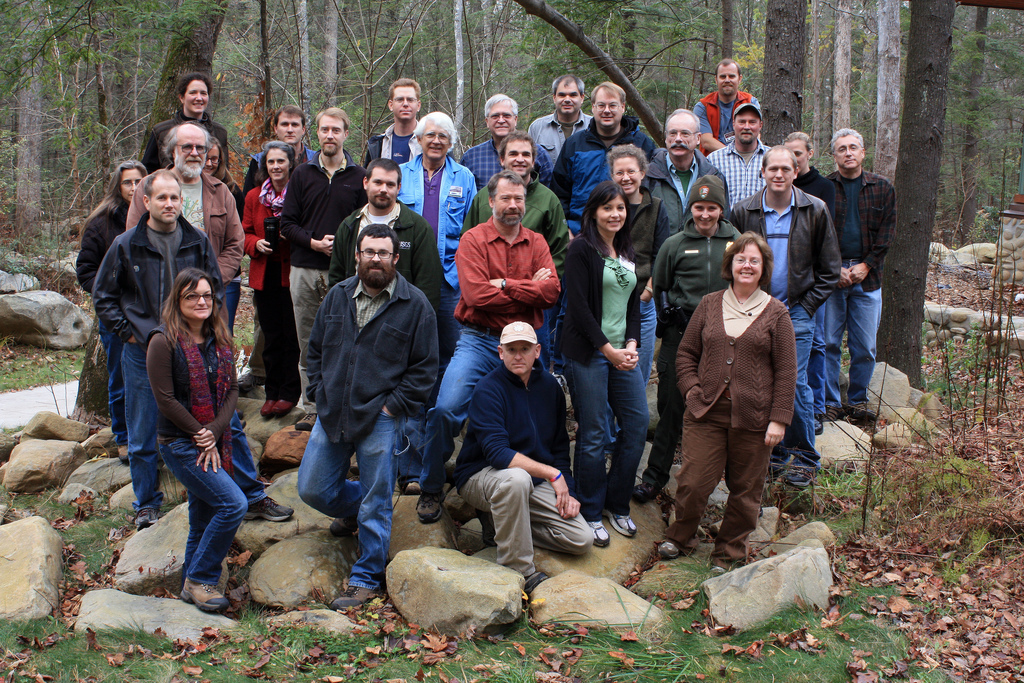
The ARMI Program has been on the leading edge of monitoring and amphibian research since its inception in 2000. The ten USGS scientists who function as “Regional Principal Investigators” are responsible for monitoring and conducting amphibian research on Department of Interior lands across the seven ARMI Regions. The ARMI program is an example of a multi-disciplinary partnership, and we have a pathologist and several hydrologists who partner with the scientists on monitoring and research.
ARMI is dedicated to developing the next generation of managers and researchers, and has supported the Declining Amphibian Task Force’s seed grant program for several years. The Regional PIs work with technicians, college students and post-docs on projects that give the newer biologists opportunities to stretch their technical skills. ARMI has directly or indirectly supported 24 graduate students, resulting in 14 Ph.D. dissertations and 10 Master’s theses at universities across the country.
ARMI scientists have identified novel diseases, studied the effects of agricultural practices, forest management, invasive species, livestock grazing, and wildfires on the survival of individuals and species richness; predicted possible outcomes of climate change and diagnosed mass mortality events to name only a few of our research activities. ARMI has worked with partners across academia and State and Federal agencies to develop and evaluate management and conservation actions for amphibians. As a result of these projects, ARMI scientists have produced more than 375 publications, including several books, multiple book chapters, and peer reviewed articles in at least 74 different scientific journals.
ARMI looks forward to the next decade of innovative research and exciting collaborations.