
Search ARMI Database

Search term(s)

Filter search results with:


To view all contents, leave all fields blank and click "Search" button.

Contribution Number


Search Results

146 record(s) found.

Papers & Reports Cryptic declines of small, cold-water specialists highlight potential vulnerabilities of headwater streams as climate refugia
Authors: Blake R Hossack; M LeMoine; Emily B Oja; Lisa A Eby
Date: 2023 | Outlet: Biological Conservation
Increasing temperatures and climate-driven disturbances like wildfire are a growing threat to many species,
including cold-water specialists. Montane areas and cold streams are often considered climate refugia that buffer
communities against change. However, climate refugia are often species-specific, and despite growing awareness
that life histories and habitat requirements shape responses to change, small or non-game species are often
under-represented in monitoring and planning programs. A recent study in Montana, USA, revealed much larger
warming-related declines in occupancy for small, non-game slimy sculpin (Cottus cognatus) between 1993 and
1995 and 2011–2013 than for two socially valued salmonid fishes that shape regional conservation efforts. To
broaden insight into climate change vulnerabilities of headwater stream communities, we analyzed data for
Rocky Mountain tailed frogs (Ascaphus montanus) that were collected during those same electrofishing surveys
for fishes from 241 stream reaches. Tailed frogs occupy small, cold streams and have several life-history traits
that make them sensitive to environmental change. We used a Bayesian framework to estimate occupancy,
colonization, and extinction dynamics relative to forest canopy, estimated stream temperature, and wildfire
effects. Tailed frog occupancy decreased by 19 % from 1993 to 1995 to 2011–2013. Changes in occupancy were
linked with increased extinction and reduced colonization where there were fire-driven reductions in canopy
cover, and reduced colonization of stream reaches that warmed on average 0.8 ?C during the study. Our results
highlight extensive extirpations for oft-overlooked species and emphasize the importance of including species
with diverse habitat requirements and life histories in conservation planning.
Papers & Reports Empirical evidence for effects of invasive American Bullfrogs on occurrence of native amphibians and emerging pathogens
Authors: Blake R Hossack; Emily B Oja; Audrey Owens; D Hall; C L Crawford; Caren S Goldberg; S Hedwall; J A Lemos-Espinal; S MacVean; Magnus McCaffery; Erin Muths; A McCall; C Mosley; Brent H Sigafus; M J Sredl,; James C Rorabaugh
Date: 2023 | Outlet: Ecological Applications
Invasive species and emerging infectious diseases are two of the greatest
threats to biodiversity. American Bullfrogs (Rana [Lithobates] catesbeiana),
which have been introduced to many parts of the world, are often linked with
declines in native amphibians via predation and the spread of emerging pathogens
such as amphibian chytrid fungus (Batrachochytrium dendrobatidis [Bd])
and ranaviruses. Although many studies have investigated the potential role of
bullfrogs in the decline of native amphibians, analyses that account for shared
habitat affinities and imperfect detection have found limited support for
clear effects. Similarly, the role of bullfrogs in shaping the patch-level distribution
of pathogens is unclear. We used eDNA methods to sample 233 sites in the southwestern USA and Sonora, Mexico (2016–2018) to estimate how
the presence of bullfrogs affects the occurrence of four native amphibians,
Bd, and ranaviruses. Based on two-species, dominant-subordinate occupancy
models fitted in a Bayesian context, federally threatened Chiricahua Leopard
Frogs (Rana chiricahuensis) and Western Tiger Salamanders (Ambystoma
mavortium) were eight times (32% vs. 4%) and two times (36% vs. 18%), respectively,
less likely to occur at sites where bullfrogs occurred. Evidence for the
negative effects of bullfrogs on Lowland Leopard Frogs (Rana yavapaiensis)
and Northern Leopard Frogs (Rana pipiens) was less clear, possibly because of
smaller numbers of sites where these native species still occurred and because
bullfrogs often occur at lower densities in streams, the primary habitat for
Lowland Leopard Frogs. At the community level, Bd was most likely to occur
where bullfrogs co-occurred with native amphibians, which could increase the
risk to native species. Ranaviruses were estimated to occur at 33% of bullfrogonly
sites, 10% of sites where bullfrogs and native amphibians co-occurred,
and only 3% of sites where only native amphibians occurred. Of the 85 sites
where we did not detect any of the five target amphibian species, we also did
not detect Bd or ranaviruses; this suggests other hosts do not drive the distribution
of these pathogens in our study area. Our results provide landscape-scale
evidence that bullfrogs reduce the occurrence of native amphibians and
increase the occurrence of pathogens, information that can clarify risks and
aid the prioritization of conservation actions.
Papers & Reports Using physiological conditions to assess current and future habitat use of a Subarctic frog
Authors: Thomas P Hastings; Blake R Hossack; L Fishback; J M Davenport
Date: 2022 | Outlet: Integrative Zoology
Species with especially close dependence on the environment to meet physiological requirements, such as ectotherms, are highly susceptible to the impacts of climate change. Climate change is occurring rapidly in the Subarctic and Arctic, but there is limited knowledge on ectotherm physiology in these landscapes. We investigated how environmental conditions and habitat characteristics influence the physiological conditions and habitat use of wood frogs (Rana sylvatica, LeConte 1825) in a Subarctic landscape near Churchill, Manitoba (Canada). We used plaster models to estimate water loss rates and surface body temperatures among different habitat types and at specific locations used by radio-tracked frogs. Water loss (R^2 = 0.67) and surface temperature (R^2 = 0.80) of plaster models was similar to that of live frogs. Model-based water loss rates were greater in tundra habitat than in boreal forest and ecotone habitat. Habitat use of wood frogs was strongly tied with available surface moisture and decreased water loss rates that were observed with plaster models. Environmental conditions, such as wind speed and ground temperature, explained 58% and 91% of the variation in water balance and temperature of plaster models. Maintaining physiological conditions may be challenging for semi-aquatic ectotherms in environments vulnerable to future climate change. The ability to predict physiological conditions based on environmental conditions, as demonstrated in our study, can help understand how wildlife will respond to climatic changes.
Papers & Reports Long-term monitoring of a species suite of Ecological Indicators: A coordinated conservation framework for the Greater Yellowstone Ecosystem
Authors: Andrew M Ray; Melanie A Murphy; Blake R Hossack
Date: 2022-03 | Outlet: Ecological Indicators
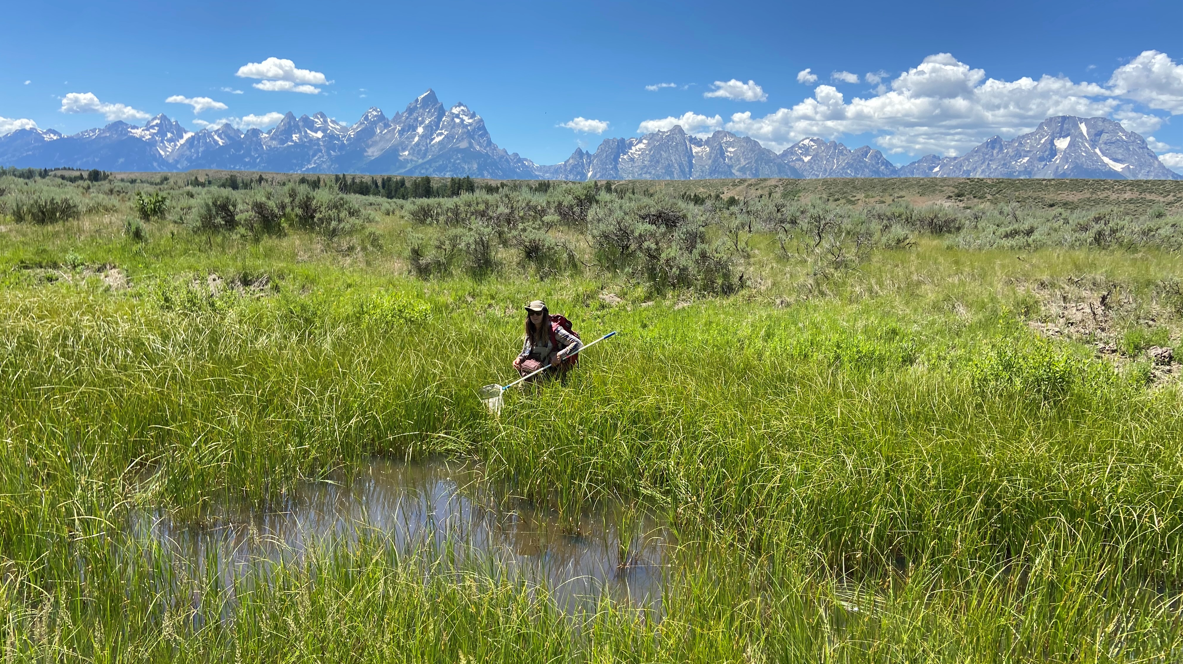
Introduction piece for a special issue.
News & Stories ARMI Scientists Collaborate with NPS on Special Issue Focused on Amphibian and Wetland Conservation in the GYE
Authors: Blake R Hossack
February 17, 2022

USGS-ARMI and scientists from the NPS Greater Yellowstone Inventory & Monitoring Network organized a special issue in the journal Ecological Indicators. This special issue was spawned by a virtual 3-day science symposium in December 2020 that was entitled Linking Monitoring and Research to Amphibian Conservation in the Greater Yellowstone Ecosystem. The papers in the special issue highlight collaborative USGS–NPS research on amphibians, wetlands, and climate, as well as emerging tools and priorities for scientists and resource managers. The special issue contains 11 papers focused on many of these same themes, including 6 papers that were led or co-authored by ARMI investigators. Notable USGS-ARMI contributions include an analysis of long-term responses of amphibian populations to wetland mitigation; a synthesis of amphibian disease research in the GYE; reflections on the 15-year NPS monitoring program in Grand Teton and Yellowstone national parks, including recommendations on how to enrich information from monitoring by incorporating new sampling technologies, adopting advances in analytical approaches, and integrating climate forecasts into wetland and amphibian assessments; and a paper that examines the important historical and future roles of NPS lands and management nationwide in amphibian conservation.

You can access the special issue here: https://www.sciencedirect.com/journal/ecological-indicators/special-issue/103RXWLVGZM

Papers & Reports Looking ahead, guided by the past: The role of U.S. national parks in amphibian research and conservation
Authors: Brian J Halstead; Andrew M Ray; Erin Muths; Evan HC Grant; Rob L Grasso; Michael J Adams; Katy S Delaney; Jane Carlson; Blake R Hossack
Date: 2022-03 | Outlet: Ecological Indicators
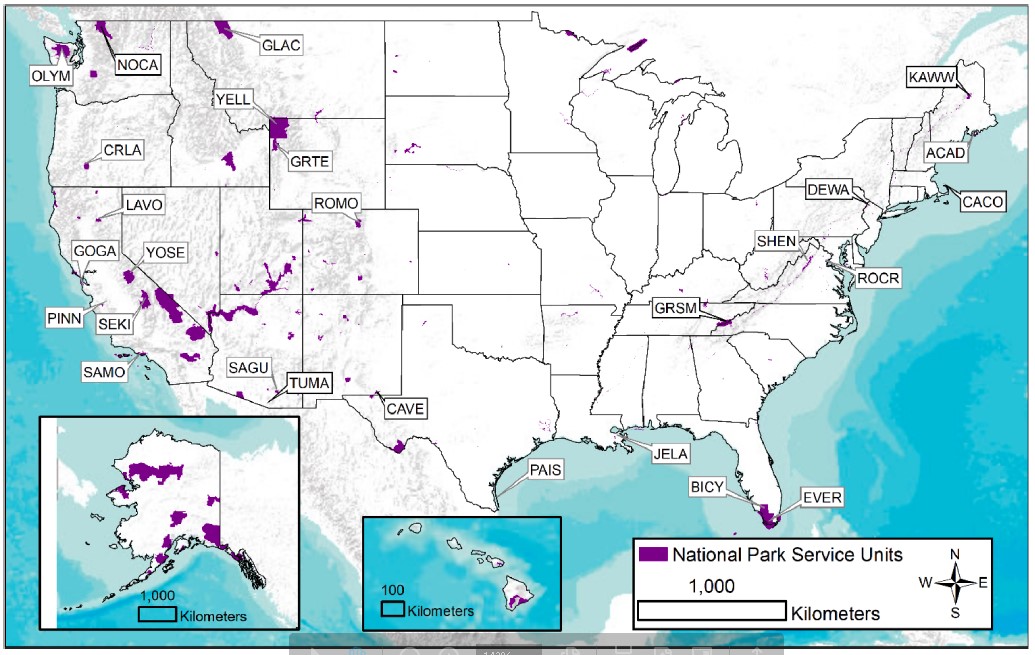
Protected areas like national parks are essential elements of conservation because they limit human influence on the landscape, which protects biodiversity and ecosystem function. The role of national parks in conservation, however, often goes far beyond limiting human influence. The U.S. National Park Service and its system of land units contribute substantively to conservation by providing protected lands where researchers can document trends in species distributions and abundances, examine characteristics important for generating these trends, and identify and implement conservation strategies to preserve biodiversity. We reviewed the contribution of U.S. national parks to amphibian research and conservation and highlight important challenges and findings in several key areas. First, U.S. national parks were instrumental in providing strong support that amphibian declines were real and unlikely to be simply a consequence of habitat loss. Second, research in U.S. national parks provided evidence against certain hypothesized causes of decline, like UV-B radiation, and evidence for others, such as introduced species and disease. However, describing declines and identifying causes contributes to conservation only if it leads to management; importantly, U.S. national parks have implemented many conservation strategies and evaluated their effectiveness in recovering robust amphibian populations. Among these, removal of invasive species, especially fishes; conservation translocations; and habitat creation and enhancement stand out as examples of successful conservation strategies with broad applicability. Successful management for amphibians is additionally complicated by competing mandates and stakeholder interests; for example, past emphasis on increasing visitor enjoyment by introducing fish to formerly fishless lakes had devastating consequences for many amphibians. Other potential conflicts with amphibian conservation include increasing development, increased risk of introductions of disease and exotic species with increased visitation, and road mortality. Decision science and leveraging partnerships have proven to be key components of effective conservation under conflicting mandates in national parks. As resource managers grapple with large-scale drivers that are outside local control, public-private partnerships and adaptive strategies are increasing in importance. U.S. national parks have played an important role in many aspects of identifying and ameliorating the amphibian decline crisis and will continue to be essential for the conservation of amphibians in the future.
Papers & Reports Identifying factors linked with persistence of reintroduced populations: lessons learned from 25 years of amphibian translocations
Authors: Blake R Hossack
Date: 2022 | Outlet: Global Ecology and Conservation
Most translocation efforts are unsuccessful, often for unknown reasons. We assessed factors linked with population persistence for 25 years of translocations of the federally threatened Chiricahua Leopard Frog. Local features were paramount, including habitat, predators, and restoration history. Timing and life stages stocked affected persistence, but rearing environment did not. Two or more translocations produced an approximate 4-yr increase in predicted population persistence.
Papers & Reports Energy-related wastewater contamination alters microbial communities of sediment, water, and amphibian skin
Authors: Brian J Tornabene; Kelly L Smalling; C E Givens; Emily B Oja; Blake R Hossack
Date: 2023-07-01 | Outlet: Science of the Total Environment
To inform responsible energy development, it is important to understand the ecological effects of contamination events. Wastewaters from oil and gas extraction often contain high concentrations of sodium chloride (NaCl) and heavy metals (e.g., strontium and vanadium), but studies of their influence on microbial communities are limited. We sampled water, sediment, and larval amphibian skin (four species) across a gradient of contamination (0.04–17500 mg/L Cl) in a large energy production area of North America. NaCl concentrations affected the similarity among microbiomes of water, sediment, and amphibian skin, but not the diversity or richness of water and skin microbiomes. Strontium concentrations were associated with lower diversity and richness of sediment microbial communities. Amphibian microbiomes were similar to those of water, but not sediment, and sediment microbiomes were similar to those of water. Species identity was the strongest predictor of amphibian microbiomes; frog microbiomes were similar but differed from that of the salamander, whose microbiome had the lowest richness and diversity. Understanding whether effects of wastewaters on microbial communities also influences their ecosystem function will be an important next step. Our study provides novel insight into associations among different wetland microbial communities and effects of wastewaters from energy production.
Papers & Reports Multi-species amphibian monitoring across a protected landscape: critical reflections on 15 years of wetland monitoring in Grand Teton and Yellowstone national parks
Authors: Andrew M Ray; Blake R Hossack; W R Gould; S F Spear; Debra A Patla; P. Stephen Corn; R W Klaver; Paul E Bartelt; D Thoma; K Legg; R Daley; Charles R Peterson
Outlet: Ecological Indicators
Data Release Chiricahua leopard frog - Arizona: influence of landscape features on landscape resistance and colonization dynamics (presence data, wind speed, air temp; hydroperiod spatial coordinates)
Authors: Erin Muths; P E Howell; Blake R Hossack; J Chandler
Date: 2018 | Outlet: Figshare
Data used in the manuscript presenting a novel spatially explicit modeling framework for narrowing the divide between these disciplines to advance understanding of the effects of landscape structure on metapopulation dynamics.
Papers & Reports Testing whether adrenal steroids mediate phenotypic and physiologic effects of elevated salinity on larval tiger salamanders
Authors: Brian J Tornabene; E J Crespi; Creagh W Breuner; Blake R Hossack
Outlet: Integrative Zoology
Salinity (sodium chloride, NaCl) from anthropogenic sources is a persistent contaminant that negatively affects freshwater taxa. Amphibians can be susceptible to salinity, but some species are innately or adaptively tolerant. Physiological mechanisms mediating tolerance to salinity are still unclear, but changes in osmoregulatory hormones such as corticosterone (CORT) and aldosterone (ALDO) are prime candidates. We exposed larval barred tiger salamanders (Ambystoma mavortium) to environmentally relevant NaCl treatments (<32–4000 mg·L?1) for 24 days to test effects on growth, survival, and waterborne CORT responses. Of those sampled, we also quantified waterborne ALDO from a subset. Using a glucocorticoid antagonist (RU486), we also experimentally suppressed CORT signaling of some larvae to determine if CORT mediates effects of salinity. There were no strong differences in survival among salinity treatments, but salinity reduced dry mass, snout–vent length, and body condition while increasing water content of larvae. High survival and sublethal effects demonstrated that salamanders were physiologically challenged but could tolerate the experimental concentrations. CORT signaling did not attenuate sublethal effects of salinity. Baseline and stress-induced (after an acute stressor, shaking) CORT were not influenced by salinity. ALDO was correlated with baseline CORT, suggesting it could be difficult to decouple the roles of CORT and ALDO. Future studies comparing ALDO and CORT responses of adaptively tolerant and previously unexposed populations could be beneficial to understand the roles of these hormones in tolerance to salinity. Nevertheless, our study enhances our understanding of the roles of corticosteroid hormones in mediating effects of a prominent anthropogenic stressor.
Data Release Survival and sublethal effects of amphibians exposed to NaCl and brines from energy production
Authors: Brian J Tornabene; Creagh W Breuner; Blake R Hossack
Date: 2019-06-25 | Outlet: PANGAEA Data Publisher for Earth & Environmental Science
We investigated the influence of brines and NaCl alone at commensurate concentrations on three larval amphibian species that occur in areas with energy-related brine contamination. The dataset contains size information (mass in grams, snout-vent length in millimeters) of larval Boreal Chorus Frogs (Pseudacris maculata) and Leopard Frogs (Rana pipiens) and Barred Tiger Salamanders (Ambystoma mavortium) taken during 96-h lethal-concentration-50 experiments. Larvae were generally exposed to concentrations of brine or NaCl ranging from 0–8,000 mg/L increasing by 1,000 mg/L increments. Other associated dataset: https://doi.pangaea.de/10.1594/PANGAEA.913836
Data Release Corticosterone Mediates Lethal and Sublethal Effects and a Growth-Survival Tradeoff for a Larval Amphibian Exposed to Increased Salinity
Authors: Brian J Tornabene; Blake R Hossack; E J Crespi; Creagh W Breuner
Date: 2018-11-06 | Outlet: PANGAEA Data Publisher for Earth & Environmental Science
We investigated the influence of increased salinity on survival, growth, water content, and Corticosterone responses of larval Northern Leopard Frogs (Rana pipiens) by exposing them to environmentally-relevant salinity treatments for 24 days. We also inhibited Corticosterone for half of the replicates using mifepristone to determine if Corticosterone mediates effects of salinity and tradeoffs between traits. Other associated datasets:
https://doi.pangaea.de/10.1594/PANGAEA.919212
https://doi.pangaea.de/10.1594/PANGAEA.919211
https://doi.pangaea.de/10.1594/PANGAEA.919209
Data Release Hatching success, survival, size and development, and behavioral data for two amphibian species exposed to NaCl and energy-related saline wastewaters
Authors: Brian J Tornabene; Creagh W Breuner; Blake R Hossack
Date: 2021-09-24 | Outlet: figshare
We investigated the relative effects of NaCl and energy-related saline wastewaters on hatching success, survival, size and development, and behaviors of northern leopard frogs ([i]Rana pipiens[/i]) and boreal chorus frogs ([i]Pseudacris maculata[/i]). Eggs were exposed and responses were tracked through hatching for 24 days. Five datasets are included. (1) Includes hatching and survival data for leopard frog eggs and larvae. (2) Includes hatching and survival data for chorus frog eggs and larvae. (3) Includes behavioral responses of both species monitored daily from day 9–24. (4) Includes morphology measurements from larval leopard frogs taken at the end of the experiment on day 24. (5) Includes morphology measurements from larval leopard frogs taken at the end of the experiment on day 24.
Data Release Larval amphibian and site-water corticosterone, and site attributes, from wetlands affected by energy-related saline wastewaters
Authors: Brian J Tornabene; Blake R Hossack; E J Crespi; Creagh W Breuner
Date: 2021-09-24 | Outlet: figshare
We investigated the influence of salinity from energy-related saline wastewaters on CORT of three larval amphibians (Tiger salamanders, Leopard frogs, and Chorus frogs) in Montana and North Dakota where wastewater contamination is pervasive. We measured baseline and stress-induced CORT (pg/h) of amphibians exposed to a gradient of wastewaters using a novel, noninvasive technique. We also measured background corticosterone in site water in 2017 and 2018, and evaluated variance within and among wetlands in 2019. Three datasets are included. (1) Includes corticosterone and morphology measurements from larval amphibians taken in 2017 and 2018. (2) Includes background corticosterone measurements and attributes from sites in 2017–2019. (3) Includes background corticosterone measurements for 5 points along the perimeter of 6 sites in 2019 to evaluate variance within and among wetlands.
Data Release Aldosterone and corticosterone of a larval amphibian exposed to increased salinity
Authors: Brian J Tornabene; Creagh W Breuner; Blake R Hossack; E J Crespi
Date: 2021-09-29 | Outlet: figshare
We exposed larval leopard frogs to increased salinity and RU486 (a glucocorticoid receptor antagonist) and tested their influence on waterborne corticosterone (baseline and stress-induced) and aldosterone and relationships between the two adrenal steroid hormones.
Papers & Reports Effects of salinity and RU486 on waterborne aldosterone and corticosterone of larval northern leopard frog larvae
Authors: Brian J Tornabene; Creagh W Breuner; Blake R Hossack; E J Crespi
Date: 2022-02-01 | Outlet: General and Comparative Endocrinology
testIncreased salinity is an emerging contaminant of concern for aquatic taxa. For amphibians exposed to salinity, there is scarce information about the physiological effects and changes in osmoregulatory hormones such as corticosterone (CORT) and aldosterone (ALDO). Recent studies have quantified effects of salinity on CORT physiology of amphibians based on waterborne hormone collection methods, but much less is known about ALDO in iono- and osmoregulation of amphibians. We re-assayed waterborne hormone samples from a previous study to investigate effects of salinity (sodium chloride, NaCl) and a glucocorticoid receptor antagonist (RU486) on ALDO of northern leopard frog (Rana pipiens) larvae. We also investigated relationships between ALDO and CORT. Waterborne ALDO marginally decreased with increasing salinity and was, unexpectedly, positively correlated with baseline and stress-induced waterborne CORT. Importantly, ALDO increased when larvae were exposed to RU486, suggesting that RU486 may also suppress mineralocorticoid receptors or that negative feedback of ALDO is mediated through glucocorticoid receptors. Alternatively, CORT increases with RU486 treatment and might be a substrate for ALDO synthesis, which could account for increases in ALDO with RU486 treatment and the correlation between CORT and ALDO. ALDO was negatively correlated with percent water, such that larvae secreting more ALDO retained less water. Although sample sizes were limited and further validation and studies are warranted, our findings expand our understanding of adrenal steroid responses to salinization in amphibians and proposes new hypotheses regarding the co-regulation of ALDO and CORT.
Papers & Reports Low occurrence of ranavirus in the Prairie Pothole Region of Montana and North Dakota contrasts with prior surveys
Authors: Brian J Tornabene; E J Crespi; Bernardo Traversari; Kenzi M Stemp; Creagh W Breuner; Caren S Goldberg; Blake R Hossack
Date: 2021-12-16 | Outlet: Diseases of Aquatic Organisms
Ranaviruses are emerging pathogens that have caused mortality events in amphibians worldwide. Despite the negative effects of ranaviruses on amphibian populations, monitoring efforts are still lacking in many areas, including in the Prairie Pothole Region (PPR) of North America. Some PPR wetlands in Montana and North Dakota (USA) have been contaminated by energy-related saline wastewaters, and increased salinity has been linked to greater severity of ranavirus infections. In 2017, we tested tissues from larvae collected at 7 wetlands that ranged in salinity from 26 to 4103 mg Cl l-1. In 2019, we used environmental DNA (eDNA) to test for ranaviruses in 30 wetlands that ranged in salinity from 26 to 11754 mg Cl l-1. A previous study (2013-2014) found that ranavirus-infected amphibians were common across North Dakota, including in some wetlands near our study area. Overall, only 1 larva tested positive for ranavirus infection, and we did not detect ranavirus in any eDNA samples. There are several potential reasons why we found so little evidence of ranaviruses, including low larval sample sizes, mismatch between sampling and disease occurrence, larger pore size of our eDNA filters, temporal variation in outbreaks, low host abundance, or low occurrence or prevalence of ranaviruses in the wetlands we sampled. We suggest future monitoring efforts be conducted to better understand the occurrence and prevalence of ranaviruses within the PPR.
Papers & Reports The role of monitoring and research in the Greater Yellowstone Ecosystem in framing our understanding of the response of amphibians to disease
Authors: Erin Muths; Blake R Hossack
Date: 2022-02 | Outlet: Ecological Indicators
Pathogens such as ranaviruses and the novel amphibian chytrid fungus (Bd) are threats to amphibian biodiversity worldwide, including in landscapes that are protected from many anthropogenic stressors. We summarized data from studies in the Greater Yellowstone Ecosystem (GYE), one of the largest and most complete temperate-zone ecosystems on Earth, to assess the current state of knowledge about ranaviruses (2001–2020) and Bd (2000–2020) and provide insight into future threats and conservation strategies. Our comprehension of amphibian disease in the GYE is based on >20 years of monitoring, surveys, population studies, and opportunistic observations of mortality events. Diseases caused by these pathogens affect local species differently, depending on temperature, community structure, and location in the GYE. Bd has not been linked to die-offs but evidence for ongoing negative effects on survival contributes to foundational data on the effects of this pathogen in North America. There is less information on how ranaviruses affect amphibian vital rates, partly because ranaviruses are more difficult to study than Bd, but local mortality events attributed to, or consistent with, disease from ranaviruses are widespread in the GYE. The significance of disease in the long-term persistence of amphibians in the GYE is linked to anticipated changes in climate, especially drought. Other stressors, such as expected increases in visitor use and its associated impacts, are likely to exacerbate the effects of disease. Long-term information from this large, intact landscape helps to frame our understanding of the response of amphibians to disease and provides data that can contribute to management decisions, mitigation strategies, and forecasting efforts.