
Search ARMI Database
Search term(s)
Contribution Number
Search Results
1290 record(s) found.
Data Release Amphibian Occupancy and Effects of Habitat Use on Pesticide Exposure in Iowa Wetlands
Authors: Don Dennerline
Outlet: USGS
Data used in manuscript applying occupancy analysis to estimate presence of four anuran species at wetlands in northern Iowa as a function of eight environmental
covariates hypothesized to affect occupancy.
covariates hypothesized to affect occupancy.
Data Release Handling times: tagging vs photos, Boreal toads in WY/CO 2020
Authors: Erin Muths
Outlet: USGS
comparison of handling times - PIT (passive integrated transponder) tagging versus photography for boreal toads in Wyoming and Colorado
Papers & Reports Context-dependent variation in persistence of host populations in the face of disease
Authors: Bennett Hardy; Erin Muths; David N Koons
Date: 2021-12 | Outlet: Journal of Animal Ecology
In Focus: Valenzuela-Sanchez, A., Azat, C., Cunningham, A. A., Delgado, S., Bacigalupe, L. D., Beltrand, J., Serrano, J. M., Sentenac, H., Haddow, N., Toledo, V., Schmidt, B. R., & Cayuela, H. (2022). Interpopulation differences in male reproductive effort drive the population dynamics of a host exposed to an emerging fungal pathogen. Journal of Animal Ecology, XX, XXXX-XXXX. Understanding the nuances of population persistence in the face of a stressor can help predict extinction risk and guide conservation actions. However, the exact mechanisms driving population stability may not always be known. In this paper, Valenzuela-Sanchez et al. (2022) integrate long-term mark-recapture data, focal measurements of reproductive effort, a population matrix model, and inferences on life history variation to reveal differences in demographic response to disease in a susceptible frog species (Rhinoderma darwinii). Valenzuela-Sanchez et al. found that demographic compensation via compensatory recruitment explained the positive population growth rate in their high disease prevalence population whereas the low disease prevalence population did not compensate and thus had decreasing population growth. Compensatory recruitment was likely due to the high probability of males brooding, and the high number of brooded larvae in the high prevalence population compared to low prevalence and disease-free populations. Valenzuela-Sanchez et al. also document faster generation times in the high prevalence population, which may indicate a faster life history that may be contributing to the population’s ability to compensate for reduced survival. Lastly, the authors find a positive relationship between disease prevalence and the number of juveniles in a given population that suggest a possible prevalence threshold when increased reproductive effort may occur. Altogether, their study provides novel support for increased reproductive effort as the pathway for compensatory recruitment leading to increasing population growth despite strong negative effects of disease on adult survival. Their results also caution the overgeneralization of the effects of stressors (e.g., disease) on population dynamics, where context-dependent responses may differ among host populations of a given species.
Papers & Reports Testing whether adrenal steroids mediate phenotypic and physiologic effects of elevated salinity on larval tiger salamanders
Authors: Brian J Tornabene; E J Crespi; Creagh W Breuner; Blake R Hossack
Outlet: Integrative Zoology
Salinity (sodium chloride, NaCl) from anthropogenic sources is a persistent contaminant that negatively affects freshwater taxa. Amphibians can be susceptible to salinity, but some species are innately or adaptively tolerant. Physiological mechanisms mediating tolerance to salinity are still unclear, but changes in osmoregulatory hormones such as corticosterone (CORT) and aldosterone (ALDO) are prime candidates. We exposed larval barred tiger salamanders (Ambystoma mavortium) to environmentally relevant NaCl treatments (<32–4000 mg·L?1) for 24 days to test effects on growth, survival, and waterborne CORT responses. Of those sampled, we also quantified waterborne ALDO from a subset. Using a glucocorticoid antagonist (RU486), we also experimentally suppressed CORT signaling of some larvae to determine if CORT mediates effects of salinity. There were no strong differences in survival among salinity treatments, but salinity reduced dry mass, snout–vent length, and body condition while increasing water content of larvae. High survival and sublethal effects demonstrated that salamanders were physiologically challenged but could tolerate the experimental concentrations. CORT signaling did not attenuate sublethal effects of salinity. Baseline and stress-induced (after an acute stressor, shaking) CORT were not influenced by salinity. ALDO was correlated with baseline CORT, suggesting it could be difficult to decouple the roles of CORT and ALDO. Future studies comparing ALDO and CORT responses of adaptively tolerant and previously unexposed populations could be beneficial to understand the roles of these hormones in tolerance to salinity. Nevertheless, our study enhances our understanding of the roles of corticosteroid hormones in mediating effects of a prominent anthropogenic stressor.
Data Release Survival and sublethal effects of amphibians exposed to NaCl and brines from energy production
Authors: Brian J Tornabene; Creagh W Breuner; Blake R Hossack
Date: 2019-06-25 | Outlet: PANGAEA Data Publisher for Earth & Environmental Science
We investigated the influence of brines and NaCl alone at commensurate concentrations on three larval amphibian species that occur in areas with energy-related brine contamination. The dataset contains size information (mass in grams, snout-vent length in millimeters) of larval Boreal Chorus Frogs (Pseudacris maculata) and Leopard Frogs (Rana pipiens) and Barred Tiger Salamanders (Ambystoma mavortium) taken during 96-h lethal-concentration-50 experiments. Larvae were generally exposed to concentrations of brine or NaCl ranging from 0–8,000 mg/L increasing by 1,000 mg/L increments. Other associated dataset: https://doi.pangaea.de/10.1594/PANGAEA.913836
Data Release Corticosterone Mediates Lethal and Sublethal Effects and a Growth-Survival Tradeoff for a Larval Amphibian Exposed to Increased Salinity
Authors: Brian J Tornabene; Blake R Hossack; E J Crespi; Creagh W Breuner
Date: 2018-11-06 | Outlet: PANGAEA Data Publisher for Earth & Environmental Science
We investigated the influence of increased salinity on survival, growth, water content, and Corticosterone responses of larval Northern Leopard Frogs (Rana pipiens) by exposing them to environmentally-relevant salinity treatments for 24 days. We also inhibited Corticosterone for half of the replicates using mifepristone to determine if Corticosterone mediates effects of salinity and tradeoffs between traits. Other associated datasets:
https://doi.pangaea.de/10.1594/PANGAEA.919212
https://doi.pangaea.de/10.1594/PANGAEA.919211
https://doi.pangaea.de/10.1594/PANGAEA.919209
https://doi.pangaea.de/10.1594/PANGAEA.919212
https://doi.pangaea.de/10.1594/PANGAEA.919211
https://doi.pangaea.de/10.1594/PANGAEA.919209
Data Release Hatching success, survival, size and development, and behavioral data for two amphibian species exposed to NaCl and energy-related saline wastewaters
Authors: Brian J Tornabene; Creagh W Breuner; Blake R Hossack
Date: 2021-09-24 | Outlet: figshare
We investigated the relative effects of NaCl and energy-related saline wastewaters on hatching success, survival, size and development, and behaviors of northern leopard frogs ([i]Rana pipiens[/i]) and boreal chorus frogs ([i]Pseudacris maculata[/i]). Eggs were exposed and responses were tracked through hatching for 24 days. Five datasets are included. (1) Includes hatching and survival data for leopard frog eggs and larvae. (2) Includes hatching and survival data for chorus frog eggs and larvae. (3) Includes behavioral responses of both species monitored daily from day 9–24. (4) Includes morphology measurements from larval leopard frogs taken at the end of the experiment on day 24. (5) Includes morphology measurements from larval leopard frogs taken at the end of the experiment on day 24.
Data Release Larval amphibian and site-water corticosterone, and site attributes, from wetlands affected by energy-related saline wastewaters
Authors: Brian J Tornabene; Blake R Hossack; E J Crespi; Creagh W Breuner
Date: 2021-09-24 | Outlet: figshare
We investigated the influence of salinity from energy-related saline wastewaters on CORT of three larval amphibians (Tiger salamanders, Leopard frogs, and Chorus frogs) in Montana and North Dakota where wastewater contamination is pervasive. We measured baseline and stress-induced CORT (pg/h) of amphibians exposed to a gradient of wastewaters using a novel, noninvasive technique. We also measured background corticosterone in site water in 2017 and 2018, and evaluated variance within and among wetlands in 2019. Three datasets are included. (1) Includes corticosterone and morphology measurements from larval amphibians taken in 2017 and 2018. (2) Includes background corticosterone measurements and attributes from sites in 2017–2019. (3) Includes background corticosterone measurements for 5 points along the perimeter of 6 sites in 2019 to evaluate variance within and among wetlands.
Data Release Aldosterone and corticosterone of a larval amphibian exposed to increased salinity
Authors: Brian J Tornabene; Creagh W Breuner; Blake R Hossack; E J Crespi
Date: 2021-09-29 | Outlet: figshare
We exposed larval leopard frogs to increased salinity and RU486 (a glucocorticoid receptor antagonist) and tested their influence on waterborne corticosterone (baseline and stress-induced) and aldosterone and relationships between the two adrenal steroid hormones.
Papers & Reports Effects of salinity and RU486 on waterborne aldosterone and corticosterone of larval northern leopard frog larvae
Authors: Brian J Tornabene; Creagh W Breuner; Blake R Hossack; E J Crespi
Date: 2022-02-01 | Outlet: General and Comparative Endocrinology
testIncreased salinity is an emerging contaminant of concern for aquatic taxa. For amphibians exposed to salinity, there is scarce information about the physiological effects and changes in osmoregulatory hormones such as corticosterone (CORT) and aldosterone (ALDO). Recent studies have quantified effects of salinity on CORT physiology of amphibians based on waterborne hormone collection methods, but much less is known about ALDO in iono- and osmoregulation of amphibians. We re-assayed waterborne hormone samples from a previous study to investigate effects of salinity (sodium chloride, NaCl) and a glucocorticoid receptor antagonist (RU486) on ALDO of northern leopard frog (Rana pipiens) larvae. We also investigated relationships between ALDO and CORT. Waterborne ALDO marginally decreased with increasing salinity and was, unexpectedly, positively correlated with baseline and stress-induced waterborne CORT. Importantly, ALDO increased when larvae were exposed to RU486, suggesting that RU486 may also suppress mineralocorticoid receptors or that negative feedback of ALDO is mediated through glucocorticoid receptors. Alternatively, CORT increases with RU486 treatment and might be a substrate for ALDO synthesis, which could account for increases in ALDO with RU486 treatment and the correlation between CORT and ALDO. ALDO was negatively correlated with percent water, such that larvae secreting more ALDO retained less water. Although sample sizes were limited and further validation and studies are warranted, our findings expand our understanding of adrenal steroid responses to salinization in amphibians and proposes new hypotheses regarding the co-regulation of ALDO and CORT.

Papers & Reports Hemidactylus parvimaculatus (Sri lankan Spotted House Gecko)
Authors: Christopher M Pellecchia; Brad M Glorioso; Robert W Mendyk; Charles A Collen; V Ch Montross; William McGighan; K Macedo; B R Maldonado; I N Morenc
Date: 2019-09-01 | Outlet: Herpetological Review
Describes three new parish records for this exotic species in Louisiana
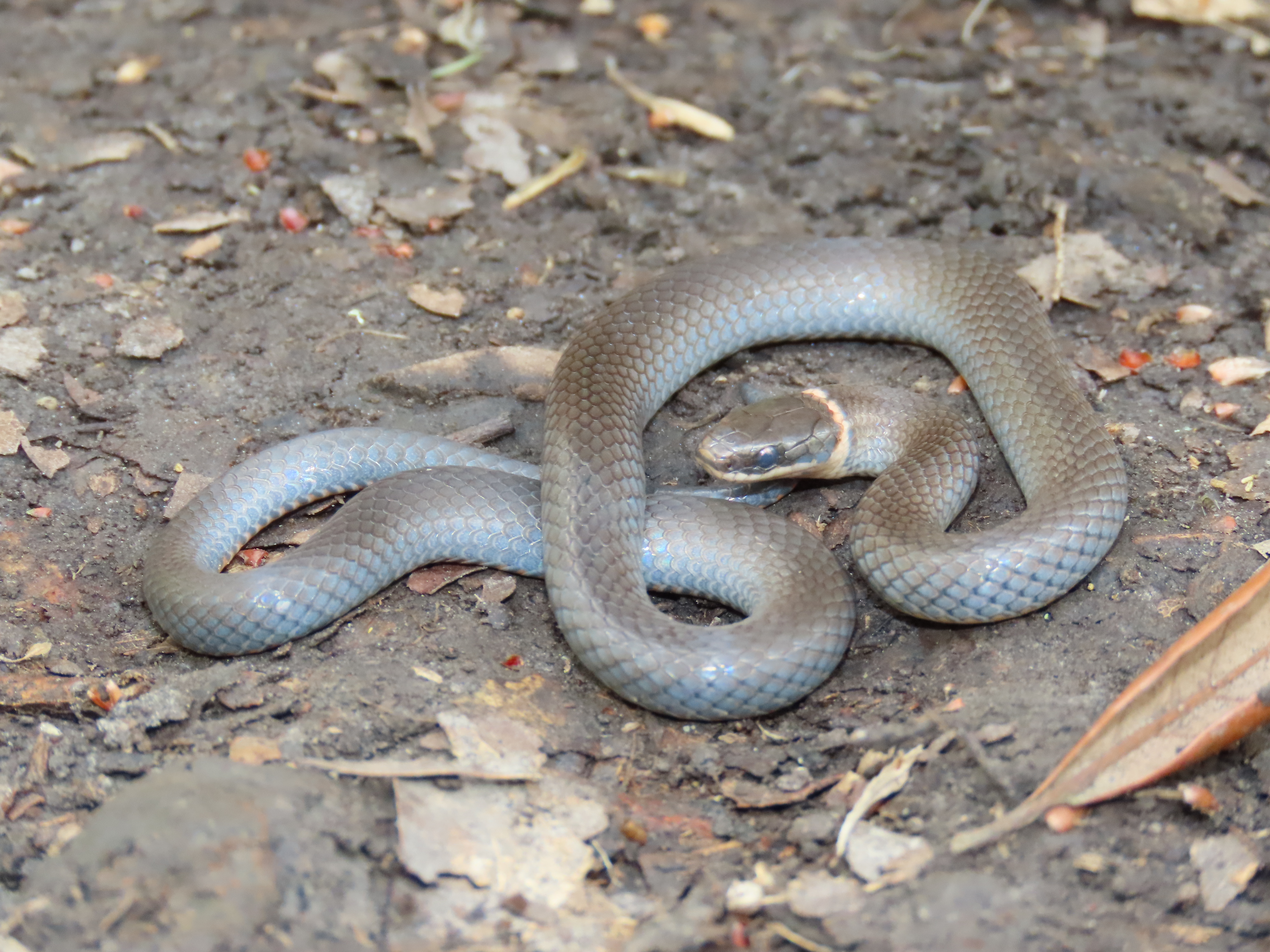
Papers & Reports DIADOPHIS PUNCTATUS (Ring-necked Snake)
Authors: R P Kidder; Brad M Glorioso; Katie D Gray
Date: 2021-12-31 | Outlet: Herpetological Review
A new parish record for the Ring-necked Snake in Louisiana
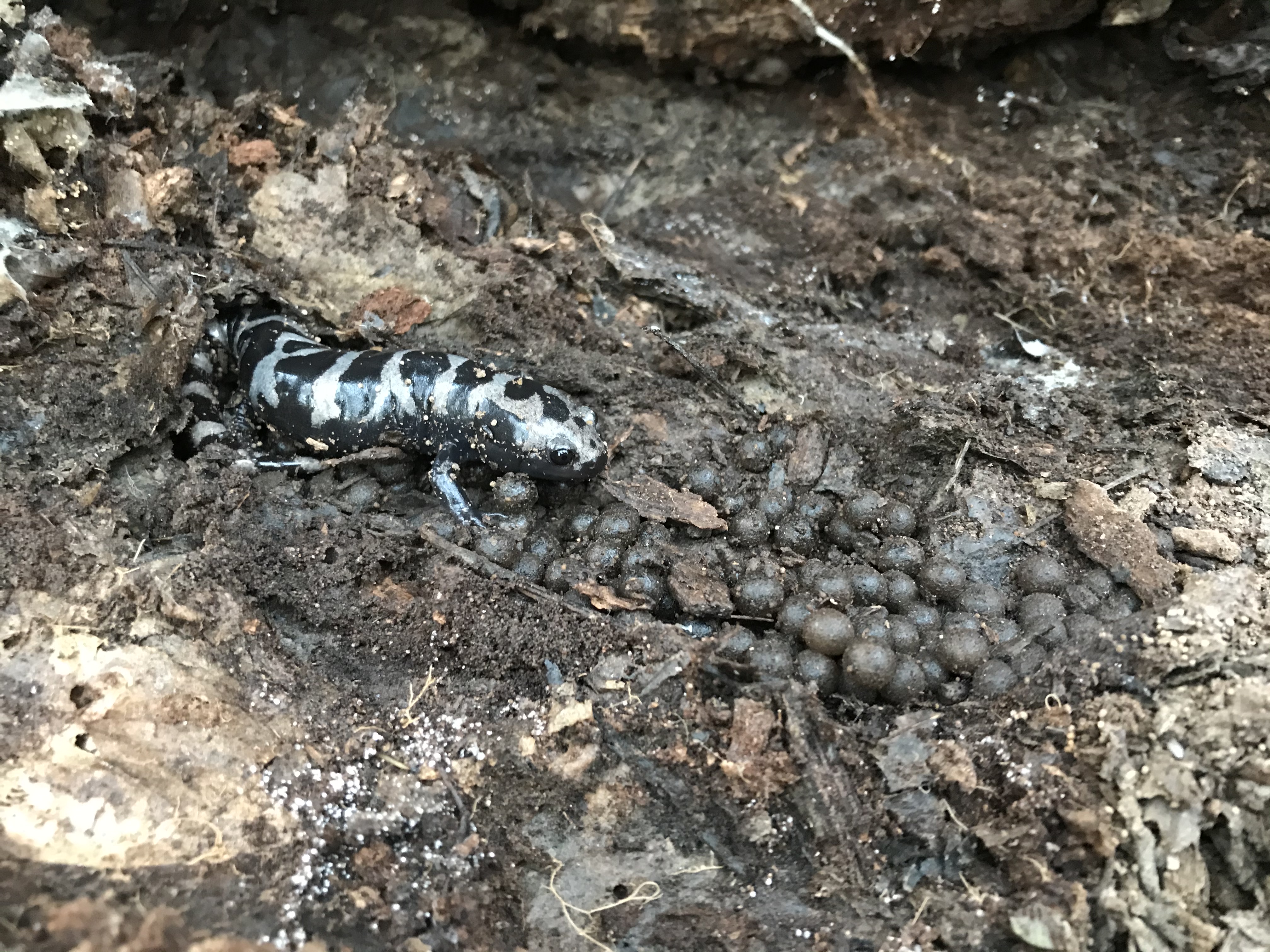
Papers & Reports AMBYSTOMA OPACUM (Marbled Salamander). ATYPICAL NEST SITES.
Authors: Joshua M Hall; Brad M Glorioso; J Se Doody
Date: 2021-09-01 | Outlet: Herpetological Review
This note describes atypical locations where Marbled Salamanders, Ambystoma opacum, eggs have been laid off the substrate.
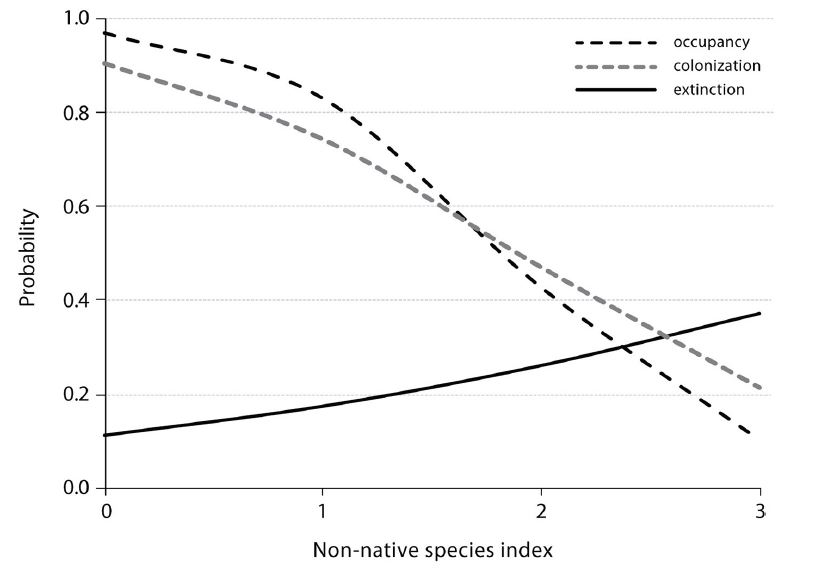
Papers & Reports Impacts of a Non-indigenous Ecosystem Engineer, the American Beaver (Castor canadensis), in a Biodiversity Hotspot
Authors: Jonathan Q Richmond; Camm C. Swift; Thomas A. Wake; Cheryl S Brehme; Kristine L Preston; Barbara E. Kus; Edward L Ervin; S Tremor; Tritia Matsuda; Robert N Fisher
Date: 2021-11-18 | Outlet: Frontiers in Conservation Science 2:752400
Non-native species having high per capita impacts in invaded communities are those that modulate resource availability and alter disturbance regimes in ways that are biologically incompatible with the native biota. In areas where it has been introduced by humans, American beaver (Castor canadensis) is an iconic example of such species due to its capacity to alter trophic dynamics of entire ecosystems and create new invasional pathways for other non-native species. The species is problematic in several watersheds within the Southern California-Northern Baja California Coast Ecoregion, a recognized hotspot of biodiversity, due to its ability to modify habitat in ways that favor invasive predators and competitors over the region's native species and habitat. Beaver was deliberately introduced across California in the mid-1900s and generally accepted as non-native to the region up to the early 2000s; however, articles promoting the idea that beaver may be a natural resident have gained traction in recent years, due in large part to the species' charismatic nature rather than by presentation of sound evidence. Here, we discuss the problems associated with beaver disturbance and its effects on conserving the region's native fauna and flora. We refute arguments underlying the claim that beaver is native to the region, and review paleontological, zooarchaeological, and historical survey data from renowned field biologists and naturalists over the past ~160 years to show that no evidence exists that beaver arrived by any means other than deliberate human introduction. Managing this ecosystem engineer has potential to reduce the richness and abundance of other non-native species because the novel, engineered habitat now supporting these species would diminish in beaver-occupied watersheds. At the same time, hydrologic functionality would shift toward more natural, ephemeral conditions that favor the regions' native species while suppressing the dominance of the most insidious invaders.
Data Release Current use pesticides in larval amphibian tissues, amphibian pathogen and wetland sediment screening data from three northeastern National Wildlife Refuges, 2013-14
Authors: Kelly L Smalling; Adam Boehlke; L Iwanowicz; Michelle L Hladik; Keith A Loftin; R Femmer; Adrianne B Brand; Evan HC Grant
Date: 2021-11-04 | Outlet: U.S. Geological Survey Data Release
The data include concentrations of current use pesticides in tissues of larval wood frog (Lithobates sylvaticus) and spotted salamander (Ambystoma maculatum) and the presence of ranavirus in wood frogs and spotted salamanders from three northeastern National Wildlife Refuges sampled in 2013 and 2014. The data also include estrogenicity, protein phosphatase 2A inhibition and a suite of 15 major and minor elements in sediment screened using portable X-Ray Fluorescence. The data include sediment and tissue samples collected from 16 wetlands at the Patuxent Research Refuge (PRR) in central Maryland, USA, 15 wetlands at the Assabet River and Oxbow National Wildlife Refuges (EMASS) in eastern Massachusetts, USA, and nine wetlands at the Chesapeake and Ohio Canal National Historic Park (CHOH) near the border of Washington DC and Maryland, USA.
Papers & Reports Site- and individual-level contamination affects infection prevalence of an emerging infectious disease of amphibians
Authors: Kelly L Smalling; Brittany A Mosher; L Iwanowicz; Keith A Loftin; Adam Boehlke; C R Muletz; N Cortes-Rodriguez; R Femmer; Evan HC Grant
Date: 2022-01-09 | Outlet: Environmental Toxicology and Chemistry
Emerging infectious disease outbreaks are one of multiple stressors responsible for amphibian declines globally. In the northeastern United States, ranaviral diseases are prevalent in amphibians and other ectothermic species, but there is still uncertainty as to whether their presence is leading to population level effects. Further, there is also uncertainty surrounding the potential interactions among disease infection prevalence in free-ranging animals and habitat degradation (co-occurrence of chemical stressors). The current study was designed to provide field-based estimates of the relationship between amphibian disease and chemical stressors. We visited 40 wetlands across three protected areas, estimated the prevalence of ranavirus among populations of larval wood frogs and spotted salamanders, and assessed chemical and biological stressors in wetland habitats and larval amphibians using a suite of selected bioassays, screening tools and chemical analyses. Estimated ranavirus occupancy varied among the three protected areas and ranged from https://0.27 to https://0.55 with considerable variation within protected area. Of the stressors evaluated, ranavirus prevalence was strongly and positively related to concentrations of metalloestrogens (metals with the potential to bind to estrogen receptors) and total metals in wetland sediments and weakly and negatively related to total pesticide concentrations in larval amphibians. These results can be used by land managers to refine habitat assessments to include such environmental factors with the potential to influence disease susceptibility.
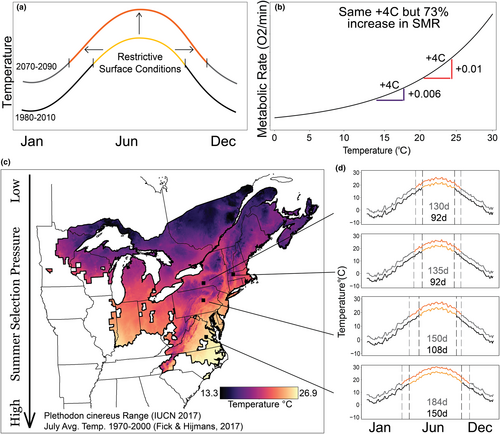
Papers & Reports Geographic variation and thermal plasticity shape salamander metabolic rates under current and future climates
Authors: David J Muñoz; David AW Miller; R Schilder; Evan HC Grant
Date: 2022-01-15 | Outlet: Ecology and Evolution
Predicted changes in global temperature are expected to increase extinction risk for ectotherms, primarily through increased metabolic rates. Higher metabolic rates generate increased maintenance energy costs which are a major component of energy budgets. Organisms often employ plastic or evolutionary (e.g. local adaptation) mechanisms to optimize metabolic rate with respect to their environment. We examined relationships between temperature and standard metabolic rate across four populations of a widespread amphibian species to determine if populations vary in metabolic response and if their metabolic rates are plastic to seasonal thermal cues. Populations from warmer climates lowered metabolic rates when acclimating to summer temperatures as compared to spring temperatures. This may act as an energy saving mechanism during the warmest time of the year. No such plasticity was evident in populations from cooler climates. Both juvenile and adult salamanders exhibited metabolic plasticity. Although some populations responded to historic climate thermal cues, no populations showed plastic metabolic rate responses to future climate temperatures, indicating there are constraints on plastic responses. We postulate that impacts of warming will likely impact the energy budgets of salamanders, potentially affecting key demographic rates, such as individual growth and investment in reproduction.
Papers & Reports Multi-scale patterns in occurrence of an ephemeral pool-breeding amphibian
Authors: Brian J Halstead; Jonathan P Rose; D R Clark; Patrick M Kleeman; Robert N Fisher
Date: 2022-03 | Outlet: Ecosphere
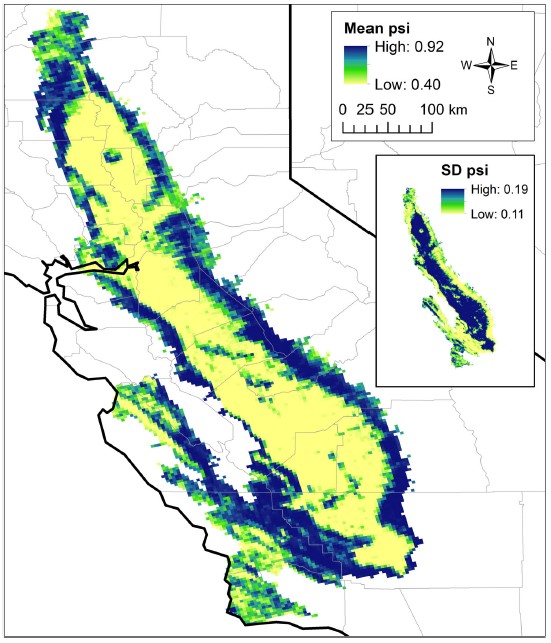
Species distributions are governed by processes occurring at multiple spatial scales. For species with complex life cycles, the needs of all life stages must be met within the dispersal limitations of the species. Multi-scale processes can be particularly important for these species, where small-scale patterns in specific habitat components can affect the distribution of one life stage, whereas large-scale patterns in land cover might better explain the distribution of other life stages. Using a conditional multi-scale model, we evaluated which aspects of the landscape and local environment are most strongly related to occupancy patterns of western spadefoots (Spea hammondii). In northern and central California, the proportion of grassland land cover within 2 km of a site was positively related to the occurrence of the northern clade of the western spadefoot. At the pond scale, we found that western spadefoots were more likely to breed in pools with lower pH. Our results indicate that protecting remaining grasslands for adult spadefoots and ensuring multiple pools with diverse characteristics and hydroperiods so at least some pools result in successful breeding will likely be necessary to conserve western spadefoots, especially with a changing climate. Considering the processes that affect species distributions at multiple life stages and spatial scales is an essential component of effective conservation.
Papers & Reports Increased growth rates of stream salamanders following forest harvesting
Authors: J C Guzy; Brian J Halstead; Kelly M Halloran; Jessica A Homyak; J D Willson
Date: 2021-10-24 | Outlet: Ecology and Evolution
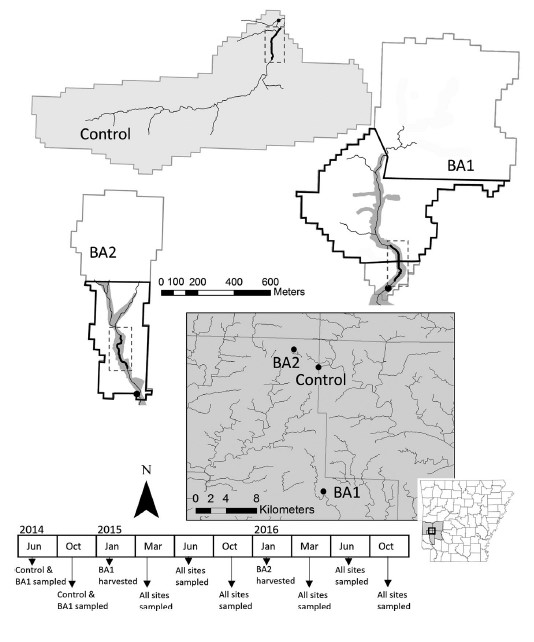
Timber harvesting can influence headwater streams by altering stream productiv-ity, with cascading effects on the food web and predators within, including stream salamanders. Although studies have examined shifts in salamander occupancy or abundance following timber harvest, few examine sublethal effects such as changes in growth and demography. To examine the effect of upland harvesting on growth of the stream- associated Ouachita dusky salamander (Desmognathus brimleyorum), we used capture– mark– recapture over three years at three headwater streams embed-ded in intensely managed pine forests in west- central Arkansas. The pine stands sur-rounding two of the streams were harvested, with retention of a 14- and 21- m- wide forested stream buffer on each side of the stream, whereas the third stream was an unharvested control. At the two treatment sites, measurements of newly metamorphosed salamanders were on average 4.0 and 5.7 mm larger post- harvest compared with pre-harvest. We next assessed the influence of timber harvest on growth of post- metamorphic salamanders with a hierarchical von Bertalanffy growth model that included an effect of harvest on growth rate. Using measurements from 839 individual D. brimleyorum recaptured between 1 and 6 times (total captures, n = 1229), we found growth rates to be 40% higher post-harvest. Our study is among the first to examine responses of individual stream salamanders to timber harvesting, and we discuss mechanisms that may be responsible for observed shifts in growth. Our results suggest timber harvest that includes retention of a riparian buffer (i.e., stream-side management zone) may have short-term positive effects on juvenile stream salamander growth, potentially offsetting negative sublethal effects associated with harvest.
Papers & Reports Responses of migratory amphibians to barrier fencing inform the spacing of road underpasses: a case study with California tiger salamanders (Ambystoma californiense) in Stanford, CA, USA
Authors: Cheryl S Brehme; J Tracey; Brittany Ewing; Michael Hobbs; A E Launer; Tritia Matsuda; Esther M. Cole Adelsheim; Robert N Fisher
Date: 2021-11 | Outlet: Global Ecology and Conservation 31:e01857
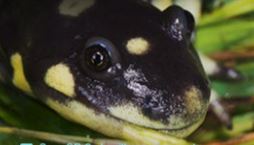
Migratory amphibians are at high risk of negative impacts when roads intersect their upland and breeding habitats. Road mortality can reduce population abundance, survivorship, breeding, recruitment, and probability of long-term persistence. Increasingly, environmental planners recommend installation of under-road tunnels with barrier fencing to reduce mortality and direct amphibians towards the passages. Often, the permeability of these barrier and passage systems to amphibian population movements are unknown. We studied the movements of California tiger salamanders (CTS: Ambystoma californiense) in relation to solid and mesh barrier fencing attached to a 3-tunnel system between upland and breeding habitats in Stanford, California. We deployed active-trigger cameras along the fencing, used pattern recognition software to identify individuals by their unique spot patterns, and calculated individual salamander movement distances, speed, direction changes, and “success” at reaching the tunnel system. We found that migrating adult CTS moved an average of 40 m along barrier fencing before turning back into the habitat or “giving-up”. This short distance, in comparison to long migratory movements, may be explained by the orientation mechanisms salamanders use to reach their breeding sites. The probability CTS found a passage decreased rapidly with increasing distance from the tunnel system, particularly if individuals turned the “wrong” way after encountering the fence. Salamanders changed directions more often and spent more time along mesh fencing. Our results suggest that a maximum of 12.5 m between passages along CTS migration routes should allow approximately 90% of adult salamanders to encounter road crossings. Additionally, use of solid fencing or a visual barrier on mesh fencing may help to lead salamanders to passages most efficiently. These considerations can assist those seeking to design effective road mitigation for CTS and other migratory amphibians.